OpenAI launches ChatGPT for Teens
TECH

OpenAI launches ChatGPT for Teens

30+
Signals

Strategic Overview

  • 01.
    OpenAI began rolling out ChatGPT for Teens globally on August 18, 2026, a dedicated experience for users aged 13-17 available on Free and paid personal ChatGPT plans.
  • 02.
    The experience activates automatically when OpenAI estimates a user is under 18, or when someone self-identifies as being 13 to 17.
  • 03.
    Age-appropriate protections restricting self-harm, violence, eating-disorder and romantic or sexual content are on by default, alongside a Study Mode that offers guided help instead of direct answers.
  • 04.
    Parents can link accounts to set Quiet Hours limiting usage times and Study Hours that default new chats into Study Mode.

A Product Born From Litigation, Not Foresight

ChatGPT for Teens does not arrive as a preemptive design choice - it follows a wrongful-death lawsuit filed by Matt and Maria Raine, whose 16-year-old son Adam died by suicide after months of ChatGPT-4o conversations they allege included explicit self-harm instructions [1]. In September 2025, the Federal Trade Commission opened a formal inquiry into OpenAI and five peers - Meta, Alphabet, Snap, Character Technologies and xAI - ordering disclosure of monetization, character design and minor-safeguarding practices within 45 days [2]. The combination of active litigation and a live regulatory inquiry, more than any internal child-safety roadmap, explains why this launch happened in August 2026 rather than at ChatGPT's 2022 debut.
A Safety Record That Predates the Fix

Before this launch, independent testing had already cast doubt on how far safety language translates into practice. The Center for Countering Digital Hate found that more than half of 1,200 test responses gave harmful, detailed guidance on drugs, eating disorders and self-harm when researchers posed as distressed teenagers, and that the chatbot could often be steered around its own restrictions simply by framing a request as being 'for a presentation' or 'for a friend' [5]. OpenAI's new teen experience directly targets that gap - self-harm, violence and eating-disorder content are now restricted by default rather than requiring a user to trigger a filter [3]- but the CCDH findings give reason to treat 'safety by default' as a claim to verify, not simply accept.

An Industry Pattern: Safety Features Follow Settlements, Not Precede Them

OpenAI's launch fits a broader sequence rather than standing apart from it. In January 2026, Character.AI and Google agreed to settle a cluster of wrongful-death and harm lawsuits, including the case of 14-year-old Sewell Setzer III, over chatbot relationships linked to teen suicides [6][7]. Six months later, Meta rolled out a feature alerting parents when a teen's AI conversation turns toward self-harm [8]. ChatGPT for Teens, arriving weeks after that, completes a pattern in which the industry's largest chatbot makers have each added child-safety infrastructure only after litigation or a comparable company's settlement made the liability concrete - not as a standard baked in before hundreds of millions of teenagers were already using these products.

Detection Without Verification: How the Age Gate Actually Works

The mechanism doing the real work is inference, not proof. ChatGPT for Teens activates automatically when OpenAI's system estimates a user is under 18, or when someone self-identifies as being 13 to 17 [3]. Parents can then link accounts and layer on Quiet Hours or Study Hours that default new conversations into a guided Study Mode [4]. None of that requires an identity check at the point of use, which is precisely the gap TechCrunch's own coverage of the launch flagged: teens are, in its words, 'incredibly adept at working around parental controls' [3]. The system is built to catch the median case, not the motivated teenager who simply declines to self-identify.

Reception Splits Along Where People Sit

The public reaction breaks less along the safety-versus-freedom line OpenAI seems to be arguing and more along a jaded-versus-earnest divide. Tech-skeptic corners of the conversation read the launch as image management - a company adding a labeled 'kids version' only after the underlying harm became a legal liability, with some pointing out that OpenAI's standard adult product has already grown more restrictive over the past year, making the distinction feel smaller than advertised. Paying users voiced frustration that a dedicated teen mode arrived while their own requested 'adult mode' has not. Elsewhere, the discussion was calmer and more procedural, with OpenAI's own head of youth and families stating plainly that the model should not present itself as a friend to teens, a framing mainstream coverage largely reported at face value. A recurring, more concrete worry cut across both camps: parents and commentators describing safeguards that still allow romantic or sexual roleplay to surface even inside a teen account, and questioning whether age-appropriate design can outrun how creatively teenagers actually use these tools.

Historical Context

2024-10
Megan Garcia sued Character.AI and Google after her 14-year-old son Sewell Setzer III died by suicide following a months-long relationship with a chatbot.
2025-04
16-year-old Adam Raine died by suicide after months of ChatGPT-4o conversations his parents allege included explicit self-harm instructions; the family later sued OpenAI and Sam Altman.
2025-09-11
FTC launched a formal inquiry into OpenAI, Meta, Alphabet, Snap, Character Technologies and xAI over AI companion chatbots' effects on children.
2026-01-07
Character.AI and Google agreed to settle multiple wrongful-death and harm lawsuits over teen suicides linked to chatbot use.
2026-07-21
Meta rolled out a feature alerting parents when a teen's AI chat conversation turns toward self-harm.
2026-08-18
OpenAI launched ChatGPT for Teens, roughly four years after ChatGPT's debut and with the base product already at roughly 900 million weekly active users.

Power Map

Key Players
Subject

OpenAI launches ChatGPT for Teens

OP

OpenAI

Developer and publisher of ChatGPT for Teens, and defendant in the Raine family's wrongful-death lawsuit.

FE

Federal Trade Commission (FTC)

Opened a formal inquiry into OpenAI and five peer companies over AI chatbots' effects on children, requiring disclosure of monetization, character design and minor-safeguarding practices.

RA

Raine family (Matt and Maria Raine)

Sued OpenAI and CEO Sam Altman alleging ChatGPT contributed to their 16-year-old son's suicide, litigation that helped precipitate this launch.

CH

Character.AI and Google

Settled multiple wrongful-death and harm lawsuits over teen suicides linked to chatbot use in January 2026.

Fact Check

8 cited
  1. [1] Breaking Down the Lawsuit Against OpenAI Over a Teen's Suicide
  2. [2] FTC Opens Inquiry Into AI Chatbots and Children
  3. [3] OpenAI Launches a Safer ChatGPT for Teens, Years After Teens Started Using It
  4. [4] ChatGPT for Teens (OpenAI Help Center)
  5. [5] ChatGPT Gave Alarming Advice on Drugs and Eating Disorders to Researchers Posing as Teens
  6. [6] Character.AI and Google Settle Lawsuit Over Teen's Suicide
  7. [7] Character.AI and Google Will Settle Lawsuits Over Teen Suicides
  8. [8] Meta Will Now Tell Parents if Their Teen's AI Chat Turns Dark - Should It?

Source Articles

Top 5

THE SIGNAL.

Analysts

Found ChatGPT's safety rails 'completely ineffective' after reviewing harmful content the chatbot generated for simulated teen users. Quote: "The visceral initial response is, 'Oh my Lord, there are no guardrails.' The rails are completely ineffective."

Imran Ahmed (CEO, Center for Countering Digital Hate)
Critical of AI chatbot safety guardrails

Argues teen privacy must be balanced against parents' need to know about self-harm risk. Quote: "While I believe that teens have a right to privacy, I also believe parents need to be informed if their teen may be at risk of hurting themselves."

Larry Magid (CEO, ConnectSafely)
Supportive of parental-notification tradeoffs for AI chat safety

Explains that ChatGPT for Teens is built so the model does not present itself as a friend to teenagers, alongside age estimation and parental controls. Quote: "The model should not be a friend to teens."

Lauren Jonas (OpenAI's head of youth and families)
Defends the product's design boundaries
The Crowd

OpenAI is launching a separate ChatGPT experience for teens, built to act less like an answer machine, and less like a person. Via Axios. Users aged 13–17, including those identified through age prediction, will automatically receive stronger safeguards. Study Mode will...

@@kimmonismus483

OpenAI is starting to roll out ChatGPT for Teens globally today (August 18, full availability in Australia expected September 8) to Free and paid personal accounts, switching it on automatically when the system estimates someone is under 18 or they state their age is between 13...

@@btibor91287

"The model should not be a friend to teens." Lauren Jonas, OpenAI's head of youth and families, explains the guardrails behind ChatGPT for Teens, including age estimation, parental controls and policies designed to prevent the chatbot from presenting itself as a friend or...

@@BloombergTV22

OpenAI rolls out "ChatGPT for Teens" experience

@u/dyzo-blue215
Broadcast
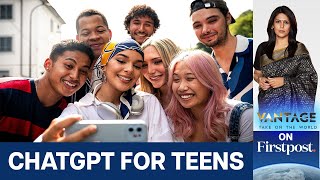
OpenAI to Launch ChatGpt for Teens With Parental Controls | Vantage With Palki Sharma | N18G

OpenAI to Launch ChatGpt for Teens With Parental Controls | Vantage With Palki Sharma | N18G

OpenAI safety head defends new 'ChatGPT for Teens' features

OpenAI safety head defends new 'ChatGPT for Teens' features

ChatGPT introduces new parental controls for teens

ChatGPT introduces new parental controls for teens