DeepSeek Deploys Huawei Ascend Chips in Inner Mongolia
TECH

DeepSeek Deploys Huawei Ascend Chips in Inner Mongolia

30+
Signals

Strategic Overview

  • 01.
    DeepSeek plans to deploy at least 160,000 Huawei Ascend 950DT chips at a new gigawatt-scale data center in Ulanqab, Inner Mongolia, potentially creating one of the largest known clusters of Chinese AI accelerators.
  • 02.
    Despite Huawei designing the 950DT for both training and inference, DeepSeek does not currently plan to use the chips for training - that work stays on Nvidia hardware, while the Ascend chips handle inference.
  • 03.
    The 1-gigawatt Ulanqab site, chosen for its cheap wind and solar power and cold climate, is expected to come partially online in late 2027 or early 2028.
  • 04.
    HBM memory shortages are expected to cap Huawei's 950DT output at the low hundreds of thousands of units in 2026, meaning DeepSeek's full order could take over a year to fulfill.

Deep Analysis

Inside the Numbers: A Cluster Built Around a Bottleneck
Inside the Numbers: A Cluster Built Around a Bottleneck
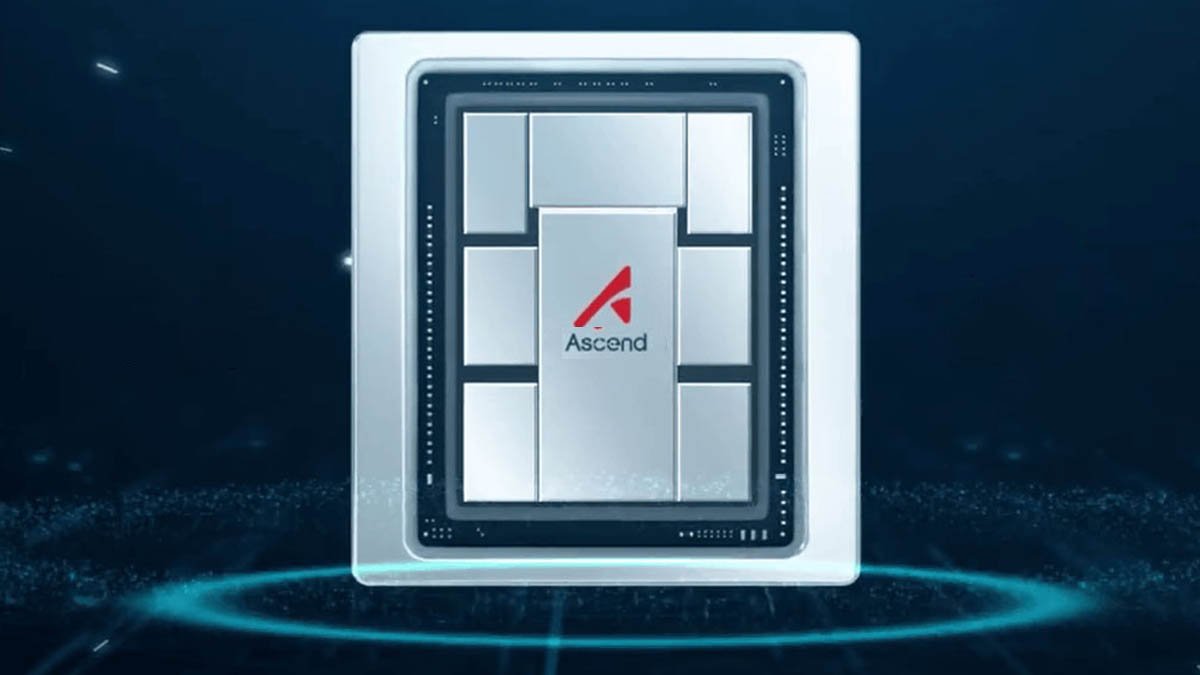
Huawei's Ascend accelerators are the centerpiece of DeepSeek's planned Inner Mongolia cluster.

DeepSeek is preparing to order at least 160,000 Huawei Ascend 950DT chips for a new data center in Ulanqab, Inner Mongolia - a deployment that would create one of the largest known clusters of Chinese AI accelerators [1]. Multiple outlets citing Bloomberg's original report converged on the same figure, underscoring how unusual an order of this size is for domestic silicon [2]. The facility itself is being built at gigawatt scale: at full load it would draw enough power for roughly 750,000 homes [1]. But the headline number describes an order, not a delivered cluster. Huawei's own production capacity is the binding constraint - HBM memory shortages are expected to cap 950DT output at just the low hundreds of thousands of units industry-wide in 2026, meaning DeepSeek's order alone could take more than a year to fill [1]. Partial operation isn't expected until late 2027 or early 2028 [1]. Social chatter around the announcement largely mirrored this framing - reactions converged tightly on the 160,000-chip figure and the largest-cluster claim, with a recurring analytical thread flagging the manufacturing timeline as the real variable to watch, not the order itself.


Why Nvidia Still Trains DeepSeek's Models

The most consequential detail in this deal isn't the chip count - it's what the chips won't do. Huawei designed the 950DT for both training and inference, but DeepSeek has no current plan to train on it; that work stays on Nvidia hardware while Ascend chips serve inference [1]. This split has a history. In August 2025, DeepSeek reportedly hit reliability failures trying to train its next-generation R2 model on Ascend hardware and switched training back to Nvidia [3]. A DeepSeek researcher, Yuchen Jin, has said long-term training reliability remains a critical weakness of Chinese processors relative to Nvidia's. That history sits in tension with a July 2026 report from a Huawei-led consortium claiming it had full-parameter post-trained DeepSeek's 1.6-trillion-parameter V4 model family using roughly 1,000 Ascend 910C chips [4]- a claim independent experts greeted skeptically, arguing Nvidia hardware likely still did the frontier training heavy lifting [4]. DeepSeek's own internal evaluation reportedly found the Ascend 910C delivers around 60 percent of Nvidia H100 inference performance [5], a gap that helps explain why inference - a more fault-tolerant, less latency-sensitive workload - is where Huawei's chips are trusted first.

The Site Selection Logic: Wind, Solar, and Cold Air

Ulanqab wasn't picked at random. The city sits 350km northwest of Beijing and offers cheap wind and solar power alongside a 4.3°C average temperature that cuts natural cooling costs for a gigawatt-scale facility [1]. That combination of low-cost renewable energy and favorable climate economics is what makes a build of this size viable at all, independent of the chip question. The deeper cause, though, is structural: U.S. export restrictions have left Nvidia largely locked out of the Chinese market, pushing DeepSeek and other domestic labs toward Huawei silicon, particularly for inference workloads where reliability requirements are lower than training [6]. DeepSeek's own capital position appears to support the bet - the company reportedly raised more than $7 billion for infrastructure in June 2026, capital that plausibly underwrites both the data center buildout and the scale of the Huawei order [1]. Read together, the site and the financing suggest this is less an opportunistic chip purchase than a deliberate, capital-backed infrastructure play built around the assumption that Nvidia access will stay constrained for years.

The Domino Effect: How One Order Reshapes China's Chip Politics

Analysts frame DeepSeek's move as proof-of-concept for the rest of China's AI industry: if a frontier lab is willing to run production inference at this scale on domestic silicon, it lowers the perceived risk for everyone else. Omdia's He Hui has argued that Huawei's Ascend chips are the country's best homegrown alternative to Nvidia, and that DeepSeek's support signals top Chinese AI models can now run on Chinese hardware [6]. That signal appears to be spreading - ByteDance, Tencent, and Alibaba are reportedly rushing to secure their own Ascend 950 orders in DeepSeek's wake [7], and Huawei itself moved up its 950DT deployment timeline to August 2026, ahead of an originally planned fourth-quarter launch, with DeepSeek's V4.2 seen as a potential early adopter [8]. The online reaction captures the underlying uncertainty in that narrative, though: community discussion split between enthusiasm for China's compute-independence trajectory and pointed skepticism about the real-world performance gap between Ascend and Nvidia chips, with commenters disputing whether Huawei's stated ratios understate how far behind its hardware actually trails - and some directly questioning the credibility of the July 2026 post-training claim itself. The consistent thread across platforms is that China's cheap, abundant electricity is seen as the mechanism offsetting Ascend's lower per-chip efficiency, by simply deploying more racks.

Historical Context

2025-08
DeepSeek reportedly hit reliability problems attempting to train its next-gen R2 model on Huawei Ascend hardware and switched training back to Nvidia while keeping Huawei chips for inference.
2026-04
DeepSeek adapted its V4 preview model to run on Huawei's Ascend chip family, completing the adaptation work.
2026-06
Huawei moved up planned deployment of the Ascend 950DT to August 2026 from a prior fourth-quarter target, with DeepSeek V4.2 seen as a potential early adopter.
2026-07-22
A Huawei-led team published a technical report claiming full-parameter post-training of DeepSeek's 1.6-trillion-parameter V4 model family using roughly 1,000 Ascend 910C chips; independent experts say Nvidia hardware likely still did the frontier training heavy lifting.
2026-09-04
Bloomberg reported DeepSeek is preparing to order at least 160,000 Huawei Ascend 950DT chips for the new Ulanqab, Inner Mongolia data center.

Power Map

Key Players
Subject

DeepSeek Deploys Huawei Ascend Chips in Inner Mongolia

DE

DeepSeek

Chinese AI lab building the Ulanqab data center and ordering the Huawei Ascend chips; splits workloads between Nvidia (training) and Huawei (inference) due to export restrictions.

HU

Huawei Technologies

Supplier of the Ascend 950DT accelerators and China's de facto national AI chipmaker; faces HBM supply constraints that limit how fast it can fulfill large orders.

NV

Nvidia

Remains locked out of significant China sales under U.S. export restrictions, yet DeepSeek still depends on whatever Nvidia hardware it can secure for model training.

BY

ByteDance, Tencent, Alibaba

Other Chinese tech giants reportedly rushing to place their own orders for Huawei's Ascend 950 processors after DeepSeek's adoption signaled the hardware's viability.

U.

U.S. export control regime

Restricts advanced Nvidia chip sales to China, the underlying pressure pushing DeepSeek toward domestic Huawei silicon for inference workloads.

Fact Check

8 cited
  1. [1] DeepSeek Turns to Huawei for 160,000 AI Chips as Nvidia Stays Locked Out of China
  2. [2] DeepSeek Said To Order At Least 160K Huawei AI Accelerators For New Data Center: Report
  3. [3] DeepSeek Reportedly Urged by Chinese Authorities To Train New Model on Huawei Hardware After Multiple Failures, R2 Training To Switch Back to Nvidia Hardware While Ascend GPUs Handle Inference
  4. [4] Huawei-Led Team Claims It Post-Trained DeepSeek's 1.6-Trillion-Parameter Models on Ascend 910C Chips
  5. [5] DeepSeek Research Suggests Huawei's Ascend 910C Delivers 60 Percent Nvidia H100 Inference Performance
  6. [6] DeepSeek, Huawei, Export Controls, and the Future of the US-China AI Race
  7. [7] DeepSeek V4 Triggers Scramble
  8. [8] Huawei Brings Forward Ascend 950DT Deployment to August, DeepSeek V4.2 Seen as Potential Early Adopter

Source Articles

Top 5

THE SIGNAL.

Analysts

Argues that Huawei's Ascend chips are China's best homegrown alternative to Nvidia, and that DeepSeek's adoption shows top-tier Chinese AI models can now run on domestic hardware.

He Hui
Director of semiconductor research, Omdia

Assesses DeepSeek's architectural efficiency work as a genuine engineering adaptation to constrained interconnect bandwidth, not a fabricated result - calling it ideal for maximizing effective use of computing resources under those conditions.

Ben Thompson
Analyst, Stratechery

Acknowledges that U.S. chip export bans are a real constraint on the company, stating plainly that bans on shipments of advanced chips are the problem.

Liang Wenfeng
CEO, DeepSeek

States that long-term training reliability remains a critical weakness of Chinese processors compared with Nvidia, a view consistent with DeepSeek's decision to keep training on Nvidia hardware.

Yuchen Jin
Researcher, DeepSeek
The Crowd

DeepSeek reportedly plans to deploy at least 160,000 Huawei Ascend 950DT chips in Inner Mongolia, potentially creating one of the largest known Huawei AI clusters! Bloomberg reports the chips would run DeepSeek's models. The company currently has no plans to use them for...

@@kimmonismus393

DeepSeek wants 160,000 Huawei Ascend chips for its massive Inner Mongolia data center: > this would be the largest Huawei AI chip cluster > only for inference, still Nvidia for training > manufacturing it could take over a year DeepSeek wants more but the production capacity...

@@Hesamation330

DeepSeek plans to use 160,000 of Huawei's best AI chips at a massive data center, advancing China's efforts to replace Nvidia.

@@business170

DeepSeek Plans 160,000 Chip Huawei AI Cluster

@u/Optimal_Image519239
Broadcast
China's DeepSeek previews new model adapted for Huawei chip tech

China's DeepSeek previews new model adapted for Huawei chip tech

Ep. 017 - DeepSeek V4 and Huawei Ascend NPU Performance (InferenceX)

Ep. 017 - DeepSeek V4 and Huawei Ascend NPU Performance (InferenceX)

DeepSeek V4 Runs on Huawei Ascend 950 Chips - China Kills NVIDIA

DeepSeek V4 Runs on Huawei Ascend 950 Chips - China Kills NVIDIA

DeepSeek Deploys Huawei Ascend Chips in Inner Mongolia — AI News | Agentic Brew