Anthropic stood on the Vatican stage — alone. That is the story.
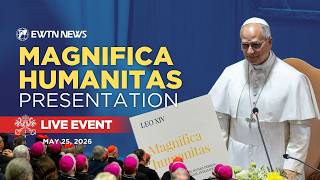
The most underreported fact about the Magnifica Humanitas launch is not what was in the document but who was standing next to the pope. Leo XIV broke with protocol by personally presenting the encyclical at the Vatican Synod Hall on 25 May 2026, an unusual step popes normally delegate to cardinals [1]. The only frontier AI executive on that stage was Anthropic co-founder Chris Olah, who was given the floor to name three concrete ethical challenges — distribution of AI gains across rich and poor countries, what human flourishing looks like in an AI-saturated world, and the opacity of model internals [2]. Olah went further than corporate communications normally allow, telling the room that 'every frontier AI lab — including Anthropic — operates inside a set of incentives and constraints that can sometimes conflict with doing the right thing' and that outside critics, including religious institutions, are essential [3].
The contrast with the rest of the industry was loud. OpenAI, Google DeepMind and Microsoft issued carefully calibrated statements praising 'dialogue between faith, ethics, and technology' without committing to any of the encyclical's specific demands, and Sam Altman, Elon Musk and Mark Zuckerberg did not publicly respond at all [4]. Skeptical voices on social media seized on this asymmetry to argue Anthropic was capturing Vatican moral authority, while defenders countered that the rest of Silicon Valley had simply chosen silence over engagement. Either reading points to the same structural fact: the Catholic Church now speaks for roughly 1.4 billion people on AI, and only one frontier lab decided that constituency was worth showing up for [4].