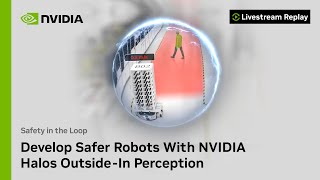
The reuse play: AV safety, recompiled for humanoids
Halos for Robotics is less a new invention than a transplant. NVIDIA built its original Halos as a full-stack safety system for autonomous vehicles in March 2025, then extended that foundation to robots [1]. The pitch leans hard on accumulated effort: NVIDIA says the robotics version draws on more than 18,600 engineering years of autonomous-vehicle safety development, up from the 15,000+ engineering years cited for the original automotive launch [1][3]. The logic is that a car threading through pedestrians and a humanoid sharing a warehouse floor face the same fundamental problem, sensing a chaotic human environment and reacting before harm, so the same safety scaffolding should carry over. Deepu Talla, NVIDIA's VP of Robotics and Edge AI, frames it as giving robotics teams a unified safety architecture to scale autonomous systems rather than each vendor reinventing safety from scratch [1]. The strategic read is that NVIDIA is amortizing a multi-year AV safety investment across a second, faster-growing market.