The real shift: the human moves out of the loop and into the loop's design
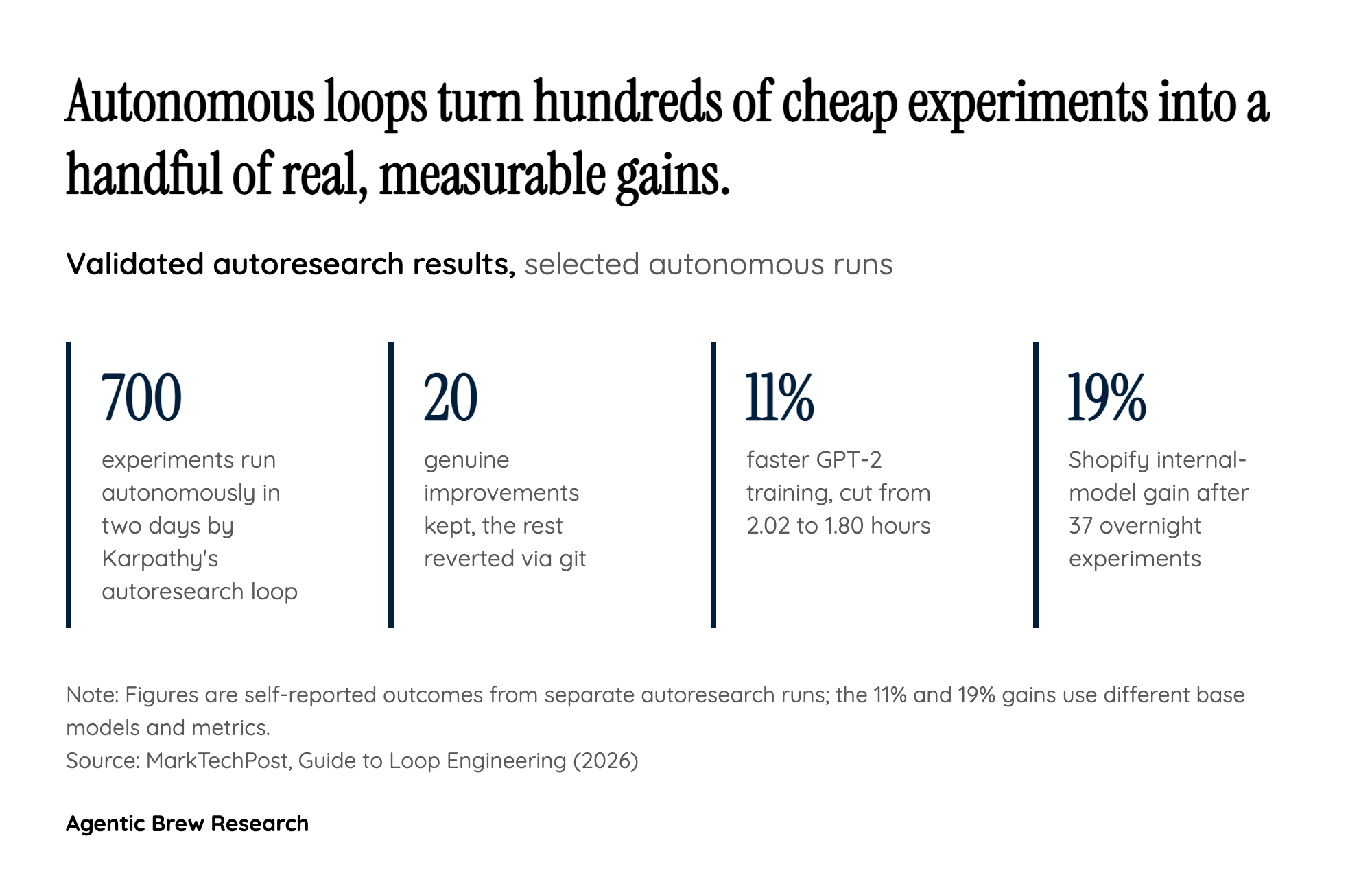
Loop engineering's core claim is not that agents got smarter but that the developer's leverage point moved. Instead of directing an agent turn-by-turn like a project manager, you author the instructions and acceptance criteria once and let the system run[1]. The tell is in how practitioners describe their own workflow: Anthropic's Boris Cherny, who runs Claude Code, says he no longer prompts Claude at all and instead writes loops that prompt Claude and figure out what to do[3], and engineer Peter Steinberger's viral framing is that you should be designing loops that prompt your agents rather than prompting agents yourself[3]. The logic underneath is a throughput argument: once an objective metric exists to grade attempts automatically, the human is the bottleneck, because a loop iterates indefinitely while a person tires after roughly a dozen experiments[1].