From Chips to Containers: NVIDIA's Industrial AI-Factory Pivot
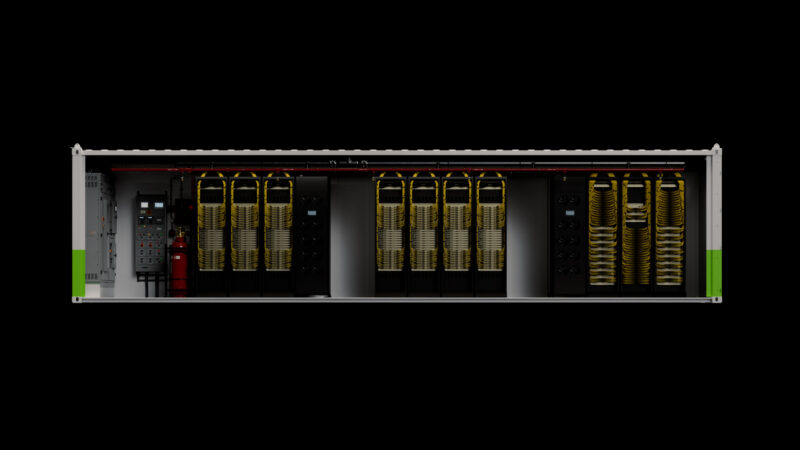
The headline product at GTC Berlin was not a chip - it was a shipping container. DSX POD packages seven liquid-cooled Vera Rubin NVL72 racks, roughly 17 kilometers of Spectrum-X cabling, and all associated networking, cooling, and management hardware into a single factory-tested, transportable unit delivering about 25 EFLOPs of AI inference [2]. NVIDIA says that packaging shift - moving integration, cabling, and liquid-cooling work off-site into factory manufacturing - can compress deployment at a prepared site from roughly six months to as little as 14 days [1]. An early proof-of-concept from Lambda, using DSX MaxLPS on NVIDIA HGX B200 systems, reported 24% more cluster token throughput and up to 30% less power for the same token output, numbers NVIDIA is using to sell the economics of speed, not just raw compute [1]. Worldwide container delivery is slated for early 2027, with a partner roster - Crusoe, Dell Technologies, HPE, Lenovo, Foxconn's Ingrasys, and more - that reads like NVIDIA assembling its own supply chain for prefabricated data centers rather than leaving that work to hyperscalers alone [1]. Crusoe is folding the Vera Rubin DSX Reference Design and Omniverse DSX Blueprint directly into its own gigawatt-scale AI-factory buildout [3]. Taken together, DSX POD reads less like a product launch than a statement: NVIDIA wants to be judged on how fast an AI factory goes from empty lot to revenue-generating tokens, not just on FLOPs per chip.