Moonshot AI's Kimi K3 launch, GPU crunch, and global chip selloff
TECH

Moonshot AI's Kimi K3 launch, GPU crunch, and global chip selloff

48+
Signals

Strategic Overview

  • 01.
    Moonshot AI released Kimi K3 on July 16-17, 2026, a 2.8 trillion parameter Mixture-of-Experts model it describes as the world's first open 3T-class model.
  • 02.
    The model has a 1 million token context window, native vision, and activates only 16 of its 896 experts per token (about 1.8%), built on two new architectural components, Kimi Delta Attention and Attention Residuals.
  • 03.
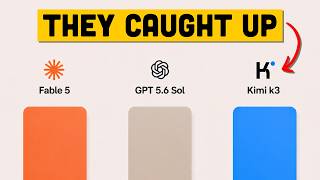
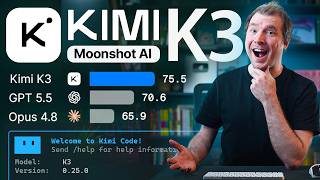
    K3 debuted at number one on Arena.ai's Frontend Code Arena with 1,679 points, ahead of Claude Fable 5 (1,631) and GPT-5.6 Sol (1,618), though Moonshot itself says the model's overall performance still trails those two on other measures.
  • 04.
    API pricing is $0.30 per million cache-hit input tokens, $3 per million cache-miss input tokens, and $15 per million output tokens; the hosted product launched immediately while full model weights are scheduled for public release on July 27, 2026.
  • 05.
    Within 48 hours of launch, user demand pushed Moonshot's GPU capacity to its limit, forcing the company to pause new Kimi K3 subscriptions while adding capacity in batches.
  • 06.
    The release coincided with roughly $3.3 trillion wiped off global semiconductor market capitalization since June 22, pushing the Philadelphia Semiconductor Index into a technical bear market, with Taiwan's benchmark down more than 6%, Japan down 4%, and the Nasdaq down about 1.5%.
  • 07.
    Moonshot is pursuing a Hong Kong IPO within roughly six months at a rumored valuation of $30-31.5 billion, up from about $4 billion at the end of 2025, with ARR growing from $200 million in April to $300 million in June 2026.

Inside Kimi K3: A 2.8-Trillion-Parameter Model That Uses Barely 2% of Itself

Moonshot AI released Kimi K3 on July 16-17, 2026 as a 2.8 trillion parameter Mixture-of-Experts model the company bills as the world's first open 3T-class system [1]. The model's efficiency, not just its size, is the real engineering story: K3 activates only 16 of its 896 experts per token, roughly 1.8% of its total parameters, while offering a 1 million token context window and native vision [1]. Two new architectural components, Kimi Delta Attention and Attention Residuals, underpin that sparsity [1]. The payoff showed up immediately on independent leaderboards: K3 debuted at number one on Arena.ai's Frontend Code Arena with 1,679 points, ahead of Claude Fable 5's 1,631 and GPT-5.6 Sol's 1,618 [2]. Moonshot itself is more measured about the bigger picture, acknowledging that K3's overall performance still trails Claude Fable 5 and GPT-5.6 Sol even as it claims frontier-level results on coding and agentic benchmarks specifically [1]. Pricing reinforces the positioning as a value play rather than an outright leader: $0.30 per million cache-hit input tokens, $3 per million cache-miss input tokens, and $15 per million output tokens, more expensive than DeepSeek V4 and GLM-5.2 but roughly a third of Claude Fable 5's cost [1]. The hosted product went live immediately across Kimi.com, Kimi Work, Kimi Code, and the Kimi API, with full model weights scheduled for public release on July 27, 2026 [1].
The 48-Hour GPU Crunch

Within 48 hours of Kimi K3's launch, user demand pushed Moonshot's GPU capacity to its limit, forcing the company to pause new subscriptions to both the consumer Kimi Membership and the Kimi Code Membership while it adds capacity in batches [3][4]. Moonshot's own explanation, as quoted by the South China Morning Post, points to demand rather than any external constraint: 'Over the past 48 hours, demand has pushed close to the limits of our current capacity' [3]. Finimize offers a broader read, arguing that Moonshot's near-term growth is being set less by user demand and more by how quickly it can secure chips, data centers, and the cash to pay for them, a challenge it says is made harder by US export controls that restrict access to the most advanced Nvidia chips [14]. That framing is not the consensus view - most other outlets covering the pause treat export controls as general background on the Chinese AI industry rather than the specific cause of this particular subscription halt. There is at least one concrete precedent for hardware constraints shaping Moonshot's roadmap: Tom's Hardware reports the company's prior model, Kimi K2 Thinking, was trained on Nvidia H800 GPUs, chips banned from export to China in late 2023, though that history concerns Moonshot's training infrastructure rather than the current inference-scaling crunch [2].

A $3.3 Trillion Reckoning: Markets Rerun the DeepSeek Playbook

Kimi K3's release coincided with a roughly $3.3 trillion decline in global semiconductor market capitalization since June 22, pushing the Philadelphia Semiconductor Index more than 20% below its late-June peak into a technical bear market, the worst weekly rout for chipmakers since April 2025 [5][6]. The reaction spread well beyond US chip names: Taiwan's benchmark fell more than 6%, Japan's closed down 4%, and the Nasdaq slid about 1.5% [7]. Risk aversion even reached crypto, with Bitcoin briefly dropping below $64,000, while chip-design software makers Cadence Design Systems and Synopsys each fell roughly 9% in a single session [8]. Domestically, the pressure was competitive as much as macro: rival Chinese labs Zhipu and MiniMax saw their stocks drop 28.4% and 15.6% respectively as investors repriced who's winning China's AI race [9]. The same week, Anthropic separately cut usage limits on Claude Fable 5 for subscribers, adding to the sense that incumbent providers were feeling the pressure [10]. Analysts are split on how much of this reaction is rational. Tech analyst Patrick Moorhead called the panic an overreaction 'shockingly similar' to the DeepSeek episode a year earlier [11], while Arena co-founder and CEO Anastasios Angelopoulos took the opposite view, calling K3 potentially 'the single biggest release of the year' given its Frontend Code Arena result [11]. Bernstein's Robin Zhu and Morgan Stanley's Gary Yu landed in between, framing K3 less as a shock and more as confirmation of steady, compounding progress by Chinese labs catching up with US frontier models. That split showed up in the reaction on X as well. One prominent tech investor framed K3 as a potential 'important inflection point' for the industry - a shift that could be negative for incumbents like Anthropic and OpenAI but net-positive for most other companies building on top of frontier-level capability, while cautioning that the real test is whether this turns out to be a genuine 'Sputnik moment' or just another capability leapfrog in a fast-moving field. A markets-focused analyst offered a narrower read, framing the episode less as a surprise about capability and more as evidence that Chinese labs can now train frontier-competitive models with meaningfully less GPU capacity than their US counterparts.

Frontier Benchmarks, Familiar Flaws

Hands-on testing surfaced a more concrete signal than any leaderboard score. Multiple reviewers used K3 to build a working Three.js Formula 1 racing game from scratch on camera, with one completing a functional build in about 35 minutes for roughly $1.24 in token cost via OpenRouter, a result comparable to Claude Fable 5's roughly 44-minute build and notably better than GLM 5.2's attempt, which needed multiple prompts and still shipped broken. That real-world coding demo lines up with, and complicates, the formal benchmark picture: independent testing found the model's raw accuracy climbed to roughly 46%, up from roughly 33% previously, but its hallucination rate rose in step, to approximately 51% [6][12]. Moonshot's own release materials concede a similar tension, flagging 'excessive proactiveness' and a user-experience gap against Claude Fable 5 and GPT-5.6 Sol even while claiming frontier-level performance on coding and agentic tasks [1].

From $4 Billion to $30 Billion: Moonshot's IPO Sprint

K3's reception has visibly accelerated Moonshot's corporate trajectory. The Beijing-based lab, founded in 2023 and backed by Alibaba and Tencent, is now pursuing a Hong Kong IPO within roughly six months at a rumored valuation of $30 to $31.5 billion, up sharply from about $4 billion at the end of 2025 [5][13]. Goldman Sachs and CICC are reportedly in discussions over lead underwriter roles, and Moonshot's annualized recurring revenue grew from $200 million in April to $300 million in June 2026, even before the K3-driven surge [5]. CEO Yang Zhilin, a Carnegie Mellon machine-learning PhD, has become the public face of that run, with his former PhD adviser Russ Salakhutdinov publicly praising the release as 'a huge win for the open-source community' [11]. Whether the IPO market treats K3 as durable technical leadership or as a repeat of the DeepSeek pattern, a sharp capability headline followed by questions about sustained differentiation, is likely to shape how investors price that valuation over the next six months.

Historical Context

2025-01-01
DeepSeek's earlier low-cost open-weight model release triggered a similar market-shaking panic in AI and chip stocks, the reference point analysts now use for the Kimi K3 reaction.
2025-12-01
Moonshot's valuation was roughly $4 billion at the end of 2025 before rising sharply amid the K3 launch and IPO push.
2026-07-16
Moonshot unveiled Kimi K3, its newest flagship model.
2026-07-20
Reports emerged that Moonshot is pursuing a Hong Kong IPO within six months at a valuation near $30 billion, following the K3 launch.

Power Map

Key Players
Subject

Moonshot AI's Kimi K3 launch, GPU crunch, and global chip selloff

MO

Moonshot AI

Beijing-based lab founded 2023, backed by Alibaba and Tencent, developer of Kimi K3 and now pursuing a Hong Kong IPO around a $30 billion valuation.

YA

Yang Zhilin

Moonshot co-founder and CEO, Carnegie Mellon machine-learning PhD, public face of the K3 launch.

AN

Anthropic / OpenAI

Incumbent frontier-model providers whose pricing and compute-demand assumptions are being pressure-tested by K3's cheaper open-weight release; Anthropic separately cut Claude Fable 5 usage limits for subscribers the same week.

GL

Global semiconductor makers

Philadelphia Semiconductor Index constituents plus Taiwan and Japan chip stocks, Cadence Design Systems, and Synopsys, which bore the brunt of the selloff as investors questioned Western AI-infrastructure capex assumptions.

ZH

Zhipu, MiniMax

Rival Chinese AI firms whose stocks fell sharply (28.4% and 15.6% respectively) on competitive pressure from K3.

AL

Alibaba

Investor in Moonshot, simultaneously promoting its own competing Qwen 3.8 model with discounted preview pricing.

Fact Check

14 cited
  1. [1] Kimi K3 Model Card
  2. [2] Moonshot Releases 2.8 Trillion Parameter Kimi K3
  3. [3] Kimi K3 Developer Suspends New Subscriptions Amid Compute Constraints
  4. [4] Moonshot Pauses New Kimi K3 Subscriptions After GPU Demand Maxes Out in 48 Hours
  5. [5] Kimi K3 Wipes $3.3T Off Chip Stocks as Moonshot Moves Toward Hong Kong IPO
  6. [6] Dow Jones, S&P 500, Nasdaq Composite: Wall Street News
  7. [7] Kimi K3 Just Triggered a DeepSeek-Style Selloff
  8. [8] Moonshot AI's Kimi K3 Launch Leads to Increased Volatility in Tech and Digital Asset Markets
  9. [9] Chinese AI Startup Moonshot Unveils Kimi K3 Model: Will It Challenge OpenAI and Anthropic?
  10. [10] Moonshot AI Halts Kimi K3 Subscribers as Servers Strain
  11. [11] Yang Zhilin, Moonshot, and the Kimi K3 Launch
  12. [12] Kimi K3 vs Opus 4.8, Fable 5, GPT-5.6 Sol
  13. [13] Moonshot AI Eyes Hong Kong IPO Near $30 Billion Valuation
  14. [14] Moonshot AI Hit a Compute Wall After Launching Kimi K3

Source Articles

Top 5

THE SIGNAL.

Analysts

"Called the market's panicked response to K3 an overreaction similar to the DeepSeek episode a year earlier."

Patrick Moorhead
Tech industry analyst

"Views K3 as confirmation that Chinese AI labs can keep pace with global frontier models rather than a surprise."

Robin Zhu
Analyst, Bernstein

"Frames K3 as steady compound progress rather than a shock, signaling broad catch-up of Chinese LLMs with US leaders."

Gary Yu
Analyst, Morgan Stanley

"Called K3 potentially the most significant AI model release of the year given its top ranking on Frontend Code Arena."

Anastasios Angelopoulos
Co-founder and CEO, Arena

"Praised K3's release as a major win for the open-source community."

Russ Salakhutdinov
CMU professor, Yang Zhilin's former PhD adviser
The Crowd

"Kimi K3 has received far more love than we expected, and our GPUs are feeling it. Over the past 48 hours, demand has pushed close to the limits of our current capacity. To protect the experience of existing subscribers, we're temporarily pausing new subscriptions and adding capacity."

@@Kimi_Moonshot35265

"Kimi K3 may be an important inflection point for AI. Potentially negative for Anthropic and OpenAI while being net positive for essentially every other company in the world. I mean that very literally. Although the real Sputnik moment would be an open-source frontier model that..."

@@GavinSBaker7911

"Neoclouds: The Kimi K3 Scare. Kimi K3 caused a large scare in the AI trade as this Chinese open source model matched frontier models on benchmarks. Let me unpack what's actually going on. Chinese Labs have much less GPUs than American Labs and yet are able to train just as..."

@@jiahanjimliu1685
Broadcast
Kimi K3 Is Fable Level... (they should be worried)

Kimi K3 Is Fable Level... (they should be worried)

Kimi K3 might be the most powerful open AI model I've seen!

Kimi K3 might be the most powerful open AI model I've seen!

Kimi K3 IS INSANE! Best Open Model EVER That BEATS FABLE 5 & GPT-5.6! (Fully Tested)

Kimi K3 IS INSANE! Best Open Model EVER That BEATS FABLE 5 & GPT-5.6! (Fully Tested)