The Fine Print Behind 'Free'
OpenAI's October 15 announcement framed the Rosalind Academic Plan as sponsored access that lets eligible labs at U.S. universities bring GPT-Rosalind into their research for free - up to 30 ChatGPT Business Standard seats, 12 months, $0 per user per month [1]. Read past the headline, though, and the plan looks less like an open gift than a managed pilot. A payment card is required even though no charge is expected during the 12-month window, Zero Data Retention is not supported, and GPT-Rosalind access itself is not bundled with the seats - it requires a separate trusted-access review that OpenAI, not the university, controls [1][2]. There is no API access at all, so nothing built under the plan can be wired into an automated pipeline; every interaction happens inside the ChatGPT interface under a named PI's oversight [1].
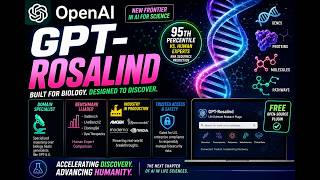
That caution tracks with what GPT-Rosalind is actually designed to do. OpenAI's own benchmark claims, cited independently by Decrypt, put the model's pass rate on BixBench at 0.751 and above the 95th percentile of human experts on best-of-ten sequence-prediction submissions [3]- genuinely sharp performance on tasks that sit close to genomic design and protein engineering, the same territory that makes biosecurity reviewers nervous. Framing the rollout as 'sponsored access' rather than 'free access' quietly signals that the free part is the seat, not the model - GPT-Rosalind remains gated no matter who is paying.