Google DeepMind's AlphaGenome Atlas
TECH

Google DeepMind's AlphaGenome Atlas

35+
Signals

Strategic Overview

  • 01.
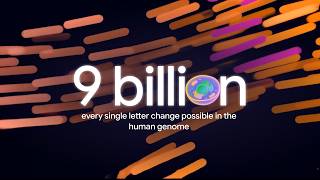
    AlphaGenome Atlas is a searchable database of predictions for the effects of all 9 billion possible single-nucleotide variants in the human genome, released by Google DeepMind on September 8, 2026.
  • 02.
    The resulting dataset is roughly 1 petabyte, more than 30 times larger than the AlphaFold Database.
  • 03.
    Each variant receives an AlphaGenome Variant Impact (AVI) score that combines AlphaGenome and AlphaMissense predictions, plus conservation and protein loss-of-function features, into a single number.
  • 04.
    An AVI score of 10 places a variant among the top 10% most impactful in the genome; a score of 30 places it among roughly the top 1 in 1,000.
  • 05.
    The Atlas is free for noncommercial academic use via a no-code web portal, API, and GitHub notebooks, with commercial access planned through Google Cloud though no price or date has been disclosed.
  • 06.
    The Atlas covers both the 2% of the genome that codes for protein and the 98% non-coding regulatory portion, and ships with a catalogue of more than 2,500 recurrent DNA motifs.

What's Actually Inside the Atlas

AlphaGenome Atlas is not a new model but a precomputed answer key: Google DeepMind ran its AlphaGenome model against all 9 billion possible single-letter substitutions in the human genome and stored the results in a roughly 1-petabyte database, more than 30 times the size of the AlphaFold Database[1]. Every variant gets an AlphaGenome Variant Impact (AVI) score, which folds AlphaGenome's regulatory predictions and AlphaMissense's protein-coding predictions - plus conservation and loss-of-function features - into a single number[1]. The score is designed to be intuitive: a variant scoring 10 sits in the top 10% most impactful in the genome, and a score of 30 places it among roughly the top 1 in 1,000[2]. Crucially, the Atlas does not stop at the 2% of the genome that codes for protein - it covers the 98% non-coding portion too, and ships with a catalogue of more than 2,500 recurrent DNA motifs that researchers can browse alongside the variant scores[3].

The Diagnostic Payoff: A Validated Case in Epilepsy

The clearest evidence the Atlas works beyond a demo came from the Broad Institute, where researchers used the AVI score to flag an overlooked deep intronic variant in the DNM1 gene, strongly linked to epileptic encephalopathy. AlphaGenome predicted the variant created an incorrect splice site that caused abnormal protein extension - a prediction later confirmed by experimental screens[1]. DeepMind reports that AVI scoring more than doubles researchers' ability to identify rare-disease-causing mutations compared to the field's previous standard tool[2]. The pattern held outside DeepMind's own case studies too: a University of Exeter researcher applied the Atlas to more than 54,000 UK Biobank whole genomes and found 22% more non-coding genetic associations than would otherwise have been detectable[3]. For DeepMind's VP of Science, this is the payoff of finally being able to interpret, not just read, the genome - as he put it, "we bought the book, but we did not understand how to read it"[4].

Free Today, Commercial Tomorrow

Access to the Atlas splits along a line likely to define its next phase. Today it's free for noncommercial academic use through a no-code website portal that DeepMind says requires zero coding skills, plus an API and notebooks on GitHub[5]. But DeepMind has also signaled a future commercial tier distributed through Google Cloud's Model Garden, with no price or timeline yet disclosed[7]. Fortune reported that Isomorphic Labs, DeepMind's own drug-discovery affiliate, is named as needing a commercial license to use AlphaGenome - underscoring that the free tier is bounded by use case, not by DeepMind's corporate structure[4]. One write-up on the coming commercial tier framed it plainly: "Google's genome map comes with a commercial tier later"[6]. That gap between a landmark resource opened for free research today and a paid enterprise product to follow is also fueling pushback in parts of the research and developer community discussing the launch, where some argue that ultimate control of the roadmap still sits with a for-profit company.

A Predictive Map, Not a Verdict

For all its scale, DeepMind's own team is candid about the difficulty of the underlying problem. Genomics Initiative Lead Žiga Avsec has said that when the project began, "it seemed impossible to do that computationally"[8]. Outside researchers are cautious about how the tool will be used in practice: University of British Columbia's Carl de Boer said the Atlas "has a clear use, but it also is probably going to be easily misinterpreted"[8]. That caution matters because uptake is already large - roughly 9,000 researchers have accessed AlphaGenome's predictions via API since the underlying model's 2025 release[9]- meaning any systematic misreading of AVI scores could spread quickly across many labs before the field settles on norms for using single-variant predictions responsibly.

Historical Context

2020-11
AlphaFold predicted 3D protein structures from amino acid sequences, recognized as solving the 50-year protein-folding problem.
2022
AlphaFold Database expanded; the Atlas dataset is now described as more than 30 times larger than the AlphaFold Database.
2023
AlphaMissense released, predicting pathogenicity for 71 million possible protein-altering variants.
2025-06-25
AlphaGenome model launched, predicting how DNA segments regulate gene expression.
2026-09-08
AlphaGenome Atlas launched publicly: a precomputed, searchable database of AVI scores and predictions for all 9 billion possible human single-nucleotide variants.

Power Map

Key Players
Subject

Google DeepMind's AlphaGenome Atlas

GO

Google DeepMind

Developer and publisher of the AlphaGenome model and the AlphaGenome Atlas database

GO

Google Cloud

Planned commercial distribution channel for AlphaGenome via Model Garden on the Gemini Enterprise Agent Platform

BR

Broad Institute (Laura Covill, Anne O'Donnell-Luria)

Used the AVI score to prioritize variants in unsolved rare-disease cases, identifying and validating the DNM1 epileptic encephalopathy variant

UN

University of Exeter (Gareth Hawkes)

Applied the Atlas to over 54,000 UK Biobank whole genomes, uncovering 22% more non-coding genetic associations

ST

Stowers Institute for Medical Research (Julia Zeitlinger, Melanie Weilert)

Used AlphaGenome to identify regulatory DNA motifs across cell types

IS

Isomorphic Labs

Named as requiring a commercial license to access AlphaGenome

EM

EMBL's European Bioinformatics Institute (Ewan Birney)

Commented on the Atlas's significance for genomic annotation

Fact Check

10 cited
  1. [1] AlphaGenome Atlas: A predictive map of every possible DNA letter change in the human genome
  2. [2] AlphaGenome Atlas Scores All 9 Billion DNA Mutations, Doubles Rare Disease Hit Rate
  3. [3] Google's map of every possible DNA typo could speed up rare disease research
  4. [4] Google DeepMind's AI predicts effects of 9 billion human genome mutations
  5. [5] Introducing AlphaGenome Atlas
  6. [6] Google's genome map comes with a commercial tier later
  7. [7] Google DeepMind Releases AlphaGenome Atlas With Precomputed Molecular Effect Predictions and AVI Scores for 9 Billion Human DNA Variants
  8. [8] AlphaGenome Atlas
  9. [9] DeepMind's new genome 'atlas' charts effects of all nine billion human gene mutations
  10. [10] google-deepmind/alphagenome

Source Articles

Top 5

THE SIGNAL.

Analysts

Frames the Atlas as finally unlocking functional interpretation of the genome after decades of having only the raw sequence: "we bought the book, but we did not understand how to read it."

Pushmeet Kohli, VP of Science, Google DeepMind
DeepMind leadership

Acknowledges the project's computational difficulty: "When we started thinking about this project, it seemed impossible to do that computationally."

Žiga Avsec, Genomics Initiative Lead, Google DeepMind
DeepMind researcher

Sees clear scientific value but warns the tool is likely to be misinterpreted by non-experts: "It has a clear use, but it also is probably going to be easily misinterpreted."

Carl de Boer, University of British Columbia
Independent academic assessment

Notes gene regulation is hard to study because different cell types behave differently, and the Atlas allows rapid cross-cell-type querying: "With AlphaGenome, we can quickly query many cell types and look for general patterns by which genes are activated and repressed."

Julia Zeitlinger, Stowers Institute
External academic user
The Crowd

With AlphaFold we mapped the protein universe - now with AlphaGenome Atlas we're charting the human genome. It can predict the impact of all 9 billion possible single-letter DNA variants, helping scientists better understand disease. Freely available for academic research:

@@demishassabis9230

We're launching AlphaGenome Atlas: an AI-powered searchable database mapping the predicted impact of all 9 billion possible single-letter DNA changes. Here's how it could help researchers better understand our biology

@@GoogleDeepMind4508

Today we're introducing AlphaGenome Atlas from @GoogleDeepMind: the most comprehensive catalog of how genetic mutations affect molecular biology. It's an AI-powered searchable database that maps the predicted impact of all 9 billion single-letter genetic changes

@@Google815

SITUATION DETECTED: Google DeepMind announced AlphaGenome Atlas, a 1-petabyte map of predicted molecular effects for all 9 billion possible single-letter DNA changes in the human genome.

@u/stealthispost444
Broadcast
AlphaGenome Atlas: Understanding the human genome

AlphaGenome Atlas: Understanding the human genome

AlphaGenome author roundtable

AlphaGenome author roundtable

Accelerating genomic discovery: AlphaGenome Atlas

Accelerating genomic discovery: AlphaGenome Atlas