A Lung Drug That Accidentally Rewrote Its Own Aging Clock
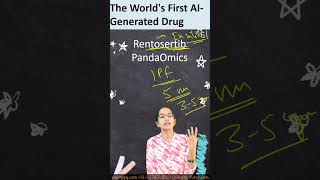
Rentosertib wasn't designed to fight aging - it was built as a TNIK inhibitor for idiopathic pulmonary fibrosis, discovered end-to-end by Insilico Medicine's Pharma.AI platform, which paired its PandaOmics target-identification engine with its Chemistry42 molecule generator [1]. During the original Phase IIa trial, researchers tracked the intended endpoint - lung function - and found meaningful improvement in the 60 mg once-daily arm, a mean forced-vital-capacity gain of +98.4 mL over 12 weeks versus a -20.3 mL decline on placebo [2]. A secondary analysis of the same trial's proteomic data, drawn from 42 of the original 71 patients and scored by six independently built proteomic aging clocks, then found that rentosertib reduced predicted biological age, peaking at roughly 2.7 to 3.5 years younger (as much as 6 years by one clock) after four weeks in the 30 mg twice-daily arm [3]. The overlap isn't coincidental. Insilico's Feng Ren has argued that IPF is 'one of the clearest clinical examples of an age-related disease in which fibrosis, chronic inflammation, extracellular matrix remodeling and cellular senescence intersect' [2]. Because TNIK sits at that intersection, a drug built to slow scarring in one organ ended up functioning as an inadvertent stress test of whether aging itself responds to disease-adjacent biology - a narrower and more testable question than 'can a drug reverse aging,' but a genuinely new data point on it.