The Real Product Isn't the Scanner — It's the Reconstruction
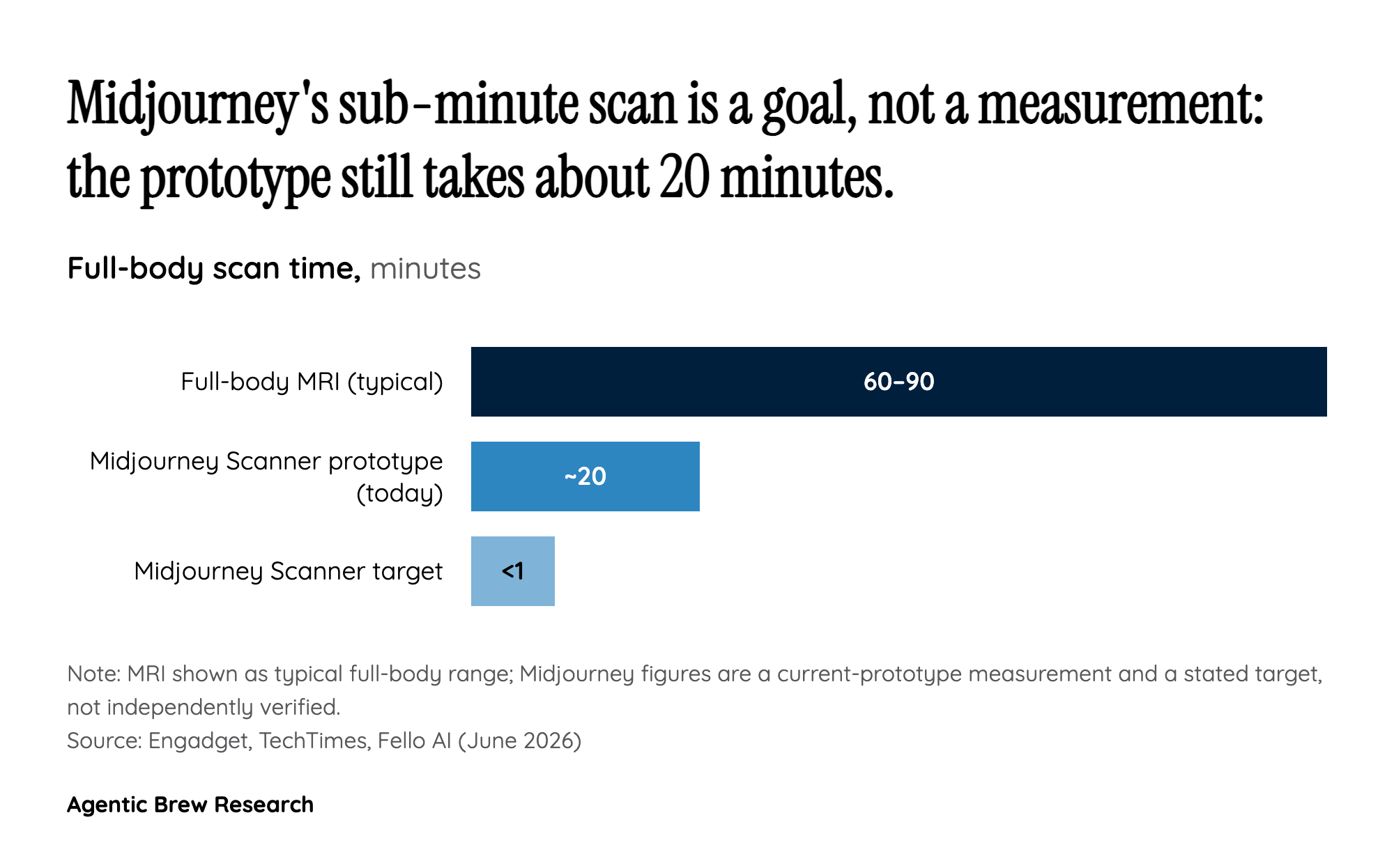
Strip away the spa imagery and the Midjourney Scanner is a bet on one specific hard problem: turning chaotic acoustic echoes into a clean three-dimensional picture of the human body. Ultrasonic tomography fires sound through tissue from every angle and records what scatters back; the raw signal is effectively noise, and reconstructing organs and muscle from it is a brutal inverse problem that has stalled previous attempts for years. Founder David Holz framed the device as the first genuinely new whole-body imaging method in roughly fifty years [2], and the pitch implicitly leans on Midjourney's core competence — generating a coherent image from ambiguous input.
Here is the twist almost every breathless thread missed: the shipping prototype reportedly uses no AI at all. Holz told reporters the system is 'just really cool hardware and software' so far, with the machine-learning layer still to come [1]. That single admission reframes the story. The 'AI image company builds AI scanner' narrative is, for now, marketing; what exists today is a dense sensor array and a conventional reconstruction stack. The genuinely interesting question is not whether Midjourney can image a body — it is whether its generative-model expertise will eventually let it reconstruct sharper anatomy from sparser, faster, cheaper scans than physics-based methods allow. That is the actual moat, and it has not been tested yet.