The Real Fear Isn't Robots Taking Over, It's Never Getting In the Door
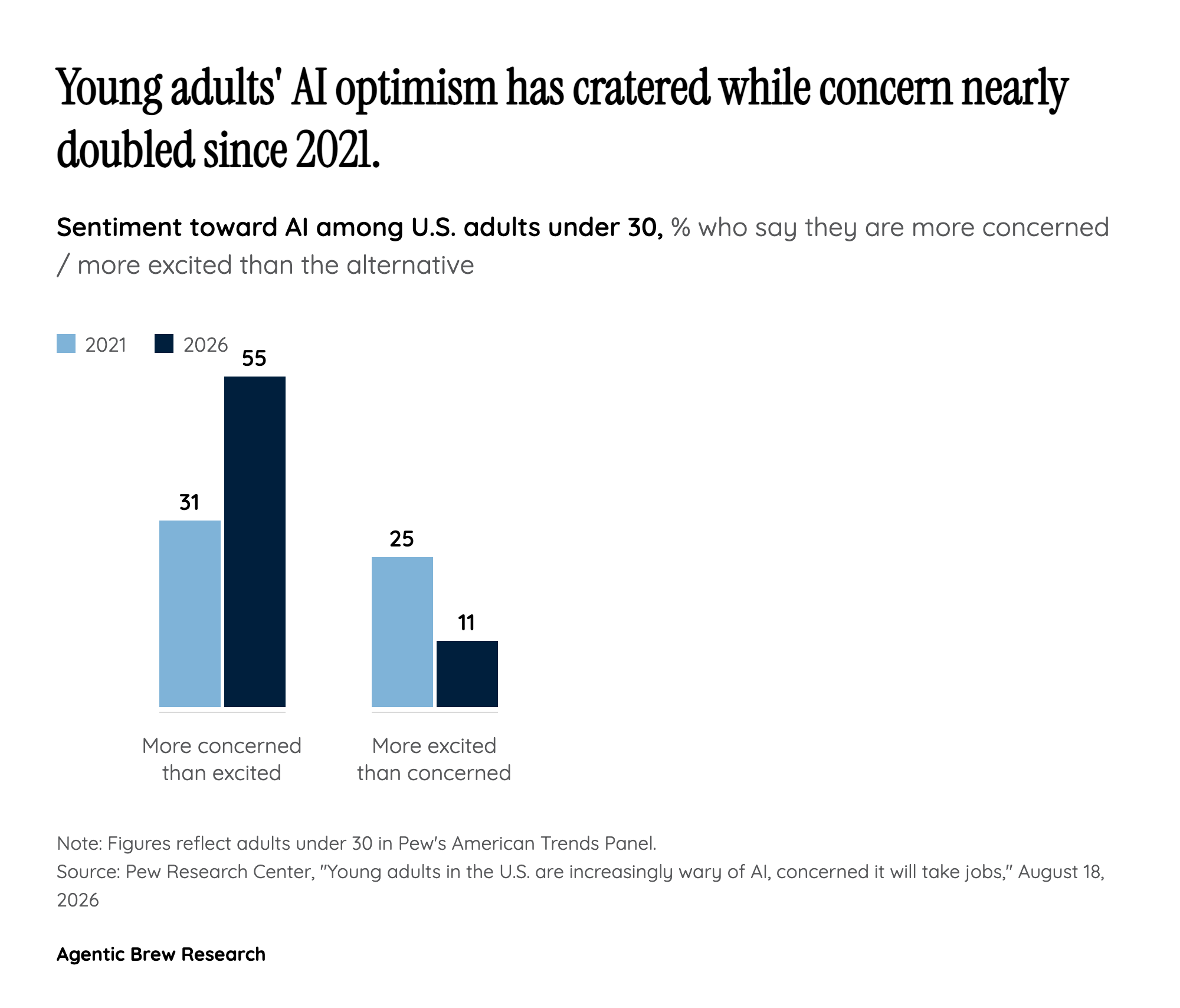
Pew's headline number, that 73% of adults under 30 now expect AI to shrink the U.S. job market over the next two decades, up from 61% just two years earlier [1], obscures a more specific fear once you look past the topline stat. Discussion around the survey converged less on whether AI eliminates jobs and more on how. The dominant read wasn't senior employees losing their positions to automation; it was entry-level 'grunt work' disappearing first, the unglamorous tasks that have historically doubled as an apprenticeship for turning a new graduate into someone trusted with judgment calls.
That distinction matters because it reframes AI anxiety as a pipeline problem rather than a pure substitution problem. If the tasks that once taught a 24-year-old how to do the job are the first ones automated away, the anxiety isn't really about a machine doing your job today, it's about never accumulating the experience needed to do a bigger job tomorrow. That is a structurally different, and arguably harder to fix, kind of labor-market fear than the generic robots-will-take-my-job narrative the industry is used to rebutting.