The bond market started warning long before Wall Street noticed
Months before CoreWeave's stock cratered, credit-market watchers were already flagging the risk. In July, CNBC's Jim Cramer warned that AI's web of circular financing arrangements - where chip suppliers effectively fund their own customers' data-center buildouts - echoed patterns from the dot-com bust [1]. By late September, CNBC reported that debt-hungry data-center operators faced rising risk as bond yields began to spike [2], and within days Bloomberg noted the broader AI selloff was already weighing on emerging-market stocks and currencies [3]. The IMF's October Global Financial Stability Report went further, naming a potential AI asset-price crash as one of three salient risks to the entire financial system [4].
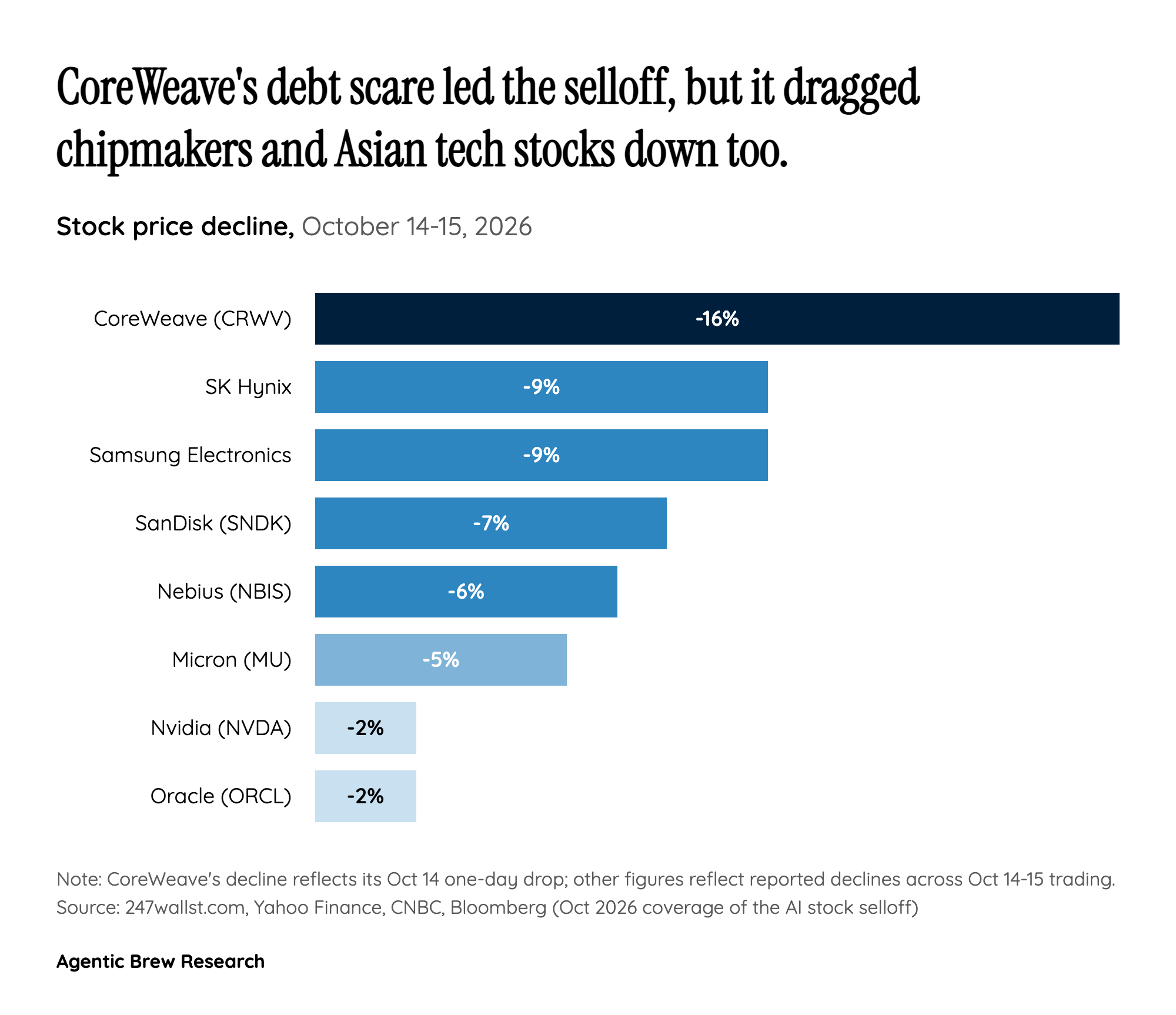
That slow build turned sudden on October 14, when CoreWeave's five-year credit-default-swap spread - which had sat at 368 basis points on October 6 - blew out to 643 basis points within the week, and its unsecured bonds due 2032 sank below 80 cents on the dollar, pushing yields above 15% from roughly 9% over the summer [5]. CoreWeave CEO Mike Intrator pushed back hard, telling Bloomberg the market was acting "irrationally" given the company's business fundamentals [6]. But the credit market had been telegraphing this exact concern - too much debt chasing AI infrastructure buildouts - for nearly three months. The surprise on October 14 wasn't the direction of the move; it was that equity investors had mostly ignored it until the bond market made it impossible to.