
Shift cleaning NYC apartments free to film robot training data
TECH

Shift cleaning NYC apartments free to film robot training data

35+
Signals

Strategic Overview

  • 01.
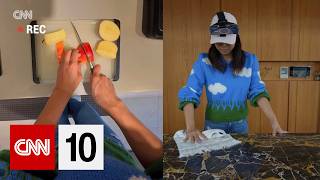
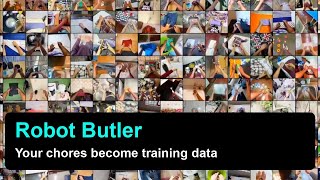
    Shift launched a free home cleaning service in New York City where vetted operators wear head-mounted cameras to record first-person video of every chore, which the company then licenses as training data for household robots.
  • 02.
    The service covers laundry folding, dishwashing, bathroom and kitchen scrubbing, fridge organization, mopping, and decluttering, with Shift explicitly telling customers that messier homes are more valuable to its training pipeline.
  • 03.
    Shift has signaled plans to extend the free-service-for-footage model to handymen, repairs, and errands as it expands to San Francisco, London, Zurich, and Munich.
  • 04.
    The launch lands inside a wider gig economy already paying workers in Los Angeles, India, Nigeria, and Argentina to film household chores for buyers like Tesla, Figure AI, and Agility Robotics.

Deep Analysis

The economic flip: a kitchen-floor video is now worth more than the kitchen-floor labor

Shift's pitch only makes sense if you accept a strange new equation: the first-person video of a cleaner mopping a floor is now worth more, per hour, than the cleaning itself. The company is openly telling New Yorkers that it will cover the entire cost of a vetted professional cleaner in exchange for the footage that cleaner records while working [1]. That is not a marketing subsidy or a loss-leader trial — Shift is wagering that a single hour of egocentric household video can be licensed for more than the going rate of an hour of NYC apartment cleaning.

The market data supports the bet. Robotics buyers spent more than six billion dollars on humanoid systems in 2025, with Micro1 estimating that more than 100 million dollars a year is now being spent on real-world data alone [2]. Micro1's own ~4,000 'robotics generalists' across 71 countries already produce over 160,000 hours of training video per month at $15 per hour, and Scale AI has assembled more than 100,000 hours of household footage on its own [2][3]. Nvidia's internal experiments add the punchline: adding 20,000 hours of first-person video lifted humanoid task success rates by more than 50 percent [3]. When marginal hours of footage move benchmark numbers that much, paying a professional NYC cleaner to wear a camera stops looking like generosity and starts looking like procurement.
The messy-home premium and the privacy geometry that comes with it

Shift is unusually candid about what it actually wants: not staged cleanings of show-home apartments but the cluttered, idiosyncratic, mid-life mess that humanoids will eventually have to navigate. Its public messaging tells customers that 'more challenging cleaning environments can be especially useful,' which inverts every prior incentive in the home-services market [4]. Roboticists collecting earlier datasets have made the same point about geographic realism — Objectways founder Ravi Rajalingam notes that an Indian kitchen, and even an Indian broomstick, look nothing like their U.S. counterparts [3]. The implication is that the most valuable footage is exactly the footage homeowners would normally be most embarrassed to share.

That appetite for mess collides with a privacy geometry the press releases gloss over. A camera-equipped cleaner doesn't just film the dishes; they film the bedroom floor on the way to the laundry, the bathroom counter, the prescriptions on the kitchen island, the unopened mail, the children's drawings, the laptop screen left awake. Shift says faces are blurred, but blurring faces is a narrow privacy guarantee in a wide-aperture data product [4]. And because the operator wears the camera, the consent burden gets pushed from a corporate UX flow down to whatever conversation happens at the door — the cleaner becomes the interface, and any ambiguity falls on them rather than on Shift.

Why messy real-world data is now the moat — and why synthetic alternatives are not catching up fast enough

There is a reason robotics labs are paying gig workers in Nigeria, Argentina, and now Manhattan instead of just simulating chores on a GPU. Real household scenes contain a long tail of friction — a sticky cabinet handle, a stuck dishwasher rail, a broom that needs an unusual grip — that simulators have not learned to generate convincingly. Labellerr's Puneet Jindal calls prioritizing real human demonstration data a no-brainer for at least the next three years, and Micro1's Arian Sadeghi puts the total demand at 'probably billions of hours,' arguing the field has not even started capturing the human-to-human interactions household robots will eventually need [3].

That thesis is what turns Shift from a quirky NYC giveaway into a strategic play. By owning the operator, the camera, and the customer relationship, Shift can collect data with a level of routine and coverage that gig-style platforms like Micro1, Sunain, and DoorDash Tasks cannot easily match [2][5]. Its planned expansion to San Francisco, London, Zurich, and Munich — and its stated intent to add handymen, repairs, and errands to the program — is the natural next move: lock in a service-for-data swap in the cities and verticals where the highest-paying robotics buyers are watching [1].

Filming your own replacement: the labor displacement loop nobody wants to name

Shift's NYC launch landed inside a public conversation that has been visibly turning sour for months. When Bercan, Shift's founder, told reporters the company is 'bridging the economy of today into the AI economy where all services, goods, and leisure will be affordable,' the official launch tweet drew unusually high engagement but with sentiment skewing meaningfully negative and replies running well above the typical ratio [6]. The dominant frame across social platforms — extending to coverage of similar service-for-data startups in the category — was that workers are effectively being paid (or, in Shift's case, not paid) to record their own replacements, with users frequently citing Vonnegut's Player Piano and pointing out that workers in upstream data pipelines are producing footage that may eventually help eliminate their own jobs.

It is worth taking that critique seriously rather than dismissing it as Luddism. The structure of these programs really is recursive: the cleaner wears the camera so the robot can learn the cleaning. Even in the most optimistic scenario for the workers — Shift covers their full hourly rate and treats the footage as bonus margin — the long-run product is a system designed to make their role optional. None of this means Shift is acting in bad faith; it does mean the program lives at the intersection of three difficult questions about labor consent, customer consent, and the durability of any short-term economic arrangement built on top of a longer-term automation thesis.

The reality check: even with all this footage, humanoids still can't fold a T-shirt reliably

It is tempting to read Shift's launch as a sign that household robots are about to arrive. The harder evidence says otherwise. Current humanoid systems sit around 70 to 80 percent task success on home chores like folding T-shirts, against the roughly 99.9 percent reliability that industrial customers expect [3]. UC Berkeley roboticist Ken Goldberg has been blunt about the timeline gap, warning that getting humanoids to perform reliable home tasks 'is going to take longer than people think' [2]. The International Federation of Robotics' Alexander Verl puts the same number in industrial language: a 70-to-80 percent success rate is 'really not something that our industry partners want to use' [3].

That reliability gap is exactly why footage is suddenly precious — and exactly why a single startup's data flywheel cannot finish the job. The broader data collection and labeling industry is projected to reach 10 billion dollars by 2030 at roughly 30 percent annual growth, a curve that assumes years of compounding investment, not a single dataset that unlocks home robotics [3]. The right way to read Shift is therefore narrower than the headline: not 'household robots are here' but 'the per-hour value of egocentric chore footage has crossed the line where it can subsidize professional services in major cities.' That is genuinely new, and it is enough to redraw a few business models without yet redrawing the home.

Historical Context

2026-03-01
DoorDash launched a standalone app paying its 8 million U.S. couriers to film themselves doing chores at home for humanoid-robot training.
2026-03-19
Los Angeles startup began paying residents up to $80 for two hours of head and wrist camera footage of household chores.
2026-04-01
MIT Technology Review documented gig workers in Nigeria, India, and Argentina filming chores at roughly $15 an hour for Micro1, which supplies data to Tesla, Figure AI, and Agility Robotics.
2026-04-04
CNN profiled the global rush to film household chores for humanoid robots and cited Nvidia evidence that 20,000 hours of first-person video lifted task success rates by more than 50 percent.
2026-04-23
Alibaba and ByteDance backed X Square unveiled a home-robot foundation model that emphasizes real, non-staged household environments as a competitive edge.
2026-05-29
Shift opened free NYC cleanings in exchange for first-person camera footage, becoming the first widely covered consumer-facing service-for-data swap in U.S. household robotics.

Power Map

Key Players
Subject

Shift cleaning NYC apartments free to film robot training data

SH

Shift

AI training-data startup running the free NYC cleaning program; owns and licenses the captured first-person footage, controls the privacy blurring pipeline, and decides which customers and homes get filmed.

BE

Bercan

Shift founder pitching the model as a bridge between the current labor economy and an AI-powered service economy where Shift sets the terms of that transition.

PR

Professional cleaners on Shift's roster

Workers wearing camera caps inside customer homes; bear the practical burden of explaining consent room-by-room while producing the data asset Shift sells.

NY

NYC apartment customers

Trade visual access to bedrooms, bathrooms, kitchens, and whatever paperwork is on the counter in exchange for free professional cleaning.

HU

Humanoid robotics buyers (Tesla, Figure AI, Agility Robotics)

Downstream customers paying for egocentric household footage; their demand sets the price that makes free cleaning economically viable.

CO

Competing data vendors (Micro1, Sunain, Scale AI, DoorDash Tasks)

Already paying gig workers $15/hour or less to film chores; Shift's free-cleaning twist is a new customer-acquisition tactic inside the same market.

Fact Check

6 cited
  1. [1] Shift will clean your house for free — to train AI
  2. [2] Inside the gig economy training humanoid robots
  3. [3] How filming your chores could train the android butlers of the future
  4. [4] This startup wants to clean your dirty dishes and clutter to help train AI
  5. [5] People Are Wearing Cameras While Cleaning to Teach AI
  6. [6] Shift's free-cleaning-for-data offer draws sharp public reaction

Source Articles

Top 3

THE SIGNAL.

Analysts

"Frames the free-cleaning offer as the on-ramp into a future where data, not labor, pays for everyday services."

Bercan
Founder, Shift

"Says demand for first-person household training footage from robotics buyers is accelerating quickly, validating the price points Shift is implicitly betting on."

Ali Ansari
CEO, Micro1

"Argues the field needs probably billions of hours of egocentric footage and has not even begun to capture human-to-human interactions, implying years of runway for services like Shift."

Arian Sadeghi
VP of Robotics Data, Micro1

"Calls prioritizing real human demonstration data a no-brainer for at least the next three years, which is the window Shift needs to monetize before synthetic data catches up."

Puneet Jindal
Co-founder, Labellerr AI

"Warns that getting humanoids to reliably perform home tasks will take longer than current enthusiasm suggests, which complicates Shift's pitch that buyers will be ready customers tomorrow."

Ken Goldberg
Roboticist, UC Berkeley

"Notes that 70 to 80 percent task success is far below the reliability industrial customers will accept, raising the bar for how much footage Shift actually needs to deliver."

Alexander Verl
Chairman of Research, International Federation of Robotics
The Crowd

"Today, we're launching shift. We're starting by cleaning your apartment in New York City, for free. Here's how it works. Book a shift cleaning. A vetted shift operator comes to your home wearing one of our devices. They clean. They leave. You pay nothing. In exchange, we record"

@@joinshiftX3791

"More and more workers in India are collecting video data to train humanoid robots using head-mounted cameras"

@u/Distinct-Question-161800

"Gig workers are getting paid to film their daily chores to train robots | Teaching robots how to be human"

@u/[deleted]369

"Would you up-charge because the company is using you to train their robots while you clean?"

@u/Typical_Anywhere_8230
Broadcast
How filming chores is training robot housekeepers | May 5, 2026

How filming chores is training robot housekeepers | May 5, 2026

Robot Butler: How Filming Chores Trains Future Androids

Robot Butler: How Filming Chores Trains Future Androids

Shift, an AI data platform, launches in NYC with free home clean… — and more by RuntimeWire (May 28)

Shift, an AI data platform, launches in NYC with free home clean… — and more by RuntimeWire (May 28)