The Bottleneck Moved From the Chip to the Glass Around It
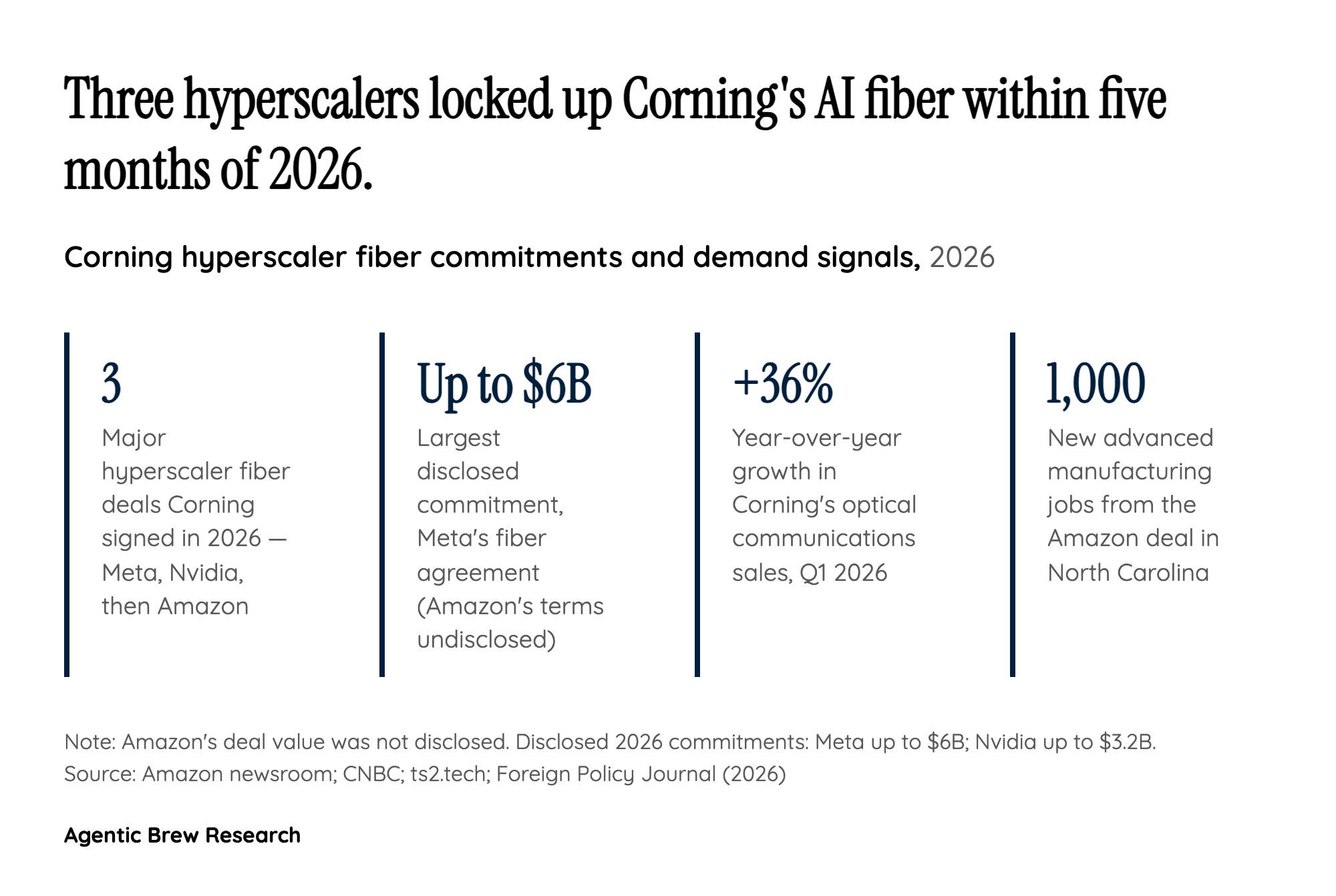
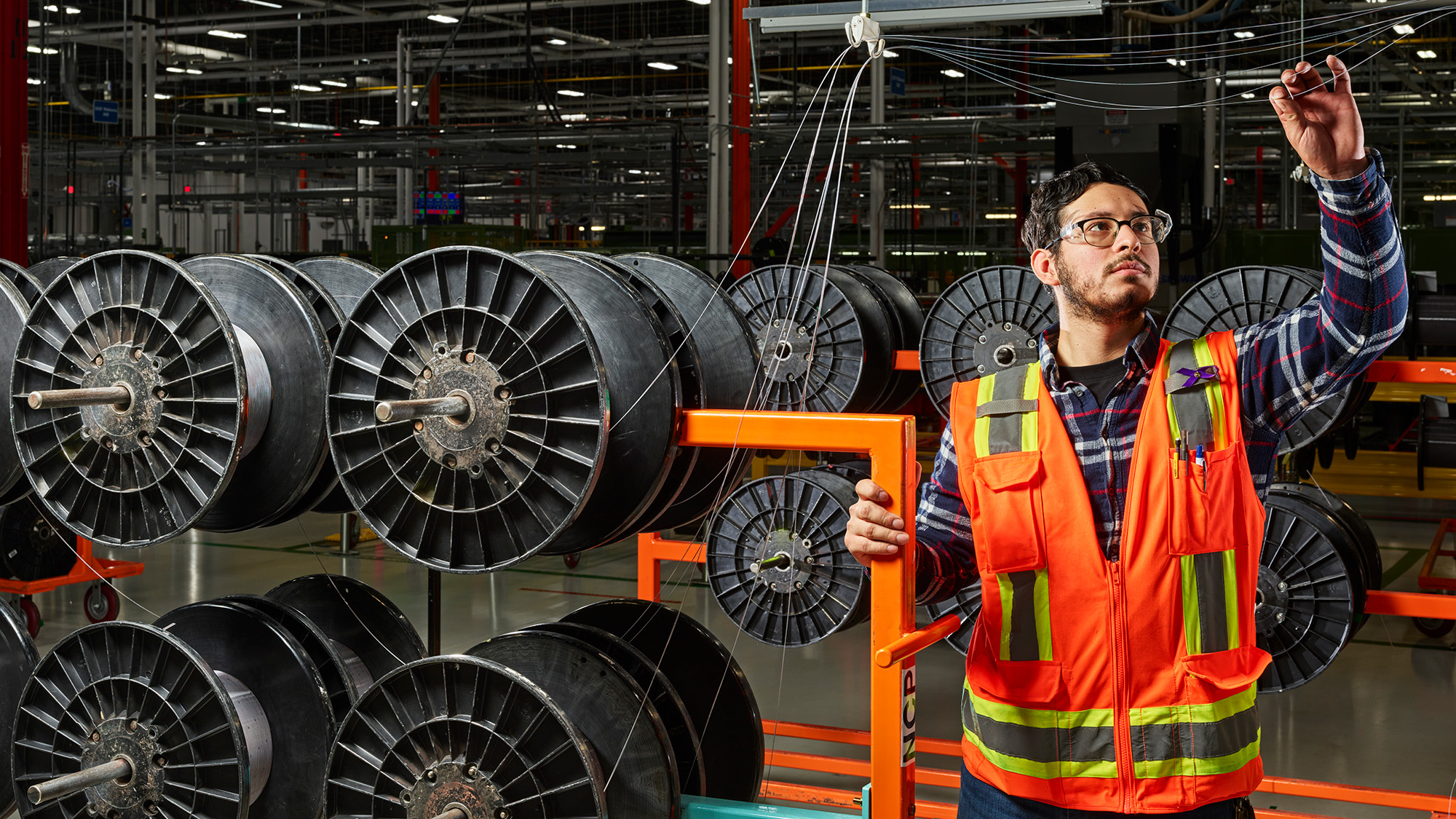
For three years the story of AI infrastructure was GPUs: who could buy the most Nvidia silicon. The Amazon–Corning deal is a signpost that the binding constraint has quietly shifted to what connects those chips together. An AI training cluster is not one giant computer; it is tens of thousands of GPUs that have to behave like one, exchanging gradients constantly. The faster and farther they can talk, the bigger the model you can train. Copper wiring, the default for decades, loses signal and burns power over distance — past a few meters it simply can't keep up with the bandwidth these clusters demand. Optical fiber carries far more data over distance with less loss and less power, which is why it has become the standard interconnect for AI clusters and why demand has outstripped supply [5].
The sharper version of this is co-packaged optics, or CPO — the technical angle the industry crowd keeps circling back to. Instead of running electrical signals out of a chip to a separate transceiver and then converting to light, CPO puts the optical engine right next to the compute silicon, so the signal becomes light almost as soon as it leaves the processor. In rack-scale systems that can replace on the order of 5,000 copper cables with glass fiber, cutting the energy a data center burns just shuffling bits between chips [6]. Corning's bet — and now Amazon's, Meta's, and Nvidia's — is that the next leg of AI scaling is gated less by how many transistors you can etch and more by how much light you can move through glass.