Fields Medalists' declaration against AI math benchmarking, sparked by OpenAI's Navier-Stokes claim
TECH

Fields Medalists' declaration against AI math benchmarking, sparked by OpenAI's Navier-Stokes claim

31+
Signals

Strategic Overview

  • 01.
    Twenty-five Fields Medal winners, including Terence Tao, Peter Scholze, and Cédric Villani, signed a declaration titled 'A Severe Misalignment of AI in Mathematics,' published September 11, 2026 on mathandai.org and on Tao's blog.
  • 02.
    The declaration argues that problem-solving is only a tool and proxy for the real goal of conceptual understanding, and warns that AI benchmark-chasing risks inverting that relationship and creating severe attribution and plagiarism questions.
  • 03.
    The statement was directly triggered by OpenAI's September 8, 2026 claim that an unreleased internal model coordinated roughly 10,000 agents over 88 hours, exchanging nearly 5 million messages, to produce a Navier-Stokes proof later formalized in Lean.
  • 04.
    The announcement collided with a competing proof from mathematicians Tristan Buckmaster and Levent Alpoge, posted roughly 12 hours earlier on a simplified version of the problem, igniting a credit dispute with OpenAI's Sebastien Bubeck.

Deep Analysis

The Real Complaint Isn't AI Solving Math, It's AI Skipping the Part That Makes Math Mean Anything

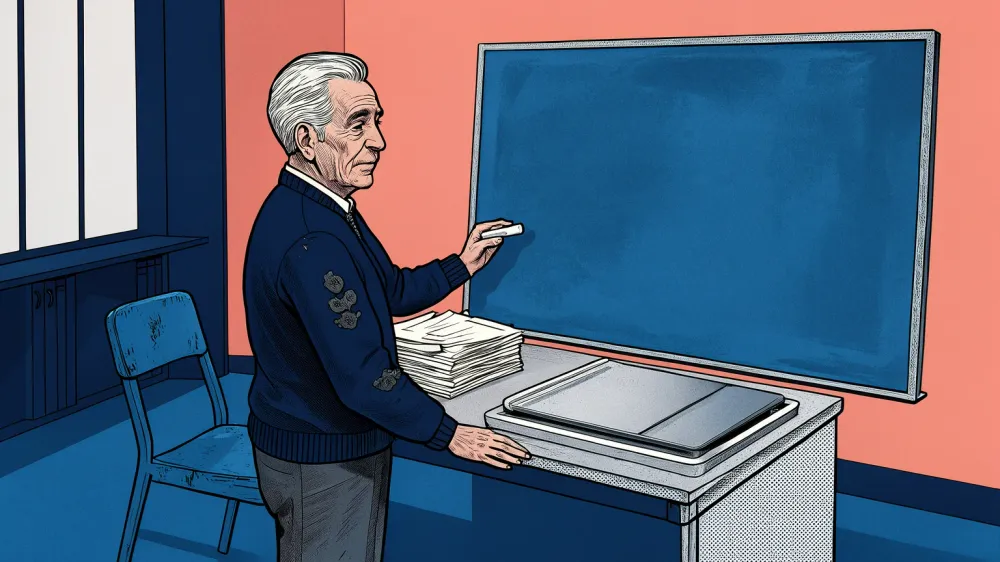
The declaration's title, 'A Severe Misalignment of AI in Mathematics' [6], borrows deliberately from AI's own vocabulary. Its central claim is that solving problems is only a tool and proxy for achieving the primary goal of conceptual understanding and insight, and that forgetting this in the world of AI may turn the tool against the primary goal [7]. That is a narrower complaint than it first sounds: the signatories explicitly do not call for a ban and concede AI could genuinely accelerate mathematical work [1]. What they are objecting to is a specific pathology of rushed, benchmark-first announcements, namely that compressing the traditional writeup-and-review cycle into days leaves too little time for proper citation, creating what the declaration calls severe attribution and plagiarism questions [1]. Tao has made the same point in starker terms outside the formal declaration, warning that treating famous open problems as capability targets to strip-mine risks hollowing out the pipeline that trains the next generation of mathematicians [3], and separately that indiscriminate AI use could reduce the field to a meaningless production quota game [2].

How a Credit Dispute Became the Test Case: Inside the Buckmaster-Alpoge Standoff

The declaration did not emerge from an abstract worry; it followed a concrete flashpoint. Roughly 12 hours before OpenAI's announcement, Tristan Buckmaster and Levent Alpoge posted their own proof addressing a simplified version of the blow-up problem [5]. Buckmaster says he asked OpenAI directly whether its model had been trained on or had access to the pair's private Codex sessions, where they had been storing every draft of the project, and says he never got a clear answer [3]. He has alleged OpenAI offered him a choice between posting his result with OpenAI publishing its own the next day, or writing up his result while crediting an OpenAI model and sharing Millennium Prize recognition, but explicitly excluding Alpoge as co-author because Alpoge works at Anthropic [4]. Sebastien Bubeck initially denied any access to their unpublished work, stating that neither the researchers nor the agents saw it before public release [3], and OpenAI's Chief Research Officer Mark Chen separately denied that any agents or employees accessed the pair's transcripts [4]. Bubeck later walked the dispute back partway, issuing a statement recognizing Alpoge and Buckmaster's priority on the related result [3]. That reversal, without a full account of how the initial denial and the later concession fit together, is exactly the kind of unresolved provenance question the Fields Medalists say benchmark-driven speed makes worse, not better.

Lean-Checked Isn't the Same as Confirmed: Why 88 Hours of Compute Doesn't End the Argument

OpenAI's proof was checked in the Lean proof-assistant language, which gives mathematicians confidence it is logically self-consistent [2], but that formal check only confirms the Lean statement is internally valid, not that it faithfully captures the Navier-Stokes existence-and-smoothness problem the Clay Institute actually posed [2]. Human verification of that mapping is still required, and it is exactly the kind of slow, deliberate work the declaration says gets squeezed out when a result is announced within days of being generated by roughly 10,000 agents exchanging almost 5 million messages over 88 hours, plus another 17 hours of formalization [2]. Bubeck put the compute cost of the whole effort at several million dollars [2], underscoring how much institutional weight now sits behind a claim the community has not yet had time to independently absorb. Even mathematicians who welcomed the underlying result, such as Charles Fefferman, have been careful to route credit for the core mathematical idea to specific human researchers rather than to the AI process itself [2], which is precisely the attribution instinct the declaration is trying to protect.

The Community Is Not United, and the Fault Lines Are Predictable

Reaction to the declaration has split along familiar lines rather than converging into consensus. On mathematics- and technology-focused forums, commenters, many identifying as mathematicians or educators, have largely validated the Fields Medalists' process-over-end-result argument and criticized OpenAI for prioritizing marketing over understanding, while more AI-accelerationist communities have dismissed the letter as self-interested job protection, with a smaller contingent conceding the underlying concern is reasonable. Institutional voices have amplified individual signatories' framing of this as a genuine credibility and attribution issue rather than reflexive resistance to AI. Independent observers have gone as far as compiling which of the world's living Fields Medalists did and did not sign, treating the roster itself as a signal of how seriously the mathematics establishment is taking the episode. The through-line across the split is less about whether AI can eventually contribute to mathematics, which almost no one disputes, and more about whether the current benchmark-chasing incentive structure inside AI labs is compatible with how credit, verification, and understanding have traditionally been built in the field.

Historical Context

2000
Selected the seven Millennium Prize Problems, including Navier-Stokes existence and smoothness, each carrying a $1 million prize.
2026-09-08
Posted their own proof addressing a simplified version of the blow-up problem roughly 12 hours before OpenAI's announcement, setting up the priority dispute.
2026-09-08
Announced that an unreleased internal model and roughly 10,000 agents produced a Navier-Stokes proof after 88 hours, later formalized in Lean over an additional 17 hours.
2026-09-11
Published 'A Severe Misalignment of AI in Mathematics' on mathandai.org and Terence Tao's blog in direct response to the Navier-Stokes controversy.

Power Map

Key Players
Subject

Fields Medalists' declaration against AI math benchmarking, sparked by OpenAI's Navier-Stokes claim

TE

Terence Tao (UCLA, Fields Medalist)

Lead signatory who published the declaration on his blog and separately warned that indiscriminate AI use risks turning mathematics into a production quota game.

OP

OpenAI

Announced on September 8, 2026 that an unreleased internal model and roughly 10,000 parallel agents produced a disputed Navier-Stokes proof, and is contesting credit allegations from Buckmaster.

SE

Sebastien Bubeck (OpenAI researcher)

Publicly represented OpenAI's math effort, denied the model had accessed Buckmaster and Alpoge's private work, later acknowledged their priority, and estimated the project's compute cost at several million dollars.

TR

Tristan Buckmaster (NYU Courant Institute)

Co-author of a competing proof on a simplified version of the problem; publicly questioned whether OpenAI's model had access to his and Alpoge's private Codex drafts and objected to OpenAI's proposed authorship arrangement.

LE

Levent Alpoge (Anthropic)

Co-author with Buckmaster of the competing proof; allegedly excluded from OpenAI's proposed shared-credit arrangement because of his Anthropic affiliation.

Fact Check

7 cited
  1. [1] 25 Fields Medalists Say AI Labs' Race to Solve Math Problems Is Harming Mathematics
  2. [2] AI Has Solved One of Math's $1 Million Millennium Prize Problems
  3. [3] OpenAI Says It Cracked the Navier-Stokes Math Grand Challenge, But Buckmaster Accuses It of Cheating and Intimidation While Tao Laments the Fallout
  4. [4] What OpenAI's Latest Controversy Tells Us About the Future of Math
  5. [5] Navier-Stokes Priority Controversy
  6. [6] A Severe Misalignment of AI in Mathematics
  7. [7] Fields Medalists' AI Math Declaration: What It Says About OpenAI's Navier-Stokes Claim

Source Articles

Top 5

THE SIGNAL.

Analysts

Warns that unchecked, benchmark-driven claims on open problems threaten the ecosystem that trains future mathematicians and could contaminate how the community verifies major results.

Terence Tao
UCLA mathematician, Fields Medalist, lead signatory

Maintains OpenAI's agents worked independently of Buckmaster and Alpoge's private materials, while later acknowledging their priority on the related result.

Sebastien Bubeck
OpenAI researcher who led the math-agent effort

Frames the episode as a watershed human-versus-machine moment for mathematics, with troubling implications for training, credit, and refereeing norms.

Tristan Buckmaster
Mathematician, NYU Courant Institute

Describes the mathematics community as caught off guard, in the middle of urgent, live debate over the announcement's implications.

Luis Silvestre
Mathematician, University of Chicago
The Crowd

AI is ravenous and is eating mathematicians' lunch. A long-standing problem is solved, others are in its sights. But is this more than just a problem about problems? Here's Fields Medallist James Maynard. Read the Fields Medallists' Declaration: https://t.co/zANc8nmMcb https://t.co/woFHCzOs7a

@@OxUniMaths1000

Two mathematicians are accusing OpenAI of lifting their unpublished work on one of math's hardest unsolved problems. Tristan Buckmaster, an NYU math professor, and Levent Alpoge spent about a month working with AI models, mainly Codex, on finite time blow up results for the

@@AGTPinsights49

A table of all living Fields Medalists, and whether or not they signed the AI declaration.

@@ciyer197

Open letter from 25 Fields medalists: A Severe Misalignment of AI in Mathematics

@u/NotaValgrinder903
Broadcast
25(!) Fields Medalists co-author "A Severe Misalignment of AI in Mathematics"

25(!) Fields Medalists co-author "A Severe Misalignment of AI in Mathematics"

Allegations that OpenAI stole a Navier-Stokes solution?? Infinite drama blowup in finite time!

Allegations that OpenAI stole a Navier-Stokes solution?? Infinite drama blowup in finite time!

Controversy behind OpenAI Solving Navier Stokes Equation

Controversy behind OpenAI Solving Navier Stokes Equation