OpenAI Proposes Robot Taxes, Public Wealth Funds, and a Four-Day Workweek
TECH

OpenAI Proposes Robot Taxes, Public Wealth Funds, and a Four-Day Workweek

46+
Signals

Strategic Overview

  • 01.
    OpenAI released a 13-page policy document titled 'Industrial Policy for the Intelligence Age: Ideas to Keep People First' on April 6, 2026, containing over two dozen policy recommendations including robot taxes, a Public Wealth Fund, a 32-hour workweek with no pay cuts, and automatic safety net triggers tied to economic displacement data. CEO Sam Altman framed the proposals as a new social contract comparable to FDR's New Deal, stating that 'AI superintelligence is so close and so disruptive that America needs a new social contract on the scale of the New Deal.'
  • 02.
    The blueprint proposes shifting the tax burden from labor to capital, with OpenAI stating that 'policymakers could rebalance the tax base by increasing reliance on capital-based revenues — such as higher taxes on capital gains at the top, corporate income, or targeted measures on sustained AI-driven returns.' It also calls for a Public Wealth Fund where governments and AI companies contribute to a nationally managed fund that 'could invest in diversified, long-term assets that capture growth in both AI companies and the broader set of firms adopting and deploying AI.'
  • 03.
    Critics have sharply questioned OpenAI's credibility on policy reform. Anton Leicht of the Carnegie Endowment for International Peace called the document 'comms work to provide cover for regulatory nihilism,' while analysts noted that OpenAI's own Leading the Future PAC has actively opposed regulations that the policy paper now endorses. OpenAI itself acknowledged uncertainty, stating: 'No one knows exactly how this transition will unfold.'
  • 04.
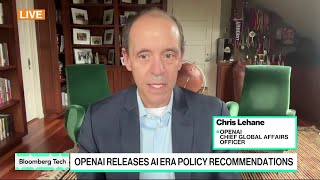
    OpenAI is backing the proposals with tangible investment, announcing a Workshop opening in Washington D.C. next month that will offer grants up to $100,000 and API credits up to $1 million for AI policy researchers. The document also calls for accelerated energy infrastructure investment and AI safety containment protocols, including 'coordinated playbooks to contain dangerous AI systems once they have been released into the world.' The proposals have drawn broad media coverage across platforms, with OpenAI Chief Global Affairs Officer Chris Lehane making the case in Bloomberg interviews and Miami Mayor Francis Suarez weighing in on Fox Business.

Deep Analysis

The Fox Designing the Henhouse: OpenAI's Credibility Problem

The most striking tension in OpenAI's policy blueprint is not what it proposes, but who is proposing it. As Lucia Velasco of the Inter-American Development Bank put it, 'OpenAI is the most interested party in how this conversation turns out, and the proposals it advances shape an environment in which OpenAI operates with significant freedom under constraints it has largely helped define.' This is a company that stands to be one of the largest beneficiaries of the AI economy it is proposing to tax and regulate. The proposals read differently when viewed through the lens of a company potentially positioning itself ahead of an IPO, seeking to appear responsible while shaping the very rules it would operate under.

The credibility gap deepens when you consider that OpenAI's Leading the Future PAC has actively opposed regulations that the policy paper now endorses. This contradiction has not gone unnoticed. Anton Leicht of the Carnegie Endowment for International Peace went so far as to call the entire document 'comms work to provide cover for regulatory nihilism' — suggesting the proposals serve as progressive-sounding cover while the company's actual lobbying apparatus works to prevent meaningful oversight. OpenAI's own careful hedge — 'These ideas are ambitious, but intentionally early and exploratory' — may itself be the tell: by framing everything as preliminary, the company creates space to walk back any proposal that threatens its business model while claiming credit for having raised the conversation.
Universal Basic Income Without the Name

Strip away the policy language and OpenAI's blueprint describes something remarkable: a tech company worth hundreds of billions of dollars is effectively proposing universal basic income funded by taxes on itself and its peers. The Public Wealth Fund, where AI companies contribute to a nationally managed fund investing in diversified assets, is a wealth redistribution mechanism. The automatic safety net triggers tied to economic displacement data are automatic cash transfers. The robot taxes are the funding mechanism. UBI advocate Scott Santens observed on X that the blueprint effectively describes universal basic income without ever naming it — a politically savvy move given UBI's polarizing reputation. This framing choice suggests OpenAI is keenly aware that the substance of policy can be more palatable when stripped of politically charged labels.

The four-day workweek proposal is perhaps the most tangible and immediately graspable element: a 32-hour workweek with no pay reduction, where productivity gains from AI flow to workers rather than exclusively to shareholders. Jamie Dimon of JPMorgan Chase independently floated a similar 3.5-day workweek idea, suggesting this is not just an OpenAI fantasy but a concept gaining traction among business leaders who see the writing on the wall. The combination of reduced work hours, automatic benefit triggers, and a public wealth fund amounts to a comprehensive redistribution framework — one that acknowledges AI will concentrate wealth dramatically and attempts to build channels for that wealth to flow more broadly.

Dead on Arrival? The Political Chasm Between Proposal and Reality

For all their ambition, OpenAI's proposals face a stark political reality: the current Trump administration has consistently resisted AI regulation, and proposals involving higher capital gains taxes, robot taxes, and expanded social safety nets run directly counter to the prevailing political winds. Former Senate AI policy advisor Soribel Feliz noted that 'some of these pillars have been the framework for every major AI governance conversation since ChatGPT came out in November 2022' — implying that these ideas have already been considered and shelved by policymakers. Fox Business coverage featuring Miami Mayor Francis Suarez characterized the proposals as a 'Bernie Sanders fever dream,' signaling how they will likely be received by the political right.

Yet there are surprising cracks in partisan resistance. An anonymous senior Republican told Fortune that 'capitalism has depended on some balance between labor and capital. Way too much leverage is going to be with capital and not with labor' — an acknowledgment from within the party that AI-driven concentration of wealth poses a systemic threat. OpenAI's strategy may be less about immediate adoption and more about Overton window management: by putting these ideas into the mainstream discourse with the backing of a major tech company, they normalize concepts like robot taxes and public wealth funds for a future political moment when AI displacement becomes impossible to ignore. The D.C. Workshop with $100,000 grants and $1 million in API credits is the infrastructure for this long game — building a policy research ecosystem aligned with OpenAI's framing.

Setting the Rules Before the Game Changes: OpenAI's Strategic Calculus

OpenAI's decision to publish this blueprint at this moment reveals a sophisticated strategic calculus. The document arrives as the company is widely expected to pursue an IPO, and demonstrating policy seriousness serves multiple audiences simultaneously: it reassures regulators that the company is thinking about societal impact, signals to potential investors that OpenAI is managing political risk, and positions the company as a responsible leader relative to competitors who have said less about economic disruption. Chris Lehane, OpenAI's Chief Global Affairs Officer and the primary spokesperson for the initiative, is a veteran political operative — his Bloomberg interviews laying out the policy rationale signal this is as much a political campaign as a policy document.

The proposals also serve a defensive function. By proactively calling for robot taxes and wealth redistribution, OpenAI gets ahead of potentially more punitive regulatory frameworks that could be imposed without its input. The document's language is revealing: it calls for 'coordinated playbooks to contain dangerous AI systems once they have been released into the world,' implicitly positioning OpenAI as a partner in containment rather than a target of it. The company is trying to establish itself as an essential participant in governance conversations — the entity you regulate with, not the entity you regulate against. Whether this represents genuine corporate responsibility or sophisticated regulatory capture depends entirely on whether the proposals survive contact with OpenAI's lobbying apparatus, and so far, the PAC's track record suggests they may not.

Historical Context

1933
Franklin D. Roosevelt's New Deal established a sweeping social contract during the Great Depression — the historical precedent Sam Altman explicitly invokes for his AI-age proposals.
2017
Bill Gates first proposed a robot tax to offset automation-driven job losses, planting the seed for the policy idea OpenAI now endorses nearly a decade later.
November 2022
ChatGPT's launch catalyzed global AI regulatory discussions and made AI governance a mainstream policy concern, setting the stage for the current proposals.
2024
OpenAI released its first major policy paper, making the current blueprint its second in two years and signaling an escalating engagement with government policy.
April 6, 2026
OpenAI published 'Industrial Policy for the Intelligence Age,' a 13-page document with over two dozen policy recommendations including robot taxes, a Public Wealth Fund, and a four-day workweek.

Power Map

Key Players
Subject

OpenAI Proposes Robot Taxes, Public Wealth Funds, and a Four-Day Workweek

OP

OpenAI

Author of the policy blueprint and leading AI company; simultaneously the primary beneficiary of AI expansion and the entity proposing constraints on it

SA

Sam Altman

OpenAI CEO and chief architect of the proposals; framing them as a 'New Deal' for the AI age while positioning the company ahead of a potential IPO

CH

Chris Lehane

OpenAI's Chief Global Affairs Officer and primary spokesperson for the policy push, leading media engagement including multiple Bloomberg interviews advocating for the proposals

FR

Francis Suarez

Mayor of Miami who appeared on Fox Business to discuss the implications of OpenAI's policy proposals, representing the perspective of local government leaders grappling with AI-driven economic shifts

CA

Carnegie Endowment for International Peace

Policy think tank providing critical analysis of the proposals, with researcher Anton Leicht calling them cover for 'regulatory nihilism'

OP

OpenAI's Leading the Future PAC

OpenAI's political action committee, which has actively opposed regulations that the policy paper now endorses, creating a credibility gap

U.

U.S. Government / Trump Administration

Target audience for the proposals but has historically resisted AI regulation, making political feasibility uncertain

THE SIGNAL.

Analysts

"Dismissed the proposals as strategic communications rather than genuine policy, calling them 'comms work to provide cover for regulatory nihilism.'"

Anton Leicht
Researcher, Carnegie Endowment for International Peace

"Highlighted the conflict of interest at the heart of the proposals: 'OpenAI is the most interested party in how this conversation turns out, and the proposals it advances shape an environment in which OpenAI operates with significant freedom under constraints it has largely helped define.'"

Lucia Velasco
Inter-American Development Bank

"Noted that the proposals are not novel, stating: 'Some of these pillars...have been the framework for every major AI governance conversation since ChatGPT came out in November 2022.'"

Soribel Feliz
Former Senate AI Policy Advisor

"Acknowledged the fundamental threat AI poses to economic balance: 'Capitalism has depended on some balance between labor and capital. Way too much leverage is going to be with capital and not with labor.'"

Anonymous Senior Republican
Senior Republican official
The Crowd

"Read the full ideas doc on the new Industrial Policy for the Intelligence Age openai.com/index/industri"

@@OpenAINewsroom823

"OpenAI released a new 13-page policy blueprint today meant as a starting point for a broader conversation about how to ensure that AI benefits everyone. It does not directly say the words universal basic income, but what it suggests describes UBI."

@@scottsantens62

"OpenAI's vision for the AI economy: public wealth funds, robot taxes, and a four-day work week"

@@TechCrunch79
Broadcast
OpenAI Pushes for Policies to Offset AI's Impact | Bloomberg Tech 4/6/2026

OpenAI Pushes for Policies to Offset AI's Impact | Bloomberg Tech 4/6/2026

SWEEPING PROPOSALS: OpenAI releases policy blueprint

SWEEPING PROPOSALS: OpenAI releases policy blueprint

OpenAI Releases Policy Recommendations for AI Age

OpenAI Releases Policy Recommendations for AI Age