The $5,000 Drone vs. the $30 Billion Data Center: Asymmetric Warfare Meets AI Infrastructure
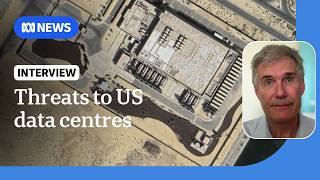
The central paradox of this crisis is the staggering asymmetry between the cost of attack and the cost of what is being attacked. Iran's Shahed drones -- which cost roughly $5,000 to produce -- have already demonstrated their ability to knock out hyperscale data centers worth billions of dollars. The Stargate facility in Abu Dhabi, with its planned 500,000 Nvidia GPUs and $30 billion price tag, represents perhaps the single highest-value concentration of AI compute hardware ever assembled in one location. A successful strike would not only destroy the physical infrastructure but could create a global GPU shortage lasting years, given the extreme complexity and lead times involved in manufacturing advanced AI chips.
This asymmetry fundamentally challenges the economics of concentrating AI infrastructure in geopolitically exposed regions. As one analyst noted, the question is no longer whether such facilities can be built, but whether anyone will insure them. Hyperscaler capital expenditure is projected to exceed $600 billion in 2026 with roughly 75 percent tied to AI infrastructure, and a significant portion of that investment thesis depends on the assumption that data centers are civilian infrastructure immune from military targeting. Iran has shattered that assumption. The IRGC video's pointed message -- 'Nothing stays hidden to our sight, though hidden by Google' -- demonstrated not just intent but intelligence capability, showing they had mapped the facility despite its absence from public satellite imagery.