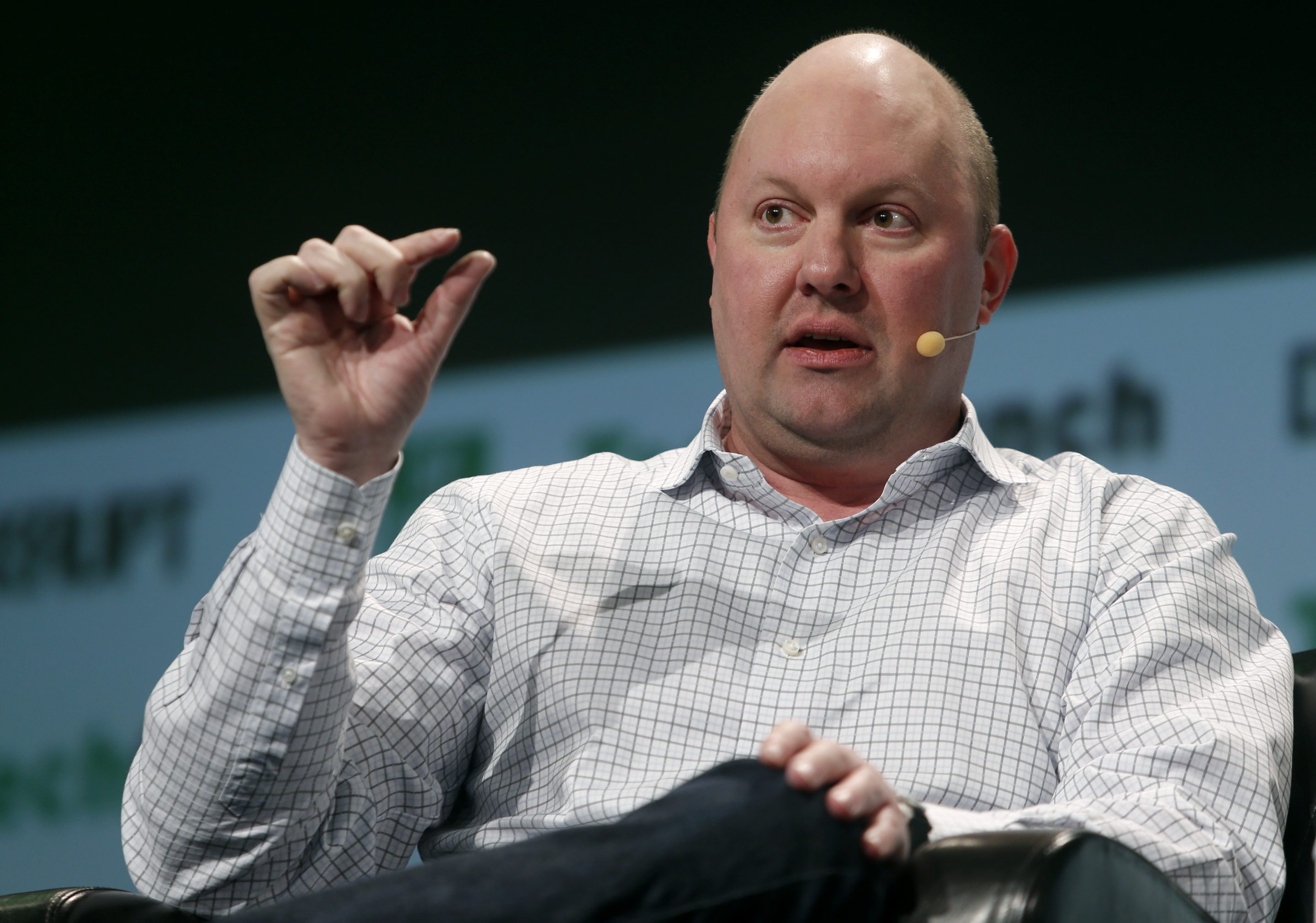
Marc Andreessen's AI Disruption Predictions
TECH

Marc Andreessen's AI Disruption Predictions

34+
Signals

Strategic Overview

  • 01.
    Marc Andreessen argues that current corporate layoffs are driven by pandemic-era overstaffing corrections — not AI — calling AI a 'silver bullet excuse' used by companies that overhired by 25–75% during 2020–2021.
  • 02.
    Andreessen contends the managerial class faces structural displacement as AI systems take over reporting, forecasting, and scheduling — the core tasks of professional managers who are not domain experts.
  • 03.
    His 2011 thesis that 'software is eating the world' has inverted: AI is now eating software itself, threatening the $1 trillion SaaS industry and prompting Morgan Stanley to warn of a 'SaaSpocalypse.'
  • 04.
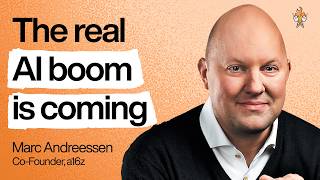
    Andreessen frames AI as an '80-year overnight success' and predicts the real boom has not yet started, positioning AI deployment as historically timed to offset a coming demographic labor collapse.

Deep Analysis

The Paradox at the Center: An AI Bull Defending Workers From AI Blame

Marc Andreessen occupies an unusual position in the 2026 AI labor debate: he is simultaneously one of the most aggressive investors in AI technology and one of the loudest voices arguing that AI is not currently responsible for job losses. His 'silver bullet excuse' framing — that essentially every large company is overstaffed by at least 25%, with some by 75%, and is now using AI as convenient cover — is a striking argument coming from someone whose firm funded 32 AI projects in 2025 alone. It threads a precise needle: AI is transformative and inevitable, but the current round of corporate layoffs is a delayed correction to pandemic-era hiring excess, not a sign of the automation wave's arrival.

This argument has both self-serving and intellectually honest dimensions. Self-serving because it separates Andreessen's AI investments from negative labor headlines. Intellectually honest because it aligns with observable data: tech companies like Amazon doubled headcount between 2019 and 2021, reaching 8.3 million in tech employment by May 2020, and the unwinding of that excess would have been inevitable with or without AI. Dave Deek at governance.fyi largely agrees with Andreessen's diagnosis while adding that Federal Reserve rate hikes — not just overstaffing — also forced the correction, a variable Andreessen conspicuously omits. The most damaging counterargument comes from Erik Brynjolfsson at Stanford, whose empirical work shows a 16% employment decline for early-career workers in AI-exposed occupations already — suggesting AI displacement is not simply pending, but already measurable in the data.

AI Eating Software: The Self-Consuming Thesis

In 2011, Andreessen's 'software is eating the world' essay became one of the most influential VC frameworks of the decade — a prediction that software companies would colonize and disrupt every traditional industry. By early 2026, he is arguing that something has inverted that thesis: AI is now eating software itself. In his framing, 'something was eating software itself. That something, of course, was artificial intelligence.' This is not a minor revision; it is a structural repudiation of the SaaS-era business model that a16z helped finance.

The mechanism is already visible. Klarna, the fintech company, has begun replacing Salesforce and Workday — two pillars of enterprise SaaS — with custom AI-built systems. Morgan Stanley analyst Keith Weiss has articulated a 'trinity of software fears' for the industry: AI-driven labor displacement, the democratization of coding through AI tools, and disruption by foundational model providers who can deliver capabilities that SaaS vendors previously charged for. Weiss's 'SaaSpocalypse' scenario threatens the $1 trillion SaaS market directly. The irony is acute: the investment thesis that made a16z one of the most powerful VC firms in the world is now the thesis being disrupted by the firm's own next wave of investments. Andreessen's vision of AI as a 'philosopher's stone' — converting the most common thing (silicon/sand) into the rarest (thought) — is not abstract; it is the mechanism by which the previous generation of software value gets repriced toward zero.

The Managerial Class as the Structural Target

Andreessen's most consequential organizational prediction is that the managerial class — not production workers or engineers — is the group most structurally exposed to AI displacement. Drawing on James Burnham's historical framework, he argues that most Fortune 500 executives are not domain experts but professional managers: their value lies in coordination, reporting, forecasting, and scheduling — precisely the functions AI handles best. In his words, 'they're really good at doing paperwork. Filling out forms, writing reports, reading — all the managerial work.'

This thesis has empirical support outside Andreessen's own claims. Gartner predicts that 20% of organizations will eliminate more than 50% of their middle management roles by 2026. Entry-level unemployment peaked at 13.3% in July 2025, with underemployment reaching 42.5% in Q4 2025. Finance and information services sectors have lost approximately 9,000 jobs monthly since 2023. The three-way standoff among product managers, engineers, and designers — each believing AI enables them to absorb the other roles — illustrates the organizational pressure from below, while AI's administrative competence applies pressure from above. The net effect, if Andreessen's trajectory holds, is a radical compression of the middle of corporate org charts, leaving domain experts and AI supervisors at either end.

Programming's Identity Crisis: Upgrade, Displacement, or Both?

Andreessen's view of software developers is deliberately optimistic: programmers are not replaced by AI but 'upgraded' into supervisors of AI coding bots. The argument is that human oversight remains essential precisely because AI coding systems make errors that only someone who understands code can diagnose and correct. In his framing, 'you still need to learn how to write and understand code, because when the AI gets it wrong, humans are the ones who have to know why.' He has gone further, suggesting that the concept of a programming language as it is understood today may not remain a salient category.

Brynjolfsson's data complicates this optimism significantly. His research shows approximately a 20% employment decline specifically for entry-level software developers in AI-exposed roles — the exact cohort that would be affected first by AI coding tools before the 'supervisor' transition matures. The X signal from @r0ck3t23 captures the cultural resonance of Andreessen's more radical claim about programming languages collapsing as a concept. The transition from code-writer to AI-supervisor is real as a direction, but the gap between today's junior developer and tomorrow's AI overseer involves a displacement period that Andreessen's framing tends to elide. The 42.5% underemployment rate among early-career workers in Q4 2025 suggests that transition is neither smooth nor immediate for the people living through it.

Demographic Timing: AI as Structural Necessity, Not Disruption

Perhaps the least-discussed dimension of Andreessen's framework is his long-horizon demographic argument: that AI arrives precisely when advanced economies need it most. Falling birth rates and aging workforces in the US, Europe, and East Asia point toward structural labor shortages in the 2030s and beyond. In Andreessen's framing, 'we're going to have AI and robots precisely when we actually need them. The remaining human workers are going to be at a premium, not at a discount.'

This reframes the entire disruption narrative. Rather than AI as a force that displaces human labor in a world of labor abundance, Andreessen positions it as a compensatory technology arriving into a world of coming labor scarcity. The near-term pain — underemployment, managerial displacement, SaaS disruption — is real, but in his framework it is transitional rather than terminal. The 'philosopher's stone' metaphor — AI converting silicon into thought — is another expression of this: the scarcest economic input (cognitive labor) is being manufactured from the most abundant one. Whether that optimism is warranted depends heavily on the speed of demographic transition, the pace of AI capability growth, and the distribution of productivity gains — none of which Andreessen's framework addresses with precision, but all of which determine whether his long-horizon prediction of human workers at a 'premium' eventually proves correct.

Historical Context

2011-08-20
Andreessen publishes 'Why Software Is Eating the World' in the Wall Street Journal.
2023-01-01
Andreessen publishes 'Why AI Will Save the World,' staking out an explicitly techno-optimist position.
2024-07-01
Andreessen sends $50,000 in Bitcoin to Truth Terminal, an autonomous AI agent.
2025-01-01
a16z publishes 'Big Ideas in Tech 2025,' funds 32 AI projects — 50% in healthcare.
2026-01-29
On Lenny's Podcast, Andreessen declares 'The real AI boom hasn't even started yet.'
2026-02-01
Morgan Stanley warns of a 'SaaSpocalypse' as AI-native companies begin replacing incumbent SaaS vendors.
2026-03-31
On the '20VC' podcast, Andreessen coins the 'silver bullet excuse' framing for AI layoffs.

Power Map

Key Players
Subject

Marc Andreessen's AI Disruption Predictions

MA

Marc Andreessen / a16z

Venture capitalist and primary architect of the AI disruption narrative; a16z funded 32 AI projects in 2025 and published 'Big Ideas in Tech 2025' outlining AI's structural impact.

FO

Fortune 500 Corporations

Primary targets of Andreessen's critique; accused of exploiting AI rhetoric to justify layoffs rooted in pandemic overhiring rather than genuine automation-driven workforce reductions.

MI

Middle Managers

High-displacement-risk group whose core tasks — reporting, forecasting, scheduling — are highly automatable; Gartner predicts 20% of organizations will eliminate more than 50% of middle management roles by 2026.

SO

Software Developers

Role is being redefined from code-writers to AI bot supervisors; junior developers face measurable near-term employment pressure while senior oversight roles grow in importance.

LE

Legacy SaaS Companies

Existentially threatened by AI-native alternatives; companies like Klarna are actively replacing Salesforce and Workday with custom AI systems, compressing the $1 trillion SaaS market.

THE SIGNAL.

Analysts

"Andreessen holds that AI was not yet capable of performing real jobs through most of 2025, stating 'AI literally until December was not actually good enough to do any of the jobs that they're actually cutting.' He predicts the real displacement will target the managerial class, whose paperwork-heavy roles AI handles naturally, while programmers will be upgraded rather than replaced."

Marc Andreessen
Co-founder, Andreessen Horowitz (a16z)

"Brynjolfsson's empirical research directly contradicts Andreessen's 'not yet' framing, finding roughly a 16% employment decline for early-career workers in AI-exposed occupations, with approximately 20% declines for entry-level software developers and 15% for call center workers."

Erik Brynjolfsson
Economist, Stanford University

"Weiss articulated a 'trinity of software fears' — labor displacement, DIY coding enabled by AI, and disruption by model providers — warning that as generative AI automates a broader swath of work, productivity gains will structurally reduce the number of employees needed."

Keith Weiss
Analyst, Morgan Stanley

"Benioff acknowledged that workforce cuts are driven by multiple simultaneous factors — cost reduction pressures, data center investment cycles, and workforce rebalancing — and that some leaders are using AI as convenient justification."

Marc Benioff
CEO, Salesforce

"Deek assessed Andreessen as 'mostly right' that pandemic overhiring explains current layoffs, but argued he omits a critical variable: Federal Reserve interest rate hikes, which independently forced workforce reductions regardless of AI capabilities."

Dave Deek
Writer, governance.fyi
The Crowd

"Marc Andreessen explains how AI has triggered a three-way standoff among Product-Managers, engineers, and designers."

@@rohanpaul_ai518

"Marc Andreessen AI is an 80 year overnight success."

@@a16z481

"Marc Andreessen just collapsed a fifty-year assumption in one sentence."

@@r0ck3t23342
Broadcast
Marc Andreessen: Future of the Internet, Technology, and AI | Lex Fridman Podcast #386

Marc Andreessen: Future of the Internet, Technology, and AI | Lex Fridman Podcast #386

Marc Andreessen: Trump, Power, Tech, AI, Immigration & Future of America | Lex Fridman Podcast #458

Marc Andreessen: Trump, Power, Tech, AI, Immigration & Future of America | Lex Fridman Podcast #458

Marc Andreessen: The real AI boom hasn't even started yet

Marc Andreessen: The real AI boom hasn't even started yet