Why This Matters
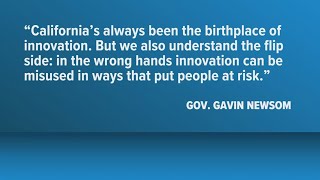
Governor Newsom's executive order represents a significant escalation in the emerging conflict between state and federal approaches to AI governance. While the Trump administration has actively pushed to deregulate AI and has gone so far as to condition $42 billion in federal broadband funding on the repeal of state-level AI regulations, California is moving in the opposite direction — using the power of state procurement to impose safety and civil liberties requirements on AI companies. This sets up a direct constitutional and political confrontation over who gets to regulate artificial intelligence in the United States.
The stakes are enormous. California is home to 33 of the top 50 privately held AI firms, and 51% of U.S. AI startup funding flows to the Bay Area. As Jim Steyer of Common Sense Media noted, California is the 'de facto center of important regulation of Big Tech.' When California sets procurement standards, the ripple effects extend far beyond state borders — AI companies that want access to the world's fifth-largest economy must comply, and those compliance standards often become de facto industry baselines. The order also arrives at a moment when a federal judge found the Pentagon's classification of Anthropic as a 'supply chain risk' was 'likely unlawful and may have been retaliatory,' underscoring concerns about the federal government using its power to punish AI companies that cooperate with state-level regulation.