OpenAI Proposes New Deal-Scale Policy for the AI Economy
TECH

OpenAI Proposes New Deal-Scale Policy for the AI Economy

33+
Signals

Strategic Overview

  • 01.
    OpenAI released a 13-page policy document titled 'Industrial Policy for the Intelligence Age: Ideas to Keep People First' on April 6, 2026, proposing sweeping economic reforms including robot taxes, a Public Wealth Fund modeled on Alaska's Permanent Fund, automatic safety net triggers tied to AI displacement metrics, and pilot programs for a 32-hour four-day workweek at full pay.
  • 02.
    The proposals call for a fundamental restructuring of the U.S. tax system, shifting the tax base from payroll toward capital gains and corporate income taxes, acknowledging that AI could hollow out the wage-and-payroll revenue currently funding Social Security, Medicaid, and food assistance programs.
  • 03.
    The blueprint also addresses AI safety and infrastructure, proposing containment playbooks for autonomous AI systems that 'cannot be easily recalled,' a 'National Transmission Highway Act' for power and fiber infrastructure, and a target of 100 GW per year of new energy capacity to close the 'electron gap' with China.
  • 04.
    The release has drawn a mix of genuine interest and sharp skepticism on social media and from analysts, with critics questioning OpenAI's sincerity given the proposals' timing alongside a potential IPO and a $110 billion private funding round, as well as broader questions on social media about the company's safety commitments.

Deep Analysis

The Fox Designing the Henhouse: Why OpenAI Is Proposing to Tax Itself

The most striking aspect of OpenAI's policy blueprint is the spectacle of the world's most valuable AI company voluntarily proposing taxes on its own core business. The document calls for shifting the U.S. tax base from payroll taxes — which fund Social Security, Medicaid, and food assistance — toward capital gains and corporate income taxes, explicitly acknowledging that 'as AI reshapes work and production, the composition of economic activity may shift — expanding corporate profits and capital gains while potentially reducing reliance on labour income.' This is a remarkable admission from a company that just closed a $110 billion private funding round.

The strategic logic, however, is not altruistic. By shaping the regulatory conversation early, OpenAI positions itself as a responsible actor and gains influence over the rules that will govern its industry. Analyst Kashyap Kompella of RPA2AI cut through the framing, arguing that 'OpenAI and other companies in the AI ecosystem are trying to play to the gallery of the incoming Trump administration.' The proposals also include liability protections and preemption of state-level AI laws — provisions that would directly benefit OpenAI by creating a friendlier federal regulatory environment and shielding it from a patchwork of state regulations.

The Public Wealth Fund proposal is particularly illustrative. Modeled on Alaska's Permanent Fund, it would 'invest in diversified, long-term assets that capture growth in both AI companies and the broader set of firms adopting and deploying AI.' In practice, this means public money flowing into AI company equity — including, presumably, OpenAI's own. The company is essentially proposing a mechanism that would make the U.S. government a stakeholder in AI companies' success, aligning government incentives with industry growth rather than regulation.
From Bill Gates' Thought Experiment to Corporate Policy: The Robot Tax Goes Mainstream

When Bill Gates floated the idea of a 'robot tax' in 2017, it was treated as a provocative thought experiment from a retired tech billionaire. Nearly a decade later, OpenAI has transformed it into a concrete policy proposal backed by a 13-page blueprint and a Washington D.C. lobbying operation that spent $3 million in 2025 alone, up from $1.76 million in 2024. The trajectory from Gates' offhand suggestion to OpenAI's formal policy document marks a significant shift in how the tech industry frames its relationship with labor markets.

OpenAI's version of the robot tax is more sophisticated than Gates' original concept. Rather than simply taxing robots, the blueprint proposes restructuring the entire tax base to account for a world where corporate profits and capital gains grow while payroll shrinks. The document proposes automatic safety net triggers — entitlement programs that scale up automatically when AI displacement metrics hit certain thresholds — ensuring that the social safety net expands in proportion to disruption without requiring new legislation each time.

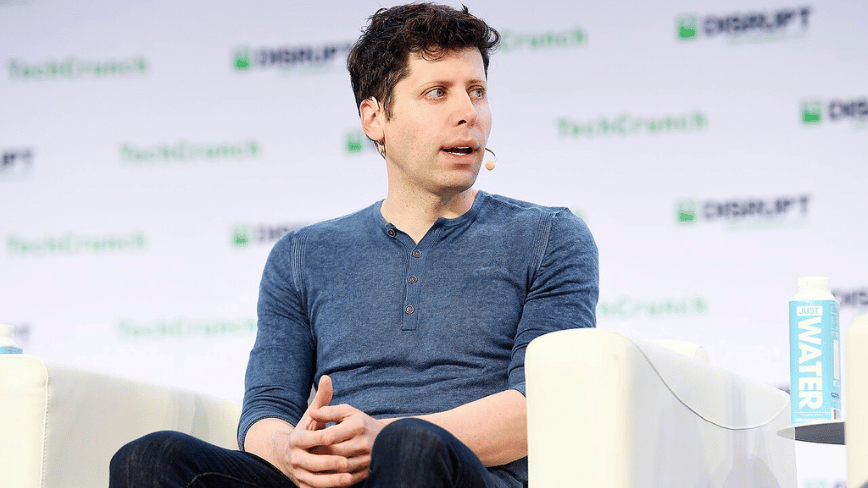
Sam Altman himself acknowledged the political difficulty, noting that large tax changes were near the edges of the Overton window. But by framing the proposals as 'comparable to the Progressive Era and the New Deal,' he is attempting to shift that window. The comparison is deliberately grand: the Progressive Era brought antitrust law, the income tax, and the Federal Reserve; the New Deal created Social Security, the SEC, and federal labor protections. Whether OpenAI's proposals belong in that lineage or represent something more self-serving is the central question analysts and policymakers will need to answer.

Automatic Stabilizers for the AI Age: A Novel Policy Mechanism

Perhaps the most technically innovative element of OpenAI's blueprint is the proposal for automatic safety net triggers tied to AI displacement metrics. Unlike traditional government programs that require congressional action to expand, these 'auto-scaling entitlements' would activate when predefined economic indicators — such as job displacement rates in AI-affected sectors — cross certain thresholds. The mechanism borrows from existing automatic stabilizers like unemployment insurance, which naturally expands during recessions, but applies the concept specifically to AI-driven economic disruption.

The 32-hour four-day workweek pilot is a concrete example. OpenAI proposes 'time-bound 32-hour four-day workweek pilots with no loss in pay that hold output and service levels constant.' The framing is careful: by specifying that output and service levels must remain constant, OpenAI is positioning the shorter workweek not as a concession to workers but as an efficiency gain enabled by AI tools. If AI makes workers productive enough to compress five days of output into four, the argument goes, the gains should be shared through reduced hours rather than captured entirely by employers.

The broader significance lies in the precedent. If adopted, automatic stabilizers tied to AI metrics would create a direct feedback loop between technological progress and social policy — the faster AI displaces workers, the faster safety nets expand. This would fundamentally change the political economy of AI development, making rapid automation immediately costly to the federal budget rather than allowing costs to accumulate silently in unemployment statistics and declining communities.

The Electron Gap: Framing AI Infrastructure as National Security

OpenAI's proposal for a 'National Transmission Highway Act' and a target of 100 GW per year of new energy capacity reveals a secondary agenda embedded within the social policy framework: securing the physical infrastructure needed for AI dominance. By framing the energy gap with China as an 'electron gap' and positioning it as a national security concern, OpenAI is borrowing the language of Cold War-era infrastructure programs to justify massive public investment in the power grid and fiber networks that AI companies need to operate.

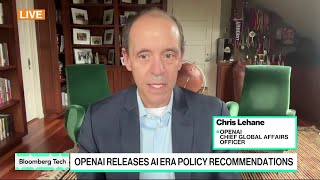
Chris Lehane, OpenAI's Chief Global Affairs Officer, called on the Office of Science and Technology Policy to prioritize closing this gap. The document warns that AI safety risks are imminent — a cyberattack is 'totally possible' within a year, and AI creating novel pathogens is 'no longer theoretical' — creating urgency for the kind of rapid infrastructure build-out that would also conveniently serve OpenAI's commercial needs for compute power.

The national security framing serves a dual purpose. It justifies expedited permitting processes that would bypass the environmental reviews and local opposition that typically slow energy projects. And it positions AI companies as essential partners in national defense, potentially unlocking defense-adjacent funding and regulatory treatment. The proposal for containment playbooks for autonomous AI systems that 'cannot be easily recalled' further reinforces this framing — if AI systems are potentially dangerous enough to require government containment plans, the companies building them become too strategically important to regulate aggressively.

The Credibility Test: Safety Concerns, IPO Timing, and Public Trust

OpenAI's policy proposals face a fundamental credibility challenge: the company is simultaneously asking the government to trust it as a policy partner while pursuing a corporate trajectory that prioritizes growth over the caution it preaches. The $110 billion private funding round and potential IPO create financial incentives that may conflict with the patient, public-interest-oriented approach the blueprint advocates. Gizmodo described the proposals as 'vague' and questioned whether OpenAI's stated concern for democratic processes was genuine given its corporate interests. Adding to the tension, X.com discussions highlighted broader questions about OpenAI's internal safety commitments, with some users pointing to investigative reporting on the topic — creating a jarring contrast between the company's public advocacy for AI containment protocols and concerns about its internal practices.

The cross-platform response to OpenAI's announcement illustrates both the scale of public interest and the depth of skepticism. On YouTube, the How Money Works channel published 'The OpenAI Problem Is About To Become OUR Problem,' which has already accumulated 1.4 million views — a staggering figure that reflects widespread public anxiety about OpenAI's growing economic power and its implications for ordinary workers. Bloomberg Technology uploaded a fresh interview with Chris Lehane discussing the policy recommendations (212 views, just posted), providing a direct channel for OpenAI's messaging to a business-oriented audience. Meanwhile, the Future of Life Institute's interview with economist Anton Korinek on what happens after AI takes all jobs has drawn 163K views, indicating sustained demand for serious economic analysis of AI displacement. The breadth of YouTube engagement — from populist skepticism to institutional interviews to academic economics — shows this topic resonating across audience segments far beyond the tech policy community. Notably, Reddit discussions have not yet appeared, likely because the news broke today (April 6, 2026) and has not had time to propagate through those communities.

On X.com, the response was immediate and polarized. User @kimmonismus posted a detailed thread breaking down the 13-page blueprint that drew 1.4K likes and 210 retweets, while @martinvars summarized the key proposals — 'Public wealth funds. Robot taxes. Auto-scaling entitlements' — capturing both the ambition and the incredulity the proposals have inspired. The dominant themes across social platforms are the New Deal comparison (which many find overblown), a credibility gap between OpenAI's public policy positions and its corporate behavior, and genuine concern about the economic disruption that motivated the proposals in the first place. The lobbying spending trajectory — from $1.76 million in 2024 to $3 million in 2025 — along with the planned Washington D.C. workshop offering grants up to $100K and API credits up to $1 million, suggests OpenAI is building a permanent policy infrastructure rather than making a one-time gesture. Whether that infrastructure serves the public interest or primarily serves OpenAI's will be the defining question as these proposals move from white paper to political reality.

Historical Context

2017-01-01
Bill Gates proposed a 'robot tax' concept where robots replacing human workers would pay the same taxes as the humans they replaced — a concept OpenAI has now formally endorsed in its policy blueprint.
2023-05-16
Sam Altman testified before U.S. Congress advocating for AI regulation including a federal licensing agency for AI models above certain capability thresholds.
2025-01-13
OpenAI published its initial 'AI in America' Economic Blueprint focused on extending U.S. global leadership in AI innovation and driving economic growth across communities.
2025-03-13
OpenAI submitted proposals for the U.S. AI Action Plan, pointing to China as justification for looser copyright rules and opposing state-level AI bills.
2026-04-06
OpenAI released 'Industrial Policy for the Intelligence Age: Ideas to Keep People First,' a 13-page blueprint calling for robot taxes, public wealth funds, automatic safety net triggers, and a four-day workweek.

Power Map

Key Players
Subject

OpenAI Proposes New Deal-Scale Policy for the AI Economy

OP

OpenAI

Author of the 13-page policy blueprint and leading AI company proposing government intervention to manage economic disruption from its own technology. Recently raised $110 billion in private funding.

SA

Sam Altman

CEO of OpenAI and primary champion of the proposals. Compared the scale of change to the Progressive Era and the New Deal, and acknowledged AI will 'totally' wipe out some areas of the labor market.

CH

Chris Lehane

OpenAI's Chief Global Affairs Officer, who called for the Office of Science and Technology Policy to prioritize closing the 'electron gap' with China.

U.

U.S. Federal Government / Office of Science and Technology Policy

Target audience for the proposals; called upon to set energy targets, expedite permitting, create policy frameworks, and coordinate AI containment strategies.

U.

U.S. Congress

Called upon by OpenAI to provide liability protections and preemption of state laws for participating AI companies.

THE SIGNAL.

Analysts

"Described the proposals as 'comparable to the Progressive Era and the New Deal' in scope. Acknowledged that AI will 'totally' wipe out some areas of the labor market and that large tax changes were near the edges of the Overton window. Framed the document as a 'starting point' rather than a prescription."

Sam Altman
CEO, OpenAI

"Suggested the proposals are politically motivated, stating that 'OpenAI and other companies in the AI ecosystem are trying to play to the gallery of the incoming Trump administration.'"

Kashyap Kompella
Analyst, RPA2AI

"Described the proposals as 'vague' and questioned OpenAI's genuine commitment, noting the timing coincides with potential IPO plans."

Gizmodo editorial analysis
Tech publication
The Crowd

"Looks like OpenAI reached Superintelligence. OpenAI just published a 13-page policy blueprint for the Intelligence Age."

@@kimmonismus1400

"OpenAI just published a 13-page blueprint for the AI age. Public wealth funds. Robot taxes. Auto-scaling entitlements tied to displacement metrics. A four-day workweek at full pay."

@@martinvars25

"OpenAI's vision for the AI economy: public wealth funds, robot taxes, and a four-day work week"

@@TechCrunch36
Broadcast
OpenAI Releases Policy Recommendations for AI Age

OpenAI Releases Policy Recommendations for AI Age

The OpenAI Problem Is About To Become OUR Problem

The OpenAI Problem Is About To Become OUR Problem

Economist explains what happens after AI takes all jobs

Economist explains what happens after AI takes all jobs