Baidu Apollo Go Robotaxi System Failure in Wuhan
TECH

Baidu Apollo Go Robotaxi System Failure in Wuhan

32+
Signals

Strategic Overview

  • 01.
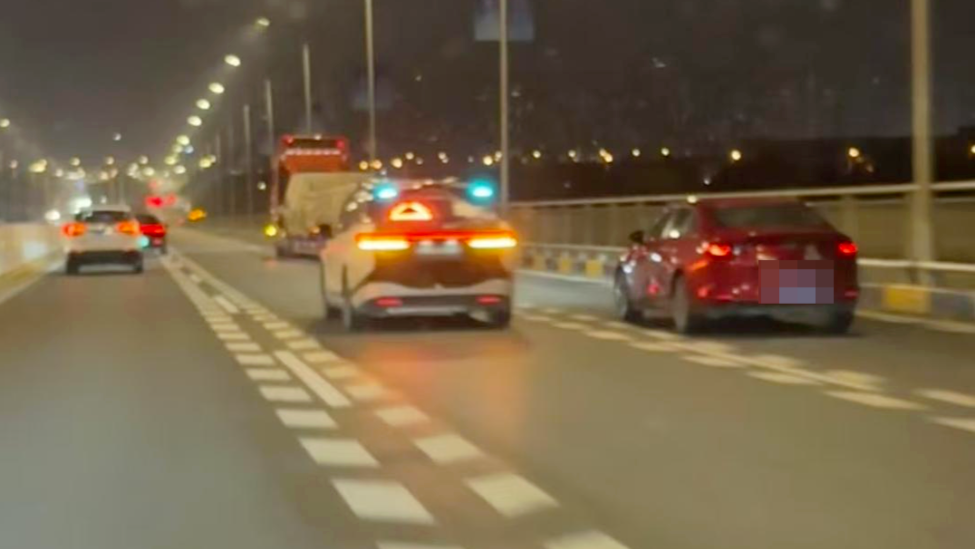
    On March 31, 2026 at approximately 8:57 PM, a fleet-wide system failure caused over 100 Baidu Apollo Go robotaxis in Wuhan to freeze mid-route simultaneously, stranding passengers on roads and elevated highways for up to two hours.
  • 02.
    Frozen vehicles caused collisions on highways and blocked traffic lanes, prompting a surge of police calls starting from 8:57 PM and raising urgent safety concerns about autonomous vehicle fleet operations.
  • 03.
    Passengers reported being trapped inside vehicles, with some waiting over 30 minutes just to reach a customer service representative.
  • 04.
    Industry insiders cited by The Paper described the fleet-wide stop as a proactive safety strategy by the system, stating that similar situations are not common in the development of the global autonomous driving industry.

Deep Analysis

Incident Timeline and Immediate Impact

At approximately 8:57 PM on March 31, 2026, over 100 Baidu Apollo Go robotaxis in Wuhan experienced a simultaneous system failure, freezing mid-route across the city's roads and elevated highways. The vehicles stopped abruptly and could not be restarted, creating immediate traffic hazards including collisions on highway segments. Passengers found themselves trapped inside the vehicles, and some remained stranded for up to two hours according to CarNewsChina reporting. Wuhan municipal police confirmed the incident publicly, noting the surge of emergency calls that began at 8:57 PM.

The passenger experience during the outage was particularly alarming. As reported by journalist Zeyi Yang on X.com, one passenger said it took her 30 minutes just to connect to a customer service representative while she remained inside the frozen vehicle. Yang's post, which included video footage of a crash caused by the stopped robotaxis, drew over 550 engagements including hundreds of likes and retweets, reflecting widespread public concern. Byron Wan's X.com post further detailed the scale, noting that vehicles were stopped dead on both regular roads and expressways. Reuters' coverage on X.com emphasized that local police confirmed the outage, which re-ignited safety concerns over the fast-growing service. The overwhelmingly negative social media reaction centered on three themes: passenger entrapment, the single-point-of-failure risk inherent in fleet-wide cloud-dependent systems, and erosion of public trust in autonomous vehicle technology.

By The Numbers: Apollo Go's Scale and the Magnitude of Failure

The Wuhan incident must be understood in the context of Apollo Go's rapid scaling. According to CNEVPost, the service had completed over 20 million cumulative rides and was operating across 26 cities globally as of February 2026. CNEVPost also reported that Apollo Go completed 3.4 million fully driverless rides in Q4 2025 alone, representing a year-over-year increase of more than 200%. CarNewsChina reported that the fleet had accumulated over 240 million kilometers of total mileage, of which more than 140 million kilometers were fully driverless. These figures underscore both the commercial ambition of the platform and the enormous scale at which a single system failure can propagate.

For comparison, Benzinga reported that Waymo, the leading U.S. autonomous ride-hailing operator, had logged over 200 million autonomous miles and was completing approximately 500,000 rides per week across 10 U.S. cities. While both companies are pushing the boundaries of commercial autonomous driving, the Wuhan incident exposed a critical vulnerability: as fleet size and geographic reach grow, the blast radius of a centralized system failure grows proportionally. Over 100 vehicles were simultaneously affected in this single event, as reported by both CarNewsChina and Yahoo News, making it one of the largest known autonomous vehicle fleet failures to date.

Systemic Risks and Regulatory Implications

The fleet-wide nature of this failure points to a centralized dependency, likely in the cloud-based dispatch or vehicle management system, that created a single point of failure across the entire Wuhan fleet. Industry insiders cited by The Paper and reported by CNEVPost framed the mass stop as a proactive safety strategy, suggesting the system may have intentionally halted vehicles in response to a detected anomaly. However, this explanation does little to address the fact that passengers were left stranded on highways with no safe exit and no timely support, a scenario that arguably represents a greater safety risk than whatever triggered the shutdown.

Analyst Chen Liteng of 100ec.cn, quoted by the South China Morning Post, stated that robotaxi operators needed to strengthen their capabilities to handle such situations. HSBC analysts, also cited by SCMP, observed that while a great deal of progress has been made in China to approach the commercial inflection, efforts to increase consumer acceptance still have a long way to go. The incident arrives in a context of prior autonomous vehicle safety events in China: a Pony.ai vehicle caught fire in Beijing in May 2025, and an Apollo Go vehicle fell into a construction pit in Chongqing in August 2025, as reported by Yahoo News. Each incident has incrementally eroded public confidence and increased regulatory scrutiny.

The social media response amplified these concerns far beyond Wuhan. Journalist Zeyi Yang's detailed X.com thread, which included firsthand passenger testimony and crash footage, was among the most widely shared posts on the incident. Reuters' X.com post framing the event as re-igniting safety concerns signaled that international media attention would follow. For regulators, the incident presents a clear mandate: autonomous vehicle fleet operators must demonstrate robust failover mechanisms, passenger safety protocols during system outages, and rapid customer support responsiveness before further scaling is permitted.

Historical Context

2019-01-01
Baidu began manned test operations for its autonomous driving platform.
2022-08-01
Wuhan issued the first unmanned demonstration qualifications to Baidu Apollo Go.
2024-02-01
Apollo Go launched fully driverless rides across the Yangtze River in Wuhan.
2025-05-01
A Pony.ai autonomous vehicle caught fire in Beijing.
2025-08-01
An Apollo Go vehicle fell into a construction pit in Chongqing.
2026-03-31
A fleet-wide system failure caused over 100 robotaxis to freeze simultaneously in Wuhan.

Power Map

Key Players
Subject

Baidu Apollo Go Robotaxi System Failure in Wuhan

BA

Baidu Apollo Go

Operator of China's largest robotaxi fleet, with over 20 million cumulative rides across 26 cities globally

WU

Wuhan Municipal Police

Local law enforcement that received a surge of emergency calls starting at 8:57 PM on March 31 and confirmed the system failure publicly

ST

Stranded Passengers

Riders trapped inside frozen robotaxis on roads and elevated highways, some for up to two hours, with limited access to customer support

CH

Chinese Autonomous Driving Regulators

Government authorities facing renewed pressure to tighten safety standards and incident-response requirements for autonomous vehicle fleets

WA

Waymo

Leading U.S. competitor in autonomous ride-hailing, operating across 10 U.S. cities with over 200 million autonomous miles driven and 500,000 rides per week

THE SIGNAL.

Analysts

"Robotaxi operators needed to strengthen their capabilities to handle such situations."

Chen Liteng
Analyst, 100ec.cn

"While a great deal of progress has been made in China to approach the commercial inflection, efforts to increase consumer acceptance still have a long way to go."

HSBC Analysts
Analysts, HSBC
The Crowd

"NEW: Dozens of robotaxis by Baidu stopped on the road in Wuhan, causing crashes on highways and trapping passengers in the cars—some for more than an hour. One passenger told me it took her 30 minutes to even connect to a customer representative. Here's a video of a crash."

@@ZeyiYang408

"Mar 31: a system failure caused over a hundred robotaxis of Baidu's autonomous ride-hailing service Apollo Go to stop dead in the middle of traffic on the roads and expressways in Wuhan, Hubei province, at around 8:57pm. Many passengers were trapped inside the vehicles."

@@Byron_Wan0

"A system failure caused a robotaxi outage involving multiple vehicles operated by Baidu's Apollo Go in central China's Wuhan, local police said, re-igniting safety concerns over the fast-growing service."

@@Reuters0
Broadcast