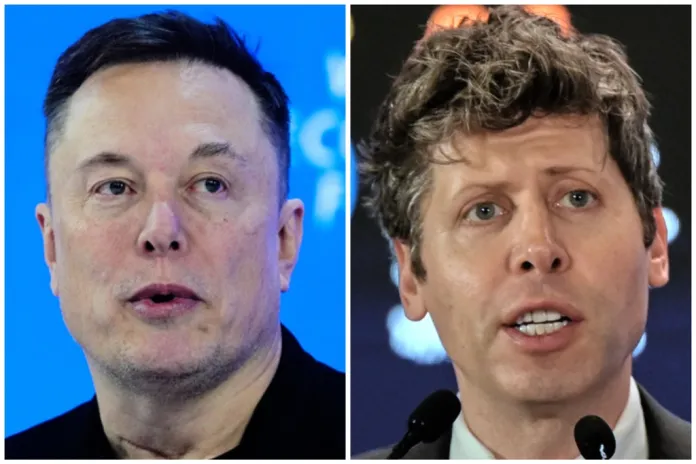
Musk Sues OpenAI for $134B, Seeks Altman and Brockman Removal
TECH

Musk Sues OpenAI for $134B, Seeks Altman and Brockman Removal

38+
Signals

Strategic Overview

  • 01.
    Elon Musk filed an amended lawsuit against OpenAI on April 7, 2026, seeking the removal of CEO Sam Altman from the nonprofit board and both Altman and President Greg Brockman as officers of the for-profit entity, while demanding they surrender all equity and personal financial benefits obtained through OpenAI's for-profit operations.
  • 02.
    Musk amended the suit so that any damages — up to $134 billion — would go to OpenAI's nonprofit arm rather than to him personally, alleging that defendants exploited charitable status for tax exemptions and donor credibility while secretly converting OpenAI into a for-profit enterprise.
  • 03.
    Jury selection begins April 27, 2026, in federal court in Oakland before U.S. District Judge Yvonne Gonzalez Rogers, with the trial expected to last approximately four weeks. OpenAI has responded by requesting California AG Rob Bonta and Delaware AG Kathy Jennings investigate Musk's 'improper and anti-competitive behavior.'

Deep Analysis

The $134 Billion Gambit: Why Musk Redirected Damages to the Nonprofit

Musk's decision to redirect any damages award to OpenAI's nonprofit arm is arguably the most strategically significant move in the amended complaint. By removing himself as the financial beneficiary, Musk neutralizes one of OpenAI's most potent defense arguments — that this lawsuit is motivated by personal greed or competitive sabotage from the founder of rival AI company xAI. The amendment transforms the narrative from a billionaire seeking a windfall into a founder trying to restore an organization's original charitable mission.

The financial architecture of the claim is striking. Musk's legal team, supported by financial economist C. Paul Wazzan, argues that a $38 million seed donation entitles Musk to a substantial share of OpenAI's valuation. According to Benzinga, OpenAI's valuation has reached approximately $852 billion following a $122 billion funding round, while CNBC reported Wazzan's analysis in the context of a $500 billion valuation framework — a gap that may reflect rapid appreciation or different methodological approaches. OpenAI's defense team counters that this methodology is legally impossible: nonprofit donors do not receive equity stakes, and treating a charitable contribution as an investment fundamentally mischaracterizes the nature of the transaction. The jury must decide whether OpenAI's leadership fraudulently induced Musk's contributions by promising a nonprofit mission they never intended to sustain.

The Brockman Journal Entry That Could Decide the Case

When Judge Yvonne Gonzalez Rogers ruled in January 2026 that the case could proceed to jury trial, she specifically cited a 2017 handwritten journal entry by OpenAI President Greg Brockman as critical evidence. The entry reads: 'I cannot believe that we committed to non-profit if three months later we're doing b-corp then it was a lie.' This single sentence, written by one of the defendants in his own hand, could be devastating at trial because it suggests that OpenAI's leadership recognized — internally and contemporaneously — that the nonprofit structure was being abandoned almost immediately after it was established.

The timing is crucial. September 2017 was the same period when Musk demanded majority equity, the CEO title, and absolute control over a proposed for-profit restructuring — requests the board rejected. The journal entry suggests that while the board was rejecting Musk's bid for control, it was simultaneously contemplating the very kind of for-profit transition Musk had proposed, just without Musk at the helm. For a jury, this could look less like principled governance and more like a power play that excluded the organization's largest donor. The defense will need to contextualize this entry — perhaps as a momentary frustration rather than evidence of institutional fraud — but handwritten admissions are notoriously difficult to explain away in front of a jury.

Competitive Warfare Disguised as Mission Restoration

OpenAI's counter-narrative paints a starkly different picture. The company's spokesperson called the lawsuit 'nothing more than a harassment campaign that's driven by ego, jealousy and a desire to slow down a competitor.' This framing is supported by several facts: Musk leads xAI, a direct competitor to OpenAI, and attempted a $97.4 billion hostile acquisition of OpenAI in February 2025 that the board rejected. From OpenAI's perspective, the lawsuit is simply another vector of competitive attack.

OpenAI has also alleged more aggressive conduct. According to Benzinga, Musk and his intermediaries allegedly conducted opposition research on Sam Altman, including tracking his flights and movements, and coordinated with Meta CEO Mark Zuckerberg to block OpenAI's for-profit conversion. OpenAI's Chief Strategy Officer Jason Kwon wrote to both California AG Rob Bonta and Delaware AG Kathy Jennings requesting they investigate Musk's 'improper and anti-competitive behavior.' These counter-allegations raise the stakes considerably — if substantiated, they could undermine Musk's claim to be acting in the nonprofit's interest and instead portray him as a competitor willing to use legal, political, and surveillance tactics to hobble a rival.

The Court of Public Opinion: How Social Media Is Shaping the Narrative

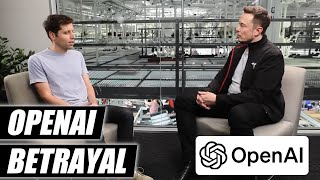
The lawsuit has generated extraordinary public attention across social platforms, revealing deep divisions that mirror the case's complexity. On X.com, Musk's own post about the amended lawsuit generated over 48,000 engagements, with sentiment running mixed — supporters framing the damages redirect as selfless and critics dismissing it as a competitive tactic wrapped in philanthropic language. The debate has spilled into long-form media as well: the All-In Podcast's episode featuring Musk discussing what he calls OpenAI's 'betrayal' drew over 750,000 views on YouTube, making it one of the most-watched segments on the lawsuit. Additional YouTube coverage from Wall Street Millennial (97,600 views analyzing financial and legal dimensions) and Matthew Berman (35,200 views examining court documents) demonstrates sustained demand for detailed breakdowns of the case.

The scale of social engagement — nearly a million YouTube views across just three channels — suggests the upcoming trial will face extraordinary public scrutiny. Reddit, typically a hub for substantive legal and tech policy debate, was inaccessible during research, representing a gap in sentiment analysis. The mixed public reaction complicates matters for both sides: Musk cannot count on universal sympathy given his estimated $700 billion fortune and ownership of a competing AI firm, while OpenAI cannot dismiss the case as frivolous when a federal judge has allowed the $134 billion damages theory to proceed to a jury. The outcome could reshape how AI companies — and tech nonprofits broadly — structure their organizations and handle donor relationships.

Historical Context

2015-12
OpenAI founded as a nonprofit AI research organization. Elon Musk served as co-founder and co-chair, contributing $38 million in seed funding.
2017-09
Musk demanded majority equity, absolute control, and the CEO title for a proposed for-profit entity. The board declined. Greg Brockman wrote in his journal: 'I cannot believe that we committed to non-profit if three months later we're doing b-corp then it was a lie.'
2018-02
Musk resigned as OpenAI co-chair after proposing and being denied a merger with Tesla.
2019-01
OpenAI transitioned from a pure nonprofit into a 'capped-profit' model with the creation of OpenAI LP.
2024-08
Musk filed the original lawsuit against OpenAI in U.S. District Court, alleging fraud and deviation from the nonprofit mission.
2025-02
Musk launched a $97.4 billion bid to acquire OpenAI outright. The board rejected it.
2025-10
OpenAI completed its conversion to a for-profit public benefit corporation, with the nonprofit retaining approximately 26% of the for-profit entity.
2026-01
The judge ruled the case can proceed to jury trial, citing Brockman's 2017 journal entry as critical evidence.
2026-04-07
Musk filed an amended complaint seeking removal of Altman and Brockman from leadership, forfeiture of their equity, and redirection of any $134 billion damages to OpenAI's nonprofit arm.

Power Map

Key Players
Subject

Musk Sues OpenAI for $134B, Seeks Altman and Brockman Removal

EL

Elon Musk

Plaintiff and OpenAI co-founder who departed in 2018. Now leads rival AI firm xAI. Originally donated $38 million in seed funding. Currently the world's wealthiest person with an estimated $700 billion fortune.

SA

Sam Altman

Defendant; CEO and board member of OpenAI. Musk seeks his removal from all leadership positions and forfeiture of equity obtained through for-profit operations.

GR

Greg Brockman

Defendant; President of OpenAI. His 2017 handwritten journal entry — stating the nonprofit commitment may have been 'a lie' — is key evidence. Musk seeks his removal as officer.

MI

Microsoft

Lead investor in OpenAI and co-defendant in the lawsuit. Musk alleges Microsoft received 'wrongful gains' from OpenAI's for-profit conversion.

XA

xAI

Musk's rival AI company operating chatbot Grok. OpenAI alleges the lawsuit is competitively motivated and designed to slow down a competitor.

JU

Judge Yvonne Gonzalez Rogers

Presiding U.S. District Judge in Oakland who ruled the case can proceed to jury trial, citing Brockman's journal entry as critical evidence.

THE SIGNAL.

Analysts

""Without Elon Musk, there'd be no OpenAI. He provided the bulk of the seed funding, lent his reputation, and taught them all he knows about scaling a business. A pre-eminent expert quantified the value of that.""

Steven Molo
Musk's lead trial lawyer

"Determined that Musk is entitled to a significant portion of OpenAI's valuation based on his $38 million seed donation, establishing the financial framework for the damages claim."

C. Paul Wazzan
Financial economist and expert witness for Musk

"Argues the damages methodology is legally flawed because it treats Musk as if he held an equity stake in the nonprofit — something legally impossible because nonprofit donors do not receive financial ownership interests. Called the lawsuit 'nothing more than a harassment campaign driven by ego, jealousy and a desire to slow down a competitor.'"

OpenAI legal team
Defense counsel for OpenAI

"Wrote to California and Delaware attorneys general requesting investigation into Musk's conduct, stating 'your offices did not thoroughly investigate OpenAI's plan.' OpenAI alleges Musk and intermediaries conducted opposition research on Altman, including tracking his flights, and coordinated with Meta CEO Mark Zuckerberg to block OpenAI's for-profit conversion."

Jason Kwon
OpenAI Chief Strategy Officer
The Crowd

"OpenAI's Nonprofit to Get Any Damages From Lawsuit. Elon Musk Asks for OpenAI's Nonprofit to Get Any Damages From His Lawsuit"

@@elonmusk40000

"Sir... Elon Musk just amended his OpenAI lawsuit... he's pledging to donate ALL $134 billion in winnings back to the OAI nonprofit... but he wants YOU removed from the nonprofit board..."

@@ns123abc6500

"NEWS: Elon Musk amends OpenAI lawsuit to ask that any damages he may win be awarded to the OpenAI's nonprofit arm and not to himself. Additionally, he is seeking to have OpenAI CEO Sam Altman and President Greg Brockman removed from their roles as officers in the company."

@@xDaily601
Broadcast
Elon Musk: OpenAI Betrayal, His Future at Tesla, and the Next Big Thing

Elon Musk: OpenAI Betrayal, His Future at Tesla, and the Next Big Thing

Musk's Lawsuit Against OpenAI Explained

Musk's Lawsuit Against OpenAI Explained

New Court Documents EXPOSE the Altman v Musk AI War

New Court Documents EXPOSE the Altman v Musk AI War