Trump-Xi Summit: AI Chip Exports and Nvidia's China Future
TECH

Trump-Xi Summit: AI Chip Exports and Nvidia's China Future

32+
Signals

Strategic Overview

  • 01.
    Trump concluded a 36-hour state visit to Beijing on May 15, 2026 without any signed AI governance framework; not a single Nvidia H200 chip has shipped to the ten approved Chinese buyers, and rare-earth exports remain roughly 50% below pre-restriction levels.
  • 02.
    The U.S. delegation included a heavyweight tech lineup — Jensen Huang (Nvidia), Tim Cook (Apple), Elon Musk (Tesla/SpaceX), Sanjay Mehrotra (Micron), and Dina Powell McCormick (Meta) — with Huang added last-minute in Anchorage after a direct call from Trump.
  • 03.
    Approved Chinese buyers Alibaba, Tencent, ByteDance, JD.com, and Lenovo each have authorization for up to 75,000 H200 chips under a January 2026 Commerce regulation that requires Nvidia to remit 25% of those sales to the U.S. government — but Beijing has steered firms toward domestic suppliers like Huawei instead.
  • 04.
    Huawei is positioning to seize China's AI chip crown in 2026, targeting roughly $12 billion in AI chip revenue on the strength of its Ascend 950PR, which delivers 2.8x the FP4 performance of Nvidia's now-banned H20.

Deep Analysis

The summit's loudest signal is the policy that didn't ship: zero H200s in China, and Beijing — not Washington — is now the blocker

The single most surprising fact about the May 2026 Trump-Xi summit is not what was negotiated, but what didn't happen. Despite a formal Commerce Department regulation published on January 13, 2026 that gave roughly ten approved Chinese firms — Alibaba, Tencent, ByteDance, JD.com, Lenovo and others — the right to each purchase up to 75,000 Nvidia H200 chips, not a single H200 has shipped to any of those buyers as of the summit's close [1]. Commerce Secretary Howard Lutnick told a Senate hearing that Beijing has held back purchases because Chinese firms are 'trying to keep their investment focused on their own domestic' chip suppliers, including Huawei [1]. This is a structural reversal of the prior two years of policy debate: for most of 2024 and 2025, the binding constraint was U.S. willingness to license; now the binding constraint is Chinese willingness to buy. Reddit's r/China community has seized on Lutnick's testimony as evidence that Beijing holds the upper hand, and the framing maps cleanly to the on-the-ground data — no chips, no signed AI governance framework, and a Geneva-truce tariff package that papered over rather than resolved the underlying technology dispute [1].
A 25% revenue tax on Nvidia is a novel — and, according to CFR, strategically incoherent — export-control instrument

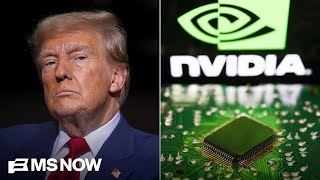
The mechanism at the heart of the H200 deal is unprecedented: rather than licensing chips through a binary yes/no regime, Trump's framework requires Nvidia to remit 25% of its China H200 sales directly to the U.S. government [1]. CFR's Chris McGuire calls the design strategically incoherent and unenforceable because 'any deal that allows Nvidia to sell more chips to China means fewer Nvidia chips for U.S. firms, and a smaller U.S. lead in AI over China' [3]. The same CFR analysis estimates that one million H200 chips would raise China's installed AI compute by 250% in 2026 — a step-change that flows through directly to PLA-adjacent training capacity even with end-use certification and a 50% U.S.-vs-China shipment cap built into the rule [3]. Michael C. Horowitz, also at CFR, frames the H200 decision as 'a more dovish approach toward what has been [the U.S.'s] preeminent geopolitical rival,' while Zongyuan Zoe Liu argues the reopening hands China 'not just a respite but a powerful opening' [4]. Heidi Crebo-Rediker warns the licensing deal could be 'politically explosive' and trigger a 'fierce backlash from China hawks' in Congress [1]. The MS NOW panel on YouTube echoed the same disconnect — that the 25% revenue-share reversal contradicts the White House's own export-control logic.

Huawei's $12B Ascend run is the real story behind Beijing's refusal to buy

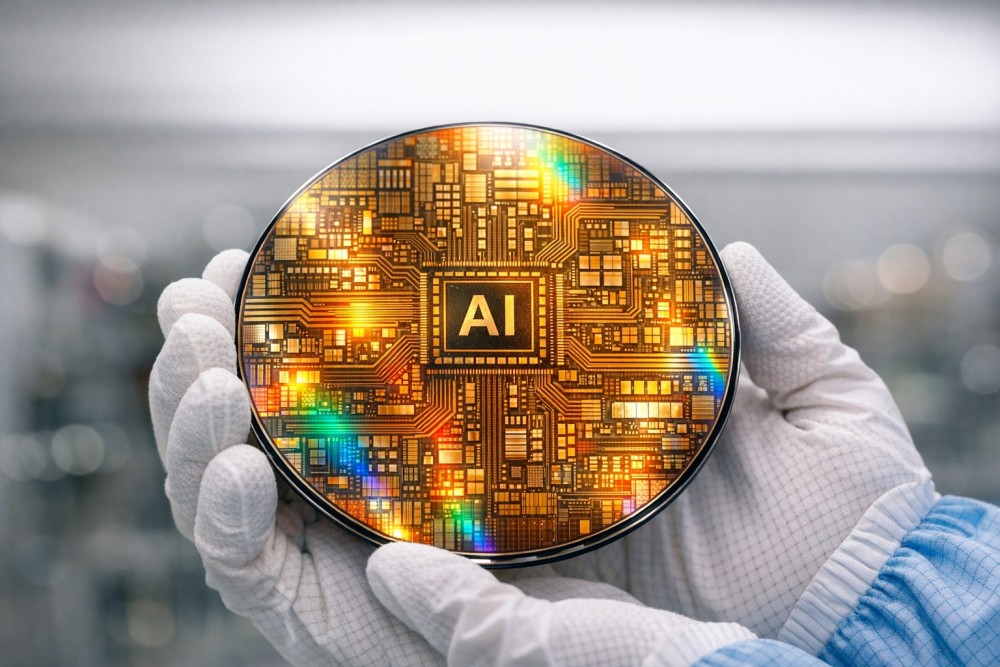
The reason Chinese firms can credibly slow-walk H200 orders is that Huawei has built a domestic alternative that no longer looks like a downgrade. Huawei is targeting roughly $12 billion in AI chip revenue in 2026, up about 60% from $7.5 billion in 2025 [6]. The Ascend 950PR delivers 1.56 PFLOPS of FP4 — about 2.8x the FP4 performance of Nvidia's now-banned H20 — and is the centerpiece of Beijing's homegrown-hardware push [8]. Tom's Hardware projects Huawei could 'seize China's AI chip crown in 2026' in a market expected to reach $67 billion by 2030 [5]. Even Jensen Huang has publicly argued top-tier Blackwell and Rubin parts should stay home: 'China should not have Blackwell or Rubin AI GPUs ... US should have the first, the most, and the best when it comes to AI hardware' [5]. The longer-term implication is a bifurcation of the global AI software stack along CUDA-vs-Cann lines — and the hardware-journalist contrarian on Reddit who argued SMIC cannot reach the leading edge without EUV is right about leading-edge fabrication, but irrelevant to the H200 generation where Huawei is already shipping competitive parts.

Rare earths are the slow-burn counter-leverage that the summit didn't fix

Lost in the chip headlines is that China's rare-earth squeeze remains unresolved and arguably the more durable form of Beijing's leverage. Rare-earth exports from China are still running roughly 50% below pre-restriction levels, and China controls approximately 85% of global rare-earth processing — inputs critical to semiconductor manufacturing itself [1]. The restrictions began in April 2025 when China introduced rare-earth export licensing; exports fell 93% year-on-year by May 2025 [9]. CSIS's Gracelin Baskaran warns that translating any normalization pledges into actual supply will take 'years, not months' [1]. Capital Economics' Leah Fahy is similarly skeptical, pointing out that Trump's 2017 China summit produced $250 billion in announcements, 'none of which materialized' [1]. The summit's framing of the relationship as 'constructive, strategic and stable,' combined with Trump's invitation to Xi for a September 24 White House visit, is more atmospheric than operational [2]. MERICS' Jacob Gunter predicted exactly this outcome — that the leaders would 'probably end up leaving these to the side,' and that 'AI and semiconductors are two of the many different fronts of the new Cold War' [7].

What markets are pricing: NVDA traders treat every China headline as free upside

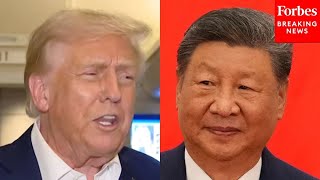
Despite the summit's lack of operational deliverables, the market read is asymmetrically bullish for Nvidia. The company's $78 billion annual guidance assumes zero China H200 revenue; any licensing-driven recovery is estimated at $3.5–4 billion, or roughly a 4–5% upside that is essentially not in models [1]. r/NVDA_Stock summarized the disposition crisply — 'China revenue is essentially not in models, so any reopening is upside' — and NVDA traded above $230 in premarket on summit headlines. The Bloomberg Television preview framed chips as one of three core summit pillars alongside fentanyl tariffs and soybeans, while Forbes Breaking News captured Trump's signature carve-out — that chip sales are 'really between you and Nvidia,' but 'not the Blackwell.' Wedbush's Dan Ives summarized the stakes: 'What is at stake is not just one trip or one headline but the direction of AI supply chains' [1]. For builders and investors, the asymmetry is the point: every additional Chinese hyperscaler that refuses an H200 order is a data point that Huawei's roadmap is real, but every approved license that finally clears is a clean beat on a model that already assumes zero. The base case after Beijing is that both can be true at once, for longer than either side intended.

Historical Context

2022-08-01
Initial U.S. export controls restricted Nvidia's most advanced AI chips (A100/H100) from sale to China.
2025-04-01
Banned Nvidia's China-specific H20 chip, triggering a $5.5 billion inventory charge for Nvidia.
2025-04-15
Introduced licensing requirements for rare-earth exports; exports fell 93% year-on-year in May 2025.
2025-12-08
Announced the U.S. would allow Nvidia to sell H200 chips to China with a 25% revenue tax to the U.S. government.
2026-01-13
Published the formal regulation creating the H200 export licensing framework with performance thresholds, a 50% U.S.-vs-China shipment cap, and end-use certification.
2026-05-12
Reached a Geneva trade-truce framework that lowered U.S. tariffs from 145% to 30% and Chinese tariffs from 125% to 10%.
2026-05-13
Arrived in Beijing for the first U.S. presidential state visit to China since 2017; greeted at airport by Vice President Han Zheng.
2026-05-15
Concluded the 36-hour summit and departed Beijing with no signed AI governance framework and no H200 shipments to date.

Power Map

Key Players
Subject

Trump-Xi Summit: AI Chip Exports and Nvidia's China Future

DO

Donald Trump

U.S. President; led the 36-hour Beijing visit and negotiated the 25% revenue-share H200 licensing framework. Carved out Blackwell and Rubin chips as off-limits to China.

XI

Xi Jinping

Chinese President; pushing domestic chip self-reliance, holding back state-controlled buyers from accepting U.S. H200 chips while leveraging rare-earth export controls as counter-leverage.

JE

Jensen Huang

Nvidia CEO; added last-minute to U.S. delegation in Anchorage; lobbying to revive Nvidia's China access while arguing top-tier Blackwell and Rubin GPUs should remain U.S.-only.

HO

Howard Lutnick

U.S. Commerce Secretary; public face of the H200 licensing framework. Told Senate that Beijing is steering Chinese firms toward domestic chipmakers, including Huawei.

HU

Huawei

Primary Chinese domestic Nvidia alternative; targeting ~$12 billion in AI chip revenue in 2026 (up ~60% from $7.5B in 2025) on strength of the Ascend 950PR.

AL

Alibaba, Tencent, ByteDance, JD.com, Lenovo

Approved Chinese H200 buyers (up to 75,000 chips each) who paused orders under Beijing pressure to prioritize domestic suppliers.

Fact Check

9 cited
  1. [1] Trump and Xi Close Beijing Summit With Warm Rhetoric, But Nvidia H200 Deliveries Remain Stalled and Rare-Earth Access Unresolved
  2. [2] 'Never mess it up': What Xi and Trump said on day one of Beijing talks
  3. [3] The New AI Chip Export Policy on China Is Strategically Incoherent and Unenforceable
  4. [4] Consequences of Exporting Nvidia's H200 Chips to China
  5. [5] Huawei Could Seize China's AI Chip Crown in 2026 as Nvidia's H200 Shipments Stall in Regulatory Limbo
  6. [6] Huawei Targets AI Chip Revenue Up 60% in 2026 vs Nvidia
  7. [7] Trump-Xi summit: Chips may be off the table, but AI warfare will likely feature in China
  8. [8] Huawei Ascend 950PR AI Chip Set to Challenge Nvidia in China by 2026
  9. [9] Trump Meets Xi in Beijing: Four Unsettled Disputes — Rare Earths, AI Chips, Taiwan, War

Source Articles

Top 5

THE SIGNAL.

Analysts

"Argues the H200 export policy is strategically incoherent and represents a net loss to U.S. AI leadership because every chip sold to China is one less chip for U.S. firms — and a smaller U.S. lead over China."

Chris McGuire
Senior Fellow for China and Emerging Technologies, Council on Foreign Relations

"By reopening chip access, the U.S. has handed China not just a respite but a powerful strategic opening to consolidate its domestic stack."

Zongyuan Zoe Liu
Maurice R. Greenberg Senior Fellow for China Studies, Council on Foreign Relations

"Top-tier Blackwell and Rubin GPUs should stay home — the U.S. should have the first, the most, and the best AI hardware — while the broader export-control posture has been counterproductive."

Jensen Huang
Nvidia founder and CEO

"Translating any rare-earth normalization pledges into actual supply will take years, not months — leaving U.S. chip-manufacturing inputs exposed for the foreseeable future."

Gracelin Baskaran
Center for Strategic and International Studies (CSIS)

"Skeptical that summit announcements will materialize, noting Trump's 2017 China summit produced $250 billion in announcements, none of which materialized."

Leah Fahy
Capital Economics
The Crowd

"Trump lands in China for Xi summit with Nvidia CEO in tow"

@u/PretendAd1963191

"Nvidia's Huang Joins Trump's China Trip as Last-Minute Addition"

@u/bloomberg131

"US clears H200 chip sales to 10 China firms as Nvidia CEO looks for breakthrough"

@u/unknown87
Broadcast
'Makes no sense.' Trump reversal on Nvidia chips to China contradicts WH policy

'Makes no sense.' Trump reversal on Nvidia chips to China contradicts WH policy

Trump-Xi Meeting Tees Up Nvidia Chips, Fentanyl Tariffs, Soybean Talk

Trump-Xi Meeting Tees Up Nvidia Chips, Fentanyl Tariffs, Soybean Talk

Trump Says He Told Xi Chip Sales Are 'Really Between You And Nvidia' But 'Not The Blackwell'

Trump Says He Told Xi Chip Sales Are 'Really Between You And Nvidia' But 'Not The Blackwell'