David Sacks Ends 130-Day Tenure as Trump's AI and Crypto Czar
TECH

David Sacks Ends 130-Day Tenure as Trump's AI and Crypto Czar

25+
Signals

Strategic Overview

  • 01.
    David Sacks completed his 130-day tenure as Trump's AI and crypto czar on March 26, 2026, hitting the maximum working days allowed for a special government employee under federal rules — a transition that generated significant online discourse, with @MarioNawfal's post on the departure drawing nearly 3,000 engagements on X.com.
  • 02.
    Sacks will transition to co-chairing the President's Council of Advisors on Science and Technology (PCAST) alongside Michael Kratsios, a role without the 130-day restriction that expands his portfolio to semiconductors, quantum computing, and nuclear power.
  • 03.
    The White House does not plan to appoint a replacement AI czar, and Sacks recently divested over $200 million in digital asset holdings for ethics compliance.
  • 04.
    While PCAST broadens Sacks' advisory scope, it is an advisory-only body — a significant step back from the direct presidential access he held as czar.

Deep Analysis

Why This Matters

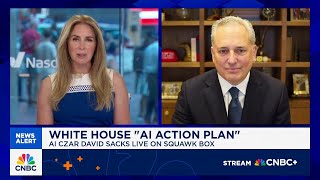
David Sacks' departure as AI and crypto czar marks the end of the most influential single-person tech policy role in the Trump administration. As a special government employee (SGE), Sacks was bound by a 130-day federal work limit — a constraint that @TukiFromKL highlighted on X.com in a viral post (1,621 engagements), contextualizing how a billionaire VC handpicked by Trump to shape crypto and AI policy for the entire country was structurally limited to just 130 working days. The transition matters because the White House has confirmed no replacement czar will be named, meaning Sacks' direct pipeline between Silicon Valley and the Oval Office disappears with him. CNBC's full interview with Sacks — now viewed over 508,000 times on YouTube — underscored the breadth of policy ground he covered, from the global AI arms race to domestic regulatory frameworks, illustrating just how much institutional knowledge walks out the door with him.

How It Works

The SGE designation allowed Sacks to serve the government while maintaining his private-sector ties at Craft Ventures, but it came with hard limits: no more than 130 working days within a 365-day period. Upon hitting that cap, Sacks transitions to co-chairing PCAST alongside Michael Kratsios — a body of up to 24 members including Jensen Huang, Mark Zuckerberg, Larry Ellison, Michael Dell, and other tech luminaries. Critically, PCAST is advisory-only. As TechCrunch noted, Sacks will be "much further from power center in Washington" than at any point since this second Trump administration began. The council can publish recommendations on semiconductors, quantum computing, nuclear power, AI, and crypto, but it lacks the executive authority Sacks wielded as czar, where he could directly brief the president and coordinate across agencies.

By The Numbers

Sacks served exactly 130 days as SGE, the federal maximum. During that period he oversaw the passage of the GENIUS Act (the first federal stablecoin framework), the barring of a central bank digital currency, and the unveiling of a national AI legislative framework on March 19, 2026. He divested over $200 million in digital asset holdings for ethics compliance. The story's reach on social media reflects its significance: @MarioNawfal's announcement post on X.com drew 2,920 engagements (2,600 likes, 211 retweets, 109 replies), while @CNBC's post garnered 1,028 engagements with mixed sentiment — some praising Sacks' accomplishments, others questioning the brevity and real impact of the role. On YouTube, Altcoin Daily's coverage of Sacks' bullish stance on the Clarity Act for crypto regulation drew 59,200 views and 2,896 likes, while Thinking Crypto's reporting on adjacent policy developments like 401(k) crypto proposals and Coinbase mortgage initiatives pulled 6,621 views, signaling sustained crypto-community attention to the policy vacuum Sacks leaves behind.

Impacts and What Comes Next

With no replacement czar planned, the day-to-day AI policy work falls to Sriram Krishnan, the White House AI adviser who worked alongside Sacks on the AI Action Plan. Krishnan lacks the czar title and the direct presidential access it conferred, raising questions about whether AI policy momentum can be sustained. On the crypto side, the policy pipeline Sacks built — executive orders on digital assets, the GENIUS Act, the CBDC bar — now enters an implementation phase without its architect in a direct operational role. The mixed sentiment visible on X.com captures this tension: supporters, reflected in @MarioNawfal's widely shared post, frame the PCAST transition as a natural and expanded continuation, while skeptics like @TukiFromKL question whether 130 days was enough to leave a durable mark. The crypto community in particular is watching closely, as evidenced by the YouTube engagement around the Clarity Act and 401(k) crypto access proposals that were under discussion during Sacks' final weeks.

The Bigger Picture

Sacks' trajectory — from PayPal mafia member and Craft Ventures partner to White House czar to PCAST co-chair — reflects a broader pattern of Silicon Valley figures cycling through government roles constrained by ethics rules and term limits. The SGE mechanism was designed to bring private-sector expertise into government temporarily, but the 130-day cap means these appointments are inherently short-lived sprints. A senior White House adviser insisted that to the administration, "David will always be his crypto and AI czar," framing the PCAST role as an expansion rather than a demotion. But PCAST's advisory-only mandate and its large membership dilute individual influence. The real test is whether the policy architecture Sacks built — particularly on stablecoins, AI regulation, and the CBDC bar — proves durable without a dedicated czar driving it forward. The volume of online discourse, from CNBC's half-million-view interview to the thousands of engagements across X.com posts with mixed sentiment, suggests the market and policy community are far from settled on what this transition means for the trajectory of U.S. tech and crypto policy.

Historical Context

2024-12-05
Trump announces David Sacks as White House AI and Crypto Czar.
2025-01-20
Executive orders signed prioritizing digital asset leadership and barring a central bank digital currency (CBDC).
2025-07-01
Congress passes the GENIUS Act, establishing the first federal stablecoin regulatory framework.
2026-03-19
White House unveils a national AI legislative framework, one of Sacks' final major policy deliverables as czar.
2026-03-26
Sacks confirms his 130-day SGE term has ended and announces transition to PCAST co-chair alongside Michael Kratsios.

Power Map

Key Players
Subject

David Sacks Ends 130-Day Tenure as Trump's AI and Crypto Czar

DA

David Sacks

Former AI and crypto czar, now PCAST co-chair and Craft Ventures partner. Retains advisory influence on tech policy but loses the direct line to the president that defined his czar role.

MI

Michael Kratsios

Senior White House tech adviser and PCAST co-chair alongside Sacks. Will share leadership of the council that advises the president on science and technology matters.

SR

Sriram Krishnan

White House AI adviser who worked alongside Sacks on the AI Action Plan during his tenure. Positioned to carry forward day-to-day AI policy work in the absence of a replacement czar.

PC

PCAST Council Members

Up to 24 members including Jensen Huang (Nvidia), Mark Zuckerberg (Meta), Larry Ellison (Oracle), Marc Andreessen (a16z), Sergey Brin (Google), Lisa Su (AMD), Michael Dell (Dell Technologies), and Fred Ehrsam (Coinbase) — collectively shaping federal tech advisory recommendations.

THE SIGNAL.

Analysts

""I think moving forward as co-chair of PCAST, I can now make recommendations on not just AI but an expanded range of technology topics." He also stated: "We've accomplished a lot in the first year, but the President wants to keep the pedal to the metal on everything tech.""

David Sacks
Former AI & Crypto Czar, Craft Ventures Partner

""David will always be his crypto and AI czar, but to the admin more broadly, this new role will allow him to advise on a broader range of critical tech issues.""

Senior White House Adviser
Trump Administration Official

""Sacks will be much further from power center in Washington than since the outset of this second Trump administration." The analysis highlights the structural downgrade from a czar role with direct presidential access to an advisory-only council position."

TechCrunch
Technology News Publication
The Crowd

"David Sacks says his time as Trump's crypto and AI czar has ended"

@@CNBC655

"do you understand what just happened with America's crypto and AI czar.. David Sacks.. PayPal mafia.. billionaire VC.. handpicked by Trump to be the guy who shapes crypto and AI policy for the entire country.. 130 days.. that's what he got.. the federal limit for a Special Government Employee..."

@@TukiFromKL1400

"DAVID SACKS COMPLETES HIS 130 DAYS AS TRUMP'S AI AND CRYPTO CZAR. Sacks used up his full allocation as a special government employee and is now moving to co-chair the President's Council of Advisors on Science and Technology."

@@MarioNawfal2600
Broadcast
WHITE HOUSE CRYPTO CZAR DAVID SACKS IS OUT! CRYPTO IN 401KS NEARS & COINBASE BITCOIN MORTGAGES!

WHITE HOUSE CRYPTO CZAR DAVID SACKS IS OUT! CRYPTO IN 401KS NEARS & COINBASE BITCOIN MORTGAGES!

Crypto Czar David Sacks All Hell Is Gonna Break Loose Bitcoin & Ethereum 2026 Clarity Act NEWS!

Crypto Czar David Sacks All Hell Is Gonna Break Loose Bitcoin & Ethereum 2026 Clarity Act NEWS!

Watch CNBC's full interview with White House AI czar David Sacks

Watch CNBC's full interview with White House AI czar David Sacks