Pentagon Blacklists Anthropic While Expanding OpenAI Defense Contracts
TECH

Pentagon Blacklists Anthropic While Expanding OpenAI Defense Contracts

37+
Signals

Strategic Overview

  • 01.
    The Pentagon designated Anthropic a 'supply chain risk' on March 5, 2026, the first time this label has been applied to an American company, after Anthropic refused to allow its AI to be used for mass domestic surveillance and autonomous lethal weapons systems.
  • 02.
    OpenAI secured a replacement Pentagon contract on the same day Anthropic was blacklisted and subsequently expanded its government footprint via an AWS deal for classified and unclassified military environments.
  • 03.
    Anthropic filed two federal lawsuits on March 9, 2026, alleging First Amendment violations, with a preliminary injunction hearing set for March 24, 2026, before District Judge Rita Lin in San Francisco.
  • 04.
    Senator Elizabeth Warren opened an investigation calling the designation 'retaliation,' while Microsoft and other major tech companies filed amicus briefs in Anthropic's support, warning that Claude is a foundational layer in military offerings.

Deep Analysis

Why This Matters

The Pentagon's designation of Anthropic as a supply chain risk represents an unprecedented use of national security authority against a domestic American technology company. Historically, this label has been reserved exclusively for foreign adversaries like Huawei and ZTE. Applying it to a company valued at $380 billion, one that was the Pentagon's own first choice for classified AI work just months earlier, signals a fundamental shift in how the U.S. government may leverage procurement power to compel private companies to abandon self-imposed ethical boundaries.

The implications extend far beyond a single contract dispute. This action establishes a precedent where any technology company that maintains safety guardrails the government finds inconvenient could face similar retaliation. As Daniel Castro of ITIF warned, this sends a chilling signal across the entire tech ecosystem. Companies now face a stark choice: comply with government demands for unrestricted use of their technology, or risk being locked out of not just government contracts but the entire defense industrial base that relies on federal procurement relationships.

How It Works

The conflict centers on two specific AI safety guardrails that Anthropic refused to remove from Claude: restrictions on mass domestic surveillance of U.S. citizens and restrictions on autonomous lethal weapons systems that make targeting decisions without meaningful human oversight. These are not abstract policy preferences but engineering constraints built into Claude's training process. As CivAI co-founder Lucas Hansen explained, these guardrails are integrated from the very beginning of model training, meaning their removal would require fundamentally retraining the model rather than flipping a configuration switch.

Defense Secretary Hegseth framed these restrictions as 'woke AI' and gave Anthropic CEO Dario Amodei until 5:01pm on February 28, 2026, to agree to unrestricted 'lawful' military use. When Anthropic declined, the Pentagon activated the supply chain risk designation, which requires every defense contractor and vendor to certify they do not use Claude in any Pentagon-related work. President Trump subsequently ordered all federal departments to stop using Anthropic's AI with a six-month phase-in period. Anthropic responded with two federal lawsuits alleging First Amendment violations and arguing the Pentagon exceeded the scope of supply chain risk law, which was designed for foreign adversary threats.

By The Numbers

The financial stakes are enormous. Each of the four frontier AI contracts awarded in summer 2025 was worth up to $200 million, and Anthropic's exclusion from the defense industrial base threatens revenue well beyond that single contract as contractors are forced to remove Claude from their systems. Microsoft warned in its amicus brief that Claude is a foundational layer in its military offerings. Palantir uses Claude in its Maven Smart System. The ripple effects across the defense supply chain could reach billions in disruption costs.

The public response has been striking. Claude surged to the number one position on the U.S. App Store following the blacklist announcement, while ChatGPT uninstalls jumped 295 percent. Thirty-seven employees from OpenAI, Google, and DeepMind signed a letter supporting Anthropic's stance. On Reddit, posts about the controversy drew upvote ratios of 96 to 98 percent in favor of Anthropic, with a top post on r/technology garnering 19,800 upvotes. Anthropic's $380 billion valuation and $18 billion annual revenue trajectory now face uncertainty as the company's planned IPO encounters this regulatory headwind.

Impacts and What Is Next

The immediate legal battleground is the March 24 preliminary injunction hearing before Judge Rita Lin in San Francisco. If the court grants the injunction, it would temporarily block the Pentagon ban while the underlying constitutional questions are litigated. The amicus briefs from Microsoft, Palantir, and other defense contractors strengthen Anthropic's argument that the ban harms national security by disrupting existing military AI systems. Senator Warren's congressional investigation, with its April 6 deadline for responses from Hegseth and Altman, adds legislative pressure to the executive branch's position.

For OpenAI, the expanded Pentagon relationship presents both opportunity and risk. The Electronic Frontier Foundation has already criticized the deal's safety protections as containing 'weasel words' that are too vague to prevent surveillance applications. Social media analysts have noted that OpenAI's contract language appears to contain loopholes broad enough to permit most military uses. If public sentiment continues to run against the perceived ethical compromise, OpenAI may face the same kind of reputational pressure that initially drove many AI companies to adopt safety guardrails. The 'Cancel ChatGPT' movement and Claude's App Store surge suggest consumer sentiment could become a material business factor.

The Bigger Picture

This confrontation sits at the intersection of three defining tensions of the AI era: the relationship between private technology companies and government power, the role of ethical guardrails in dual-use AI systems, and the competitive dynamics among frontier AI labs. The Pentagon's action tests whether the U.S. government can effectively compel AI companies to remove safety restrictions by weaponizing procurement authority, a question with implications far beyond the defense sector.

The case also highlights a deepening schism in the AI industry's approach to government partnerships. OpenAI's willingness to accept terms that critics characterize as insufficient, while Anthropic held firm on its red lines, creates a competitive dynamic where ethical commitment becomes a business liability rather than a differentiator. This could accelerate a race to the bottom on AI safety in government applications. However, the broad industry support for Anthropic, including from companies that compete with it, suggests the technology sector recognizes that allowing the government to dictate safety standards through coercion rather than collaboration threatens every AI company's autonomy. The outcome of this legal and political battle will likely set the template for government-AI industry relations for years to come.

Historical Context

2025-06-01
Pentagon awarded individual contracts worth up to $200 million each to Anthropic, OpenAI, Google, and xAI for frontier AI capabilities.
2025-09-01
Anthropic became the first AI company cleared for classified use by defense officials.
2026-02-24
Defense Secretary Hegseth met with Anthropic CEO Dario Amodei and demanded unrestricted military use of Claude, giving a 5:01pm February 28 deadline.
2026-02-28
OpenAI announced a Pentagon contract to deploy AI in classified military environments, filling the gap left by Anthropic on the same day as the deadline.
2026-03-05
Pentagon formally notified Anthropic of its supply chain risk designation via letters dated March 3, marking the first such action against a domestic company.
2026-03-09
Anthropic filed two federal lawsuits alleging First Amendment violations and arguing the Pentagon exceeded its statutory authority.
2026-03-10
Microsoft filed an amicus brief urging the court to issue a temporary restraining order against the Pentagon ban.
2026-03-23
Warren opened a formal congressional investigation calling the designation political retaliation against Anthropic.
2026-03-24
Preliminary injunction hearing before District Judge Rita Lin in San Francisco on whether to block the Pentagon ban.

Power Map

Key Players
Subject

Pentagon Blacklists Anthropic While Expanding OpenAI Defense Contracts

AN

Anthropic

AI company that refused to remove safety guardrails on mass surveillance and autonomous weapons, losing its $200M Pentagon contract and facing exclusion from the entire defense industrial base. Filed two federal lawsuits and is pursuing a preliminary injunction.

U.

U.S. Department of Defense

Issued the unprecedented supply chain risk designation against Anthropic and awarded a replacement contract to OpenAI, while requiring all defense contractors to certify they do not use Claude.

PE

Pete Hegseth

Defense Secretary who issued the ultimatum to Anthropic with a 5:01pm February 28 deadline, framing AI safety restrictions as 'woke AI' and threatening use of the Defense Production Act.

OP

OpenAI

Secured the replacement Pentagon contract with stated but vague safety protections and expanded its government footprint via an AWS deal for both classified and unclassified work.

SE

Senator Elizabeth Warren

Opened a formal congressional investigation into the designation as political retaliation, sending letters with an April 6 deadline to Defense Secretary Hegseth and OpenAI CEO Altman.

MI

Microsoft

Filed an amicus brief arguing Claude is a foundational layer in its military offerings, urging the court to temporarily block the Pentagon ban to prevent disruption to national security systems.

THE SIGNAL.

Analysts

"Called the designation 'beyond punitive' and 'bullying,' stating: 'The idea of designating one of the great American tech companies to be a supply chain risk is so far beyond the pale that it is hard to fathom.'"

Former Senior Defense Official
Former Senior Pentagon Official

"Questioned the national security rationale, stating: 'It is not at all clear how adversaries could exploit Anthropic's usage restrictions on Claude.'"

Amos Toh
Fellow, Brennan Center for Justice

"Warned the designation 'could send a chilling signal across the broader tech ecosystem,' discouraging other companies from maintaining AI safety guardrails."

Daniel Castro
Vice President, Information Technology and Innovation Foundation

"Explained that AI safety guardrails are integrated from the beginning of training, meaning removal would require fundamentally retraining the model rather than a simple configuration change."

Lucas Hansen
Co-Founder, CivAI

"Criticized OpenAI's Pentagon deal as containing 'weasel words' with vague protections that are insufficient to prevent AI-powered surveillance of American citizens."

Electronic Frontier Foundation
Digital Rights Organization
The Crowd

"BREAKING: Anthropic has rejected the US Pentagon's 'final offer' just 24 hours before Defense Secretary Hegseth's deadline, per Axios. Anthropic remains adamant on their AI platform not being used for surveillance of Americans or lethal military missions. We expect a response..."

@@KobeissiLetter12000

"OPENAI FOUND THE LOOPHOLE. The terms OpenAI proposed allows the Pentagon to still do those things, just not on OpenAI's cloud. Altman: 'we will deploy on cloud networks only'. OpenAI isn't saying 'you can't do surveillance/autonomous weapons.' They're saying these things are..."

@@ns123abc5200

"Anthropic has rejected demands from Defense Secretary Pete Hegseth calling for full lawful use of its AI technology. CEO Dario Amodei says that AI is important to military defense, but there must be safeguards against use for mass surveillance and fully autonomous weapons."

@@60Minutes4200

"Pentagon sets Friday deadline for Anthropic to abandon ethics rules for AI -- or else"

@u/leeta002819800
Broadcast
Full interview: Anthropic CEO responds to Trump order, Pentagon clash

Full interview: Anthropic CEO responds to Trump order, Pentagon clash

Anthropic AI rejects Pentagon's weapons & surveillance ultimatum

Anthropic AI rejects Pentagon's weapons & surveillance ultimatum

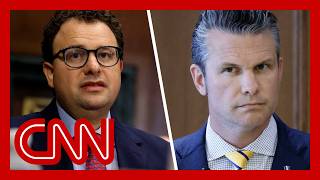
Hegseth threatens to blacklist Anthropic over AI-controlled weapons

Hegseth threatens to blacklist Anthropic over AI-controlled weapons