SoftBank earnings surge on OpenAI valuation gains
TECH

SoftBank earnings surge on OpenAI valuation gains

39+
Signals

Strategic Overview

  • 01.
    SoftBank's Q4 (Jan-Mar 2026) net income tripled to roughly ¥1.83 trillion (~$11.6 billion), versus the ¥295.2 billion consensus estimate, and full-year net income jumped to ¥5.002 trillion from ¥1.153 trillion a year earlier.
  • 02.
    Vision Fund posted a ~$46 billion fiscal-2025 gain, with nearly $45 billion attributable to OpenAI alone.
  • 03.
    SoftBank's $34.6 billion cumulative investment in OpenAI was marked to a fair value of $79.6 billion as of March 31, 2026, and total commitment is scheduled to reach $64.6 billion (about a 13% stake) after a final tranche in October 2026.
  • 04.
    To fund the bet SoftBank sold its entire Nvidia stake for $5.83 billion, divested T-Mobile shares, expanded Arm margin loans, and arranged a $40 billion bridge facility; total debt rose to $113 billion from $77 billion a year earlier.
  • 05.
    S&P revised SoftBank's credit outlook to negative in March 2026, and in early May SoftBank reportedly cut a planned OpenAI-backed margin loan target from $10 billion to $6 billion as lenders pulled back.

Deep Analysis

One private name now is the Vision Fund

The headline numbers are real, but they collapse to a single position. SoftBank's full-year net income jumped to ¥5.002 trillion from ¥1.153 trillion, and Q4 alone tripled to ¥1.83 trillion — beating the consensus ¥295 billion estimate by more than 6x [1]. Inside that result, the Vision Fund posted roughly $46 billion of fiscal-year gains, with nearly $45 billion tied to OpenAI [3]. Bloomberg Intelligence's Kirk Boodry put it most bluntly: 'This quarter's profit basically comes down to the OpenAI stake, which SoftBank marked up by around $25 billion' [1]. In other words, almost every other portfolio company netted to roughly nothing this quarter.

That is not a diversified investment conglomerate any more; it is a single-name vehicle wearing a portfolio costume. The mark on OpenAI alone overwhelms the rest of the Vision Fund's book [10]. SoftBank's reported profit cycle is now structurally tethered to whatever OpenAI's next primary funding round prints — a level of single-asset concentration unusual even by Masayoshi Son's historical standards.

Accounting alchemy: a $45B gain you can't spend

The mark is large precisely because OpenAI's primary-market valuation re-rated violently: from $157 billion in October 2025 to $852 billion by March 2026, a 5.4x move in five months [3]. Under fair-value accounting, SoftBank re-prices its private stake to the most recent transaction; the cumulative $34.6 billion invested was marked to $79.6 billion as of March 31 [2].

That accounting honesty produces accounting volatility — and, critically, no cash. SoftBank cannot sell into a public market, so the reported earnings number translates poorly into deployable liquidity. The skeptical thread in independent finance coverage and community discussion has fixed on exactly this paper-versus-pocket distinction: the $46 billion is an unrealized fair-value entry, and the same accounting that produced the upside produces a symmetrical downside if the next funding round prices flat. Nothing about this quarter changes that mechanic.

The financing machinery behind the bet

To fund a commitment now scheduled to reach $64.6 billion, SoftBank has been running a continuous asset-sale and leverage program. It exited Nvidia entirely for $5.83 billion in November 2025 [9], sold down T-Mobile, lifted margin loans against Arm shares to roughly $20 billion from $13.5 billion, and arranged a $40 billion bridge facility [3]. Reported total debt climbed to about $113 billion as of March 31, 2026, up from $77 billion a year earlier, while Q4 financing expenses rose to ¥229.4 billion from ¥148.9 billion [2][4].

Each financing line is individually rational; collectively they describe a conglomerate that has converted liquid public-market assets and incremental debt capacity into one illiquid private position. Jefferies' Atul Goyal labels the broader arrangement 'circular funding dynamics' — a reference to the way SoftBank, OpenAI and related compute-infrastructure deals increasingly recycle capital among themselves [1]. Son himself signals he intends to plow further gains back into AI and robotics rather than de-risk [11].

The $10B-to-$6B loan cut is the real signal

The most underrated datapoint in this earnings cycle is not the $46 billion gain — it is the $4 billion that didn't get raised. SoftBank reportedly trimmed a planned OpenAI-backed margin loan target from $10 billion to $6 billion in early May as banks pulled back on accepting OpenAI shares as collateral [8]. That is the first concrete instance of professional lenders, who get paid to underwrite exactly this kind of structure, declining to fully extend the leverage stack.

S&P had already moved first, revising the outlook to negative in March on the view that 'asset liquidity and quality of its portfolio, and its financial capacity are likely to deteriorate because of its additional huge investment in OpenAI' [5][6]. Equity markets are celebrating the mark; credit markets are pricing the funding gap. When the two disagree this sharply on the same balance sheet, the credit side has historically been the one to watch — and the social-media reception, particularly from the more skeptical finance corners, has zeroed in on this gap as the structural tell rather than the headline.

The WeWork echo and the Son pattern

Critical commentary skews heavily toward one comparison: the same operator who took a high-profile loss on WeWork is now running a far larger, more concentrated, more leveraged bet on a single private company. The most-engaged independent-finance reviews of this quarter's print draw an explicit parallel — high-conviction concentration, debt-financed top-ups at rising marks, and a narrative-driven thesis untethered from realized cash flows.

Son himself signals he intends to plow the gains back into AI and robotics rather than de-risk [11], framing the strategy as ideologically aligned with OpenAI's mission of broad benefits from advanced AI. The bull case is that this time the underlying asset is genuinely transformative and the mark is conservative relative to a probable IPO. The bear case is structural: SoftBank's edge has historically been capital scale, not security selection, and capital scale becomes a liability when one position dominates the book, debt is rising, and the next funding round determines whether ¥5 trillion of reported earnings was a peak or a floor.

Historical Context

2025-03-31
Signed a definitive agreement for up to $40 billion in follow-on investments in OpenAI.
2025-11
Liquidated its entire remaining Nvidia stake for $5.83 billion to free cash for OpenAI tranches.
2025-12-30
Completed the $40 billion OpenAI commitment via a final tranche.
2026-02-27
Announced an additional $30 billion follow-on commitment via Vision Fund 2, lifting cumulative exposure to $64.6 billion (about a 13% stake) with the final tranche slated for October 2026.
2026-03-03
Revised SoftBank's outlook to negative, citing the $30B incremental commitment and portfolio concentration.
2026-05-08
Reportedly trimmed a planned OpenAI-backed margin loan target from $10 billion to $6 billion as lenders pulled back.
2026-05-13
Reported FY2025 results: ¥5.0 trillion annual net income and ¥1.83 trillion Q4 profit, primarily driven by OpenAI valuation gains.

Power Map

Key Players
Subject

SoftBank earnings surge on OpenAI valuation gains

SO

SoftBank Group Corp.

Japanese investment conglomerate booking the gains; financing an OpenAI doubling-down via asset sales and new borrowings.

OP

OpenAI

Single holding driving nearly all Vision Fund returns; recipient of follow-on tranches scheduled through October 2026.

MA

Masayoshi Son (SoftBank Chairman & CEO)

Architect of the OpenAI bet; funded it through Nvidia/T-Mobile divestitures and bridge debt while pledging to recycle gains into more AI and robotics.

VI

Vision Fund 2

Vehicle holding the OpenAI position; reports the mark-to-fair-value gains that flow into SoftBank's headline earnings.

S&

S&P Global Ratings

Revised SoftBank's credit outlook from stable to negative in March 2026, citing OpenAI concentration and liquidity strain from the incremental $30B commitment.

SA

Sam Altman (OpenAI CEO)

Counterparty who frames SoftBank's scale as enabling faster execution at OpenAI on compute and product.

Fact Check

10 cited
  1. [1] SoftBank Group profit surges on OpenAI stake as $64 billion bet faces cash test
  2. [2] SoftBank's Quarterly Earnings Surge 300% Thanks to OpenAI Stake Valuation
  3. [3] SoftBank books $45B paper gain on OpenAI as Vision Fund swings to $46B yearly profit
  4. [4] SoftBank posts $46 billion gain at Vision Fund driven mainly by massive OpenAI bet
  5. [5] SoftBank's $30 Billion OpenAI Bet Spurs S&P Credit Outlook Cut
  6. [6] SoftBank (SFTBY) OpenAI Exposure Boosts Earnings Amid Rising Debt and Funding Concerns
  7. [8] SoftBank cuts OpenAI-backed margin loan target from $10B to $6B
  8. [9] SoftBank sells its entire stake in Nvidia for $5.83 billion
  9. [10] SoftBank's Huge OpenAI Bet Pays Off With $45 Billion Gain
  10. [11] SoftBank profit jumps on OpenAI valuation gains

Source Articles

Top 4

THE SIGNAL.

Analysts

"Attributes essentially the entire quarter's profit to a single mark-up on the OpenAI stake of roughly $25 billion, underscoring the conglomerate's dependence on one private valuation."

Kirk Boodry
Analyst, Bloomberg Intelligence

"Warns that SoftBank's AI strategy is sustained by 'circular funding dynamics' between SoftBank, OpenAI and related infrastructure partners."

Atul Goyal
Analyst, Jefferies

"Says SoftBank's portfolio quality, asset liquidity and financial capacity are likely to deteriorate as the OpenAI commitment grows, justifying a negative outlook."

S&P Global Ratings
Credit rating agency

"Positions SoftBank's role as ideologically aligned with OpenAI's mission and signals that future gains will be plowed back into AI and robotics."

Masayoshi Son
Chairman & CEO, SoftBank Group

"Credits SoftBank's capital scale with letting OpenAI accelerate compute build-out and product execution."

Sam Altman
CEO, OpenAI
The Crowd

"SoftBank cuts target for OpenAI margin loan by 40% to $6 billion, Bloomberg News reports"

@u/Sweaty_Rub43221000

"Over 600 OpenAI Employees Sold $6.6B in Shares at $11M Each Before Any IPO"

@u/andix3488

"SoftBank posts $46 billion gain at Vision Fund driven mainly by massive OpenAI bet"

@u/Tadikif79
Broadcast
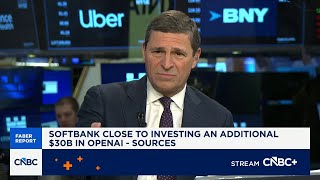
Faber Report: Softbank close to investing an additional $30B in OpenAI

Faber Report: Softbank close to investing an additional $30B in OpenAI

SoftBank Borrows $40 Billion to Invest in OpenAI - AI Fraud Gamblers are Betting the House

SoftBank Borrows $40 Billion to Invest in OpenAI - AI Fraud Gamblers are Betting the House

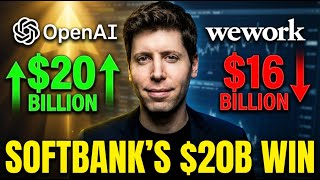
OpenAI Just Made SoftBank $20 Billion on Paper (The Same Guy Who Lost $16B on WeWork)

OpenAI Just Made SoftBank $20 Billion on Paper (The Same Guy Who Lost $16B on WeWork)