Why This Matters
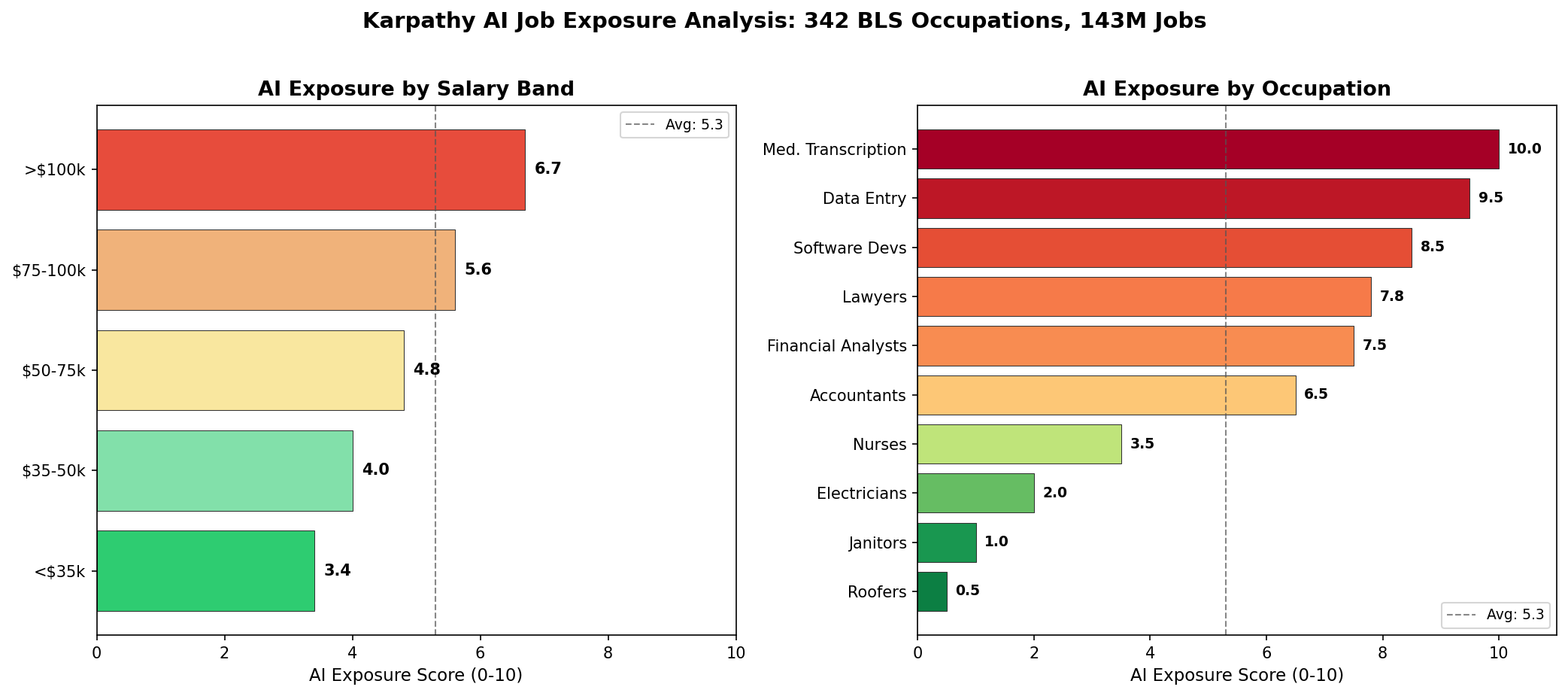
The convergence of Karpathy's empirical scoring tool and Altman's metered-utility vision within the same week marks a qualitative shift in the AI labor discourse. For the first time, a respected AI researcher has attached specific, data-grounded vulnerability scores to virtually every occupation in the U.S. economy, transforming an abstract debate into a concrete, occupation-by-occupation risk map. The finding that 42% of American jobs, representing 59.9 million workers and $3.7 trillion in annual wages, score 7 or higher on AI exposure gives policymakers, employers, and workers a quantitative framework they previously lacked.
This matters beyond the numbers because the social reaction reveals deep fractures in how society is processing AI's labor implications. Karpathy deleted his repository within hours after it was 'wildly misinterpreted,' demonstrating that even well-intentioned transparency efforts can become lightning rods. Meanwhile, Altman's admission that 'nobody knows what to do' about AI's disruption of the labor-capital balance, coming from the CEO of the company building the most advanced AI systems, underscores that the pace of technological development has outstripped institutional preparedness.