Context Engineering for AI Agents
TECH

Context Engineering for AI Agents

29+
Signals

Strategic Overview

  • 01.
    Context engineering is the set of strategies for curating and maintaining the optimal set of tokens during LLM inference, addressing the entire context state across multiple turns rather than just a single prompt.
  • 02.
    LangChain CEO Harrison Chase defines context engineering as building dynamic systems to provide the right information and tools in the right format such that the LLM can plausibly accomplish the task.
  • 03.
    Most agent failures stem not from model inadequacy but from missing, irrelevant, or poorly formatted context.
  • 04.
    Anthropic identifies four core context ingredients for agents: system prompts at the right altitude, tools with clear self-contained purpose and minimal overlap, diverse canonical few-shot examples, and curated message history.
  • 05.
    Anthropic's Claude Developer Platform now ships three first-class context engineering primitives: compaction, tool-result clearing, and a memory tool for persistent external storage.
  • 06.
    Just-in-time context retrieval is a converging best practice: agents maintain lightweight identifiers (file paths, queries, links) and dynamically load data at runtime rather than pre-loading everything.

The bottleneck moved from model to context

For three years the dominant assumption was that better foundation models would unlock production agents. That assumption has quietly collapsed. The new consensus, articulated most directly by Harrison Chase, is that capability is no longer the limiter — context is. LangChain's central claim is that most of the time when an agent is not performing reliably the underlying cause is that the appropriate context, instructions and tools have not been communicated to the model [2]. Anthropic's Applied AI team frames the same shift differently: context must be treated as a finite resource with diminishing marginal returns, and the engineering job is to surface the smallest possible set of high-signal tokens rather than to flood the window [1].

This reframing has practical teeth. Prompt engineering — the message-level instruction craft that dominated 2022-2024 and briefly carried six-figure salaries — is now treated as a subset of a broader discipline [10]. Context engineering covers everything that ends up in the model's view across a multi-turn agent run: system prompts, tool definitions, retrieved documents, memory, prior tool results, and the running message history. As Chase puts it on the Sequoia podcast, agent context is non-deterministic — you don't actually know what the context at step 14 will be because there's 13 steps before that that could pull arbitrary things in [3]. That non-determinism is why traces, not source code, are becoming the unit of debugging.
Four ways context breaks, with receipts

The field now has a shared vocabulary for failure. Drew Breunig's June 2025 essay names four modes: poisoning (a hallucination enters context and gets repeatedly referenced), distraction (the model fixates on its own history instead of training), confusion (irrelevant tokens skew the answer), and clash (parts of context contradict each other) [4]. The vocabulary stuck because the underlying empirical picture is unambiguous.

The numbers are not subtle. Chroma Research's 2025 study tested 18 frontier LLMs and found every single one degrades as input length increases — performance grows increasingly unreliable as input length grows [5]. Databricks measured Llama 3.1 405b correctness beginning to drop around 32,000 tokens [5]. Google DeepMind's own Gemini 2.5 technical report acknowledges context distraction past 100,000 tokens, with the agent favoring repeating actions over novel planning [4]. Microsoft and Salesforce found a 39% average performance drop when prompts were sharded across multiple conversational turns, with OpenAI's o3 falling from 98.1 to 64.1 on affected benchmarks [4]. And the most actionable data point of all: on the Berkeley Function-Calling Leaderboard, a quantized Llama 3.1 8b failed with 46 tools available but succeeded with 19 tools in the same 16K window — a roughly 3x accuracy swing driven entirely by pruning tool surface area [4]. Bigger context windows are not free capability; they are a budget with steep marginal cost.

Anthropic bet the stack on context

Anthropic has aligned more of its platform with context engineering than any other lab. The Model Context Protocol, launched in November 2024, became the substrate — and the strategic payoff arrived when both OpenAI and Google adopted MCP across their stacks, turning a single-vendor protocol into the de facto cross-vendor standard [7]. MCP downloads grew from 2M monthly at launch to 97M by March 2026, a 4,750% expansion in 16 months [7].

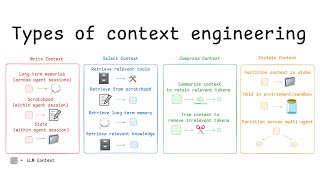
In January 2026, Anthropic followed by shipping three native context primitives on the Claude Developer Platform. Compaction is a whole-transcript operation that flattens user messages, assistant messages, tool calls, tool results, and even prior compaction blocks into a summary [6], with a server-side minimum trigger of 50K input tokens. Tool-result clearing fires by default at 100K tokens and keeps the last three tool uses [6]. A memory tool gives agents persistent external storage. These are no longer harness-level concerns built by application developers — they are first-class API features.

The second pillar is Agent Skills, which lean on progressive disclosure: Claude loads information only as needed [9]. Skill metadata is loaded at startup; the full skill body is pulled in on demand. That is just-in-time retrieval lifted from the developer best-practices essay — agents maintain lightweight identifiers (file paths, stored queries, web links) and use these references to dynamically load data into context at runtime using tools [1]— and burned into the platform.

The new production playbook is converging

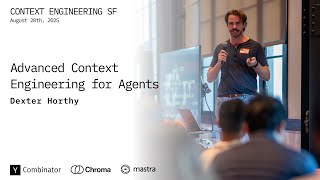
Across the practitioner videos and developer forums tracked for this cluster, an unusual amount of agreement has formed on what production context engineering actually looks like — and notably, it does not look like a longer prompt or a bigger model. The Manus co-founder Yichao Ji, in conversation with LangChain, frames the playbook as three operations: context reduction via dual-form tool results (a full version plus a compact one), context offloading via layered action spaces with filesystem-backed state, and context isolation via narrowly-scoped sub-agents with constrained-decoding inter-agent comms. Human Layer founder Dexter Horthy, in his YC Root Access deep-dive, makes a complementary case: subagents earn their cost as context-isolation primitives, not as parallelism primitives, and frequent intentional compaction is the difference between an agent that survives a real codebase and one that fails on its second tool call.

Developer community discussion on X and Reddit lands on the same shape. The dominant frustration is with naive dump-everything-into-RAG patterns; the dominant enthusiasm is for purpose-built context systems that prune what an agent sees rather than expand it. Anthropic's Agent Skills release was framed in the same community discussion as Anthropic effectively open-sourcing its production playbook for context engineering. What is notable is that this playbook is not Anthropic-specific — it is the same vocabulary practitioners now use regardless of which model they target, which makes the playbook itself the durable asset. The strategic stakes are large: fewer than one in four organizations experimenting with AI agents have managed to scale them to production [8], and the converging consensus is that closing that gap runs through context discipline, not model upgrades.

Historical Context

2022
Prompt engineering peaks in 2022-2024 with message-level instruction design and six-figure salaries; relevance declines as context windows expand and models improve.
2024-11-01
Anthropic introduces the Model Context Protocol (MCP), creating an open standard that quickly becomes the substrate for context engineering across vendors.
2025-06-22
Publishes 'How Long Contexts Fail', formalizing the four failure modes (poisoning, distraction, confusion, clash) that now anchor the field's vocabulary.
2025-07
Publishes 'The rise of context engineering', formally defining the term and arguing it has replaced prompt engineering as the central agent-development discipline.
2025-09-29
Publishes 'Effective context engineering for AI agents', the canonical industry reference; soon followed by Agent Skills with progressive disclosure.
2026-01-12
Ships native compaction on the Claude Developer Platform with configurable triggers and instructions, alongside tool-result clearing and a memory tool.

Power Map

Key Players
Subject

Context Engineering for AI Agents

AN

Anthropic

Publisher of the canonical 'Effective context engineering for AI agents' essay; shipped compaction, tool-result clearing, and the memory tool as native Claude Developer Platform features; originator of MCP and Agent Skills.

LA

LangChain / Harrison Chase

Coined and popularized the term 'context engineering'; argues it is the central discipline behind long-horizon agents and the new AI moat; promotes harness engineering and Deep Agents.

OP

OpenAI and Google

Adopted Anthropic's Model Context Protocol (MCP) across their stacks, helping make context engineering a cross-vendor standard.

CH

Chroma Research

Published the 2025 study testing 18 frontier models that quantified context rot as input length grows.

DA

Databricks

Published research showing model correctness begins dropping around 32K tokens for Llama 3.1 405b.

Fact Check

10 cited
  1. [1] Effective context engineering for AI agents
  2. [2] The rise of context engineering
  3. [3] Context Engineering Our Way to Long-Horizon Agents with LangChain's Harrison Chase
  4. [4] How Long Contexts Fail
  5. [5] Context Engineering: The 2025 Guide to Building Better AI Agents
  6. [6] Context Engineering Tools
  7. [7] Context Engineering: The New Discipline for Effective AI Systems
  8. [8] Agentic AI Trends 2026
  9. [9] Equipping agents for the real world with Agent Skills
  10. [10] Context Engineering vs Prompt Engineering

Source Articles

Top 1

THE SIGNAL.

Analysts

"Context engineering is the new AI moat for long-horizon agents; better foundation models alone will not get agents to production; everything LangChain does is context engineering."

Harrison Chase
Co-founder & CEO, LangChain

"Agent context is non-deterministic across multi-step runs, so traces (not code) become the source of truth for debugging agents."

Harrison Chase
Co-founder & CEO, LangChain

"Context is a finite resource with diminishing returns; the goal is the smallest set of high-signal tokens, not maxing out the window."

Anthropic Applied AI team
Authors of 'Effective context engineering for AI agents'

"Identifies four named failure modes for long contexts: poisoning, distraction, confusion, and clash; each requires different mitigations."

Drew Breunig
Independent researcher / author of 'How Long Contexts Fail'

"Models do not use their context uniformly; reliability degrades as input length grows across every frontier model tested."

Chroma Research
Independent research lab

"Gemini 2.5 Pro exhibits context distraction beyond 100K tokens, favoring repetition over novel planning."

Google DeepMind
Authors of Gemini 2.5 technical report
The Crowd

"I just read Anthropic's guide on effective context engineering for AI agents. It rewires how you think about context, with beautiful simple explanations. Bookmark this. Here's what you need to know: - Context Rot is real. As the number of tokens in the context window"

@@Hesamation2090

"Anthropic just open-sourced their entire playbook for building production AI agents. It's called Agent Skills for Context Engineering and it's what their engineers actually use. - Context fundamentals & degradation patterns - Multi-agent architectures - Memory systems design"

@@ihtesham2005990

"LLM agents break down on long tasks. This is where context engineering really matters. Agents can reason and use tools, but extended operations cause unbounded context growth and accumulated errors. Common fixes like context compression or retrieval-augmented prompting force"

@@omarsar0444

"How are you centralizing knowledge/context from AI agents (like Claude Code)?"

@u/dylannalex0150
Broadcast
Advanced Context Engineering for Agents

Advanced Context Engineering for Agents

Context Engineering for Agents

Context Engineering for Agents

Context Engineering for AI Agents with LangChain and Manus

Context Engineering for AI Agents with LangChain and Manus