Why This Matters
The AI data center boom represents a fundamental restructuring of the relationship between the technology industry and the energy sector. For decades, data centers were a modest and largely invisible draw on the US power grid. That era is over. With hyperscalers collectively deploying $630-700B in 2026 alone — a 62% jump from 2025 according to Fortune — the sheer scale of capital flowing into compute infrastructure is now rivaling the annual GDP of mid-sized nations. Meta's decision to finance 10 gas-fired power plants through Entergy, adding 7.5GW and a 30% increase to Louisiana's entire grid capacity, signals that tech companies are no longer just consumers of energy but active shapers of national energy infrastructure. This shift is not lost on the public: on X.com, accounts like StockMarket.News have framed the situation as a "generational crisis," warning that by 2028 US data centers could consume 6.7-12% of the country's electricity — enough to power 24 million homes. That post, along with thousands of similar discussions, reflects a growing awareness that AI's physical footprint is expanding at a pace that outstrips public oversight.
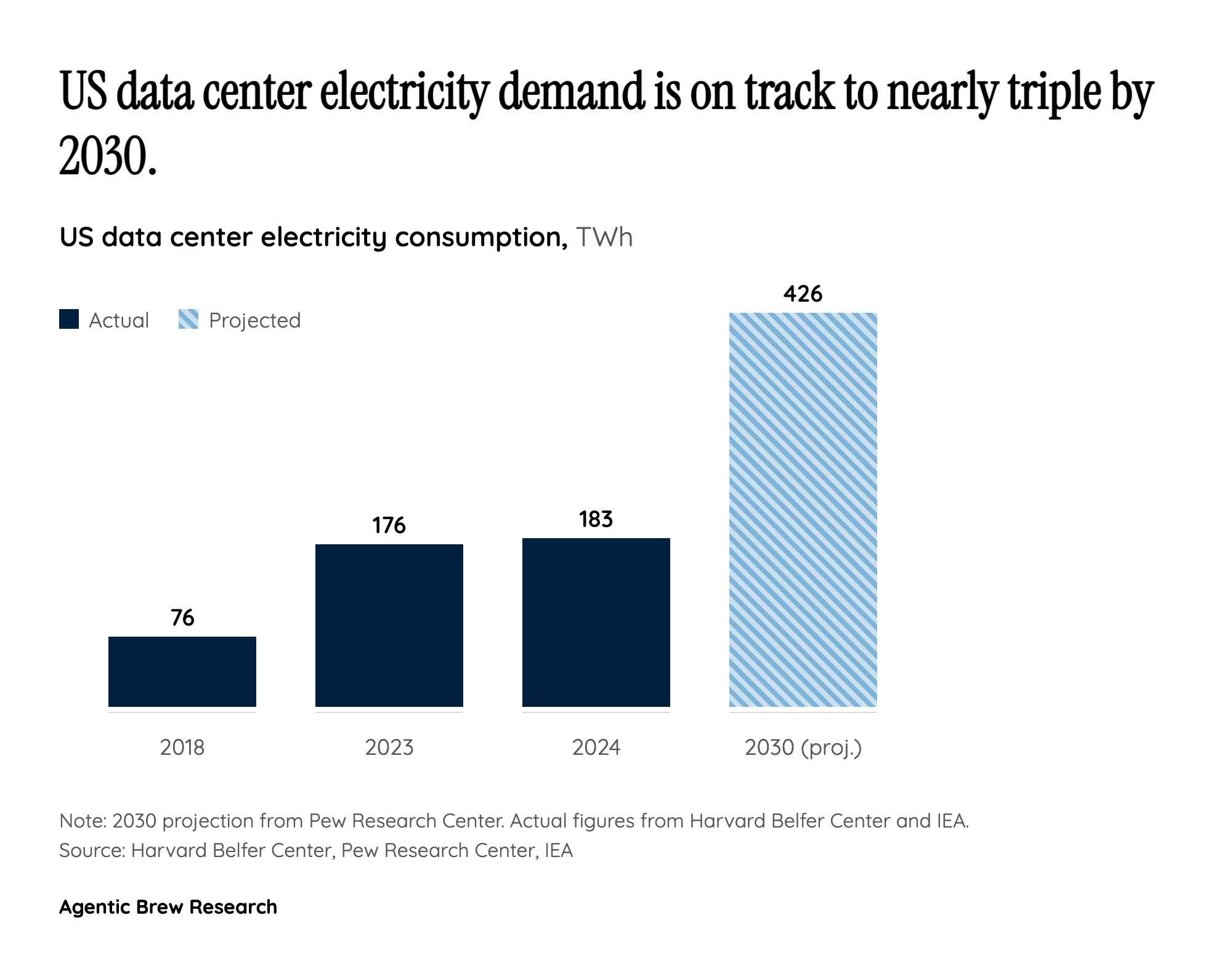
The stakes extend well beyond electricity bills. As Wendover Productions documented in a video viewed 1.37 million times, a single ChatGPT query uses roughly ten times the energy of a traditional Google search, and the world's 8,000-plus data centers are already proving insufficient for the demands of generative AI. The Harvard Belfer Center has called this convergence of AI demand and grid constraints a "watershed moment," and the data supports that framing: US data center electricity consumption jumped from 76 TWh in 2018 to 176 TWh in 2023, more than doubling in just five years. Meanwhile, the discourse on X.com has exposed how misinformation can muddy the debate — entrepreneur Sean Frank, in a post that garnered over 7,000 engagements, argued forcefully that claims about AI data centers consuming excessive water amounts are a "total hoax," urging critics to focus on the real issue of rising electricity prices rather than debunked water-use narratives. The difficulty of separating legitimate concerns from viral misinformation makes informed policymaking all the more critical as these investments accelerate.