Musk v. Altman OpenAI Trial Testimony
TECH

Musk v. Altman OpenAI Trial Testimony

52+
Signals

Strategic Overview

  • 01.
    The Musk v. Altman trial opened April 28, 2026 in Oakland before U.S. District Judge Yvonne Gonzalez Rogers, with a nine-person jury whose liability verdict will be advisory only.
  • 02.
    Musk seeks roughly $150 billion in damages plus reversal of OpenAI's for-profit restructure and removal of Sam Altman and Greg Brockman from leadership.
  • 03.
    On the stand Musk acknowledged that xAI 'distills' OpenAI's models to train its own and that his contribution to OpenAI was about $38 million against an originally pledged $1 billion.
  • 04.
    Greg Brockman testified that Musk demanded full and absolute control of OpenAI in 2017, said he needed roughly $80 billion to fund a self-sustaining city on Mars, and physically intimidated him: 'I thought he was going to hit me.'
  • 05.
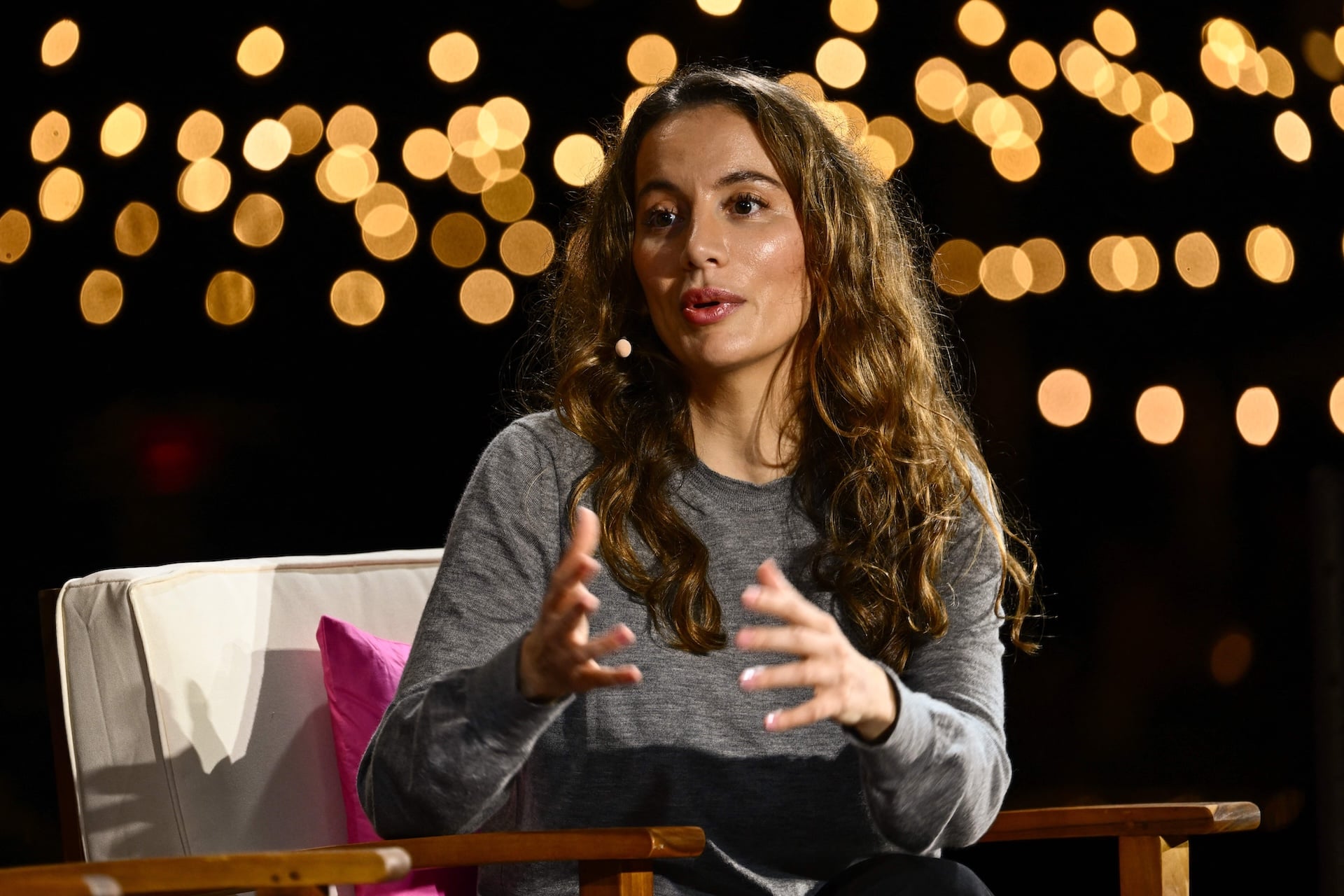
    Shivon Zilis, Musk's partner and former OpenAI board member (2020-2023), testified she acted as a liaison between Musk and OpenAI's leadership and that Musk wanted Tesla to absorb OpenAI, even offering Sam Altman a Tesla board seat.

Deep Analysis

Musk's Best Witness in the Room Is Musk — and That's the Problem

Trials often turn on what a defendant says under cross. This one is turning on what the plaintiff said. Musk took the stand first, repeated 'You can't just steal a charity' as a near-mantra, and walked the jury through what his lawyers framed as a charitable-trust violation: OpenAI was founded as a 501(c)(3) to keep AGI out of any single party's hands, the argument goes, and the for-profit conversion converted donor-funded assets to private gain.

The problem is the same testimony delivered defense-grade material. Musk acknowledged on the record that xAI 'distills OpenAI's models to train its own models' — the kind of admission that rebrands a charitable-trust complaint as competitive warfare in the jury's mind. Kalshi's traders moved in real time: Musk's win probability was around 60% as the trial opened and slid to roughly 34-40% over the following days. Single witnesses rarely move prediction markets that much, and the witness moving them was the plaintiff.
The Mars Subplot Is Why the Charitable-Trust Frame Is Cracking

Greg Brockman's testimony delivered the trial's most cinematic moment and, more importantly, its most damaging frame for Musk's case. Brockman told the jury that when Musk demanded full and absolute control of OpenAI in August 2017, he gave a specific reason: he needed roughly $80 billion to build a self-sustaining city on Mars, and OpenAI was a vehicle that could plausibly throw off that kind of capital. When the founders refused, Brockman testified, Musk stormed around the table; 'I thought he was going to hit me.'

That anecdote does something the defense couldn't manufacture: it converts Musk's stated reason for breaking with OpenAI from 'OpenAI is on a path of certain failure' (his February 2018 framing) into 'OpenAI wouldn't give me what I needed for Mars.' The legal claim Musk is bringing is fiduciary in nature — he says he donated $38 million believing it would stay in a nonprofit. But Brockman's 2017 anecdote, paired with Musk's own 'distill' admission, lets Judge Gonzalez Rogers read the entire arc as a thwarted control bid rather than a defense of mission. Even Fortune's Jeremy Kahn, who's covered the case throughout, calls it 'a distraction, generating much more heat than it is shedding light on the bigger concerns about who controls AI.'

What the Pre-Trial 'Most Hated Men' Text Reveals About Strategy

The most consequential single document in the trial may not have come from any witness. On April 25 — two days before jury selection — Musk texted Brockman gauging settlement interest. Brockman countered by suggesting both sides drop all claims. Musk's reply, now sought by OpenAI's lawyers as exhibit material via Brockman's live testimony rather than a screenshot: 'By the end of this week, you and Sam will be the most hated men in America. If you insist, so it will be.'

The legal mechanics here matter. Federal Rule of Evidence 408 normally bars settlement communications from being admitted to prove liability — and on Reddit the most-upvoted thread on the trial is largely a debate among self-identified attorneys over whether OpenAI's filing route preserves admissibility. But OpenAI's filing isn't trying to use it for liability; it's trying to use it for motive. If Judge Gonzalez Rogers admits it, the case effectively becomes Musk-the-plaintiff arguing he sued to defend a charity, with a contemporaneous text in evidence saying he sued to make Altman and Brockman the most hated men in America. That kind of motive evidence is exactly the kind a fact-finder weighs against a request for $150 billion in equitable relief.

The Murati Subplot: Even If Musk Loses, Altman Doesn't Win

Mira Murati's video testimony and the November 19, 2023 text chain with Altman — both entered into evidence — open a parallel storyline that the legal outcome doesn't close. Murati, who served 48 hours as interim CEO during Altman's 2023 board ouster, told the court her concern at the time was 'about Sam saying one thing to one person and completely the opposite to another person.' The texts themselves capture Altman pleading with Murati during the firing ('still don't want me?') and Murati relaying the board's position ('They don't want you. They're convinced about their decision.'). Altman is also recorded asking whether Microsoft could acquire OpenAI as an exit ramp.

None of that is, strictly, what Musk is suing about. Musk's complaint is about the 2019-2026 nonprofit-to-PBC conversion. But the texts and Murati's framing function as a permanent, court-stamped record of Altman's 2023 management style — the kind of evidence that lives forever in board reviews, partner conversations, and founder back-channels even if the jury's advisory verdict goes OpenAI's way. The reputational damage is uncorrelated with the legal damage, which is why community sentiment on Reddit is overwhelmingly skeptical of Musk's lawsuit but still treats the trial as a referendum on Altman.

Why the Numbers Don't Add Up to $150 Billion

The financial scaffolding around the trial is striking precisely because it doesn't line up. Musk pledged $1 billion to OpenAI and contributed $38 million in actual donations — confirmed on the stand and by Wikipedia's restatement of the founding pledge. He is asking for roughly $150 billion. Brockman's recently disclosed equity stake in OpenAI is reported at near $30 billion. OpenAI itself is privately valued north of $850 billion. Brockman's own journal entries reference 'over $150 billion of OpenAI equity value' tied to the nonprofit — a number Musk's team is now using as the anchor for damages.

The gap between what was given (~$38M) and what is being demanded (~$150B) is the gap a charitable-trust theory has to bridge. Musk's argument is that he is not asking for the return of his donation but for a remedy proportional to the asset class that was misappropriated — i.e., the nonprofit's claim on present-day OpenAI equity. That's a defensible legal theory in the abstract, but it requires the court to find that the 2019 capped-profit structure, blessed by counsel and disclosed at the time, was a breach Musk did not consent to. Two factors complicate that finding: he stayed publicly involved with OpenAI through 2018, and his own February 2018 'certain failure' framing implies he saw it as a failed nonprofit, not a charity to be policed. The damages math is large, but the path to it runs through findings of fact that the plaintiff's own historical conduct keeps undercutting.

Historical Context

2015-12
OpenAI was founded as a nonprofit by Musk, Altman, Sutskever, Brockman and others, with Musk pledging $1 billion (he ultimately contributed $38 million).
2017-08
Musk demanded full and absolute control of a future for-profit OpenAI with himself as leader; per Brockman's testimony, he stormed out when refused.
2018-02
Musk left OpenAI's board, telling colleagues OpenAI was 'on a path of certain failure' and stopping further donations.
2019
OpenAI established a capped-profit subsidiary, beginning the structural shift from pure nonprofit that is now central to Musk's legal claim.
2023-11-19
During Altman's brief board-driven ouster as CEO, Altman and CTO Murati exchanged the frantic texts ('They don't want you'; 'still don't want me?') now entered into trial evidence.
2024-02-29
Musk filed the underlying suit against OpenAI and Altman, alleging breach of OpenAI's nonprofit mission.
2026-04-25
Two days before jury selection, Musk texted Brockman exploring settlement, then replied to Brockman's drop-all-claims counter-offer with: 'By the end of this week, you and Sam will be the most hated men in America.'
2026-04-28
Trial opened in Oakland before Judge Gonzalez Rogers; Musk testified first, repeating 'You can't just steal a charity.'
2026-05-06
Zilis took the stand, Murati testified by video, and Brockman read from his February 2018 emails — the trial's most evidence-dense day.

Power Map

Key Players
Subject

Musk v. Altman OpenAI Trial Testimony

EL

Elon Musk

Plaintiff, OpenAI co-founder, and now xAI founder; alleges OpenAI's leaders breached charitable trust by converting to for-profit and is seeking $150B plus structural reversal — but his cross-examination admissions about xAI distilling OpenAI models have given the defense its 'competitive warfare' narrative.

SA

Sam Altman

Defendant and OpenAI CEO; the trial has surfaced damaging artifacts about his management style, most notably the 2023 ouster text exchange with then-CTO Mira Murati and her testimony that he gave senior leaders contradictory accounts.

GR

Greg Brockman

Defendant and OpenAI President; his contemporaneous 2017 journal entries and testimony about Musk's $80B Mars-financing demand for full control are among the prosecution-defining moments — and his disclosed ~$30B equity stake fuels Musk's unjust-enrichment theory.

SH

Shivon Zilis

Former OpenAI board member (2020-2023), Neuralink executive, and mother of four of Musk's children; her dual personal-and-board role is what OpenAI is using to argue Musk had an inside informant funnel — though Zilis testified she did not.

MI

Mira Murati

Former OpenAI CTO and 48-hour interim CEO during the November 2023 ouster; her video testimony alleging Altman 'created chaos' and lied about safety standards is, narratively, the most damaging Altman-direct moment of the trial.

MI

Microsoft

Co-defendant and OpenAI's largest investor; named in Musk's $150B damages demand, putting the firm on the hook for any liability outcome.

JU

Judge Yvonne Gonzalez Rogers

Presiding U.S. District Judge in Oakland; because the jury verdict on liability is advisory only, she effectively decides both the legal question and any remedy — making this a bench trial dressed as a jury one.

Source Articles

Top 5

THE SIGNAL.

Analysts

"The trial generates more spectacle than substantive insight on AI governance, and most legal analysts view Musk's case as weak."

Jeremy Kahn
AI Editor, Fortune

"Musk's win odds collapsed from roughly 60% at trial start to 34-40% after his own testimony, an unusually large move on a single witness's testimony."

Kalshi prediction market traders
Kalshi political/event prediction market

"Recounting Musk's 2017 control demand, Brockman testified that 'It should not be the case that there exists one person with full and absolute control over OpenAI' — recasting Musk's rationale as personal control, not principled mission defense."

Greg Brockman
President and Co-Founder, OpenAI (witness)

"Murati told the court her concern in 2023 was 'about Sam saying one thing to one person and completely the opposite to another person' — a contemporaneous, named insider view of the management environment Musk's complaint targets."

Mira Murati
Former CTO and interim CEO, OpenAI (witness, video testimony)
The Crowd

"JUST IN: Shivon Zilis took the stand and testified about her advisory role at OpenAI starting in 2016. He declined a full-time COO offer to preserve her "broad AI ecosystem context," then working across all of Musk's AI companies by mid-2017 with 80-100 hour weeks."

@@muskonomy0

"Altman texts Musk: "we offered you equity when we established the capped profit. you didn't want it at the time." (Altman drafted this with Shivon Zilis, then sent it to Musk that night.) OpenAI's lawyers' plan was to use this to argue Musk's lawsuit is competitive warfare."

@@ns123abc0

"JUST IN: Greg Brockman reads a February 2018 email on Day 6 where Elon Musk warned OpenAI was "on a path of certain failure" and pushed again to build AGI inside Tesla. After the ICO plan was dropped, Brockman said Elon Musk "gave up on OpenAI" and sent a stark warning."

@@muskonomy0

"BREAKING: Two Days Before Trial, Musk Texted OpenAI's Brockman About a Settlement. When Brockman Said Drop All Claims, Musk Replied: "By the End of This Week, You and Sam Will Be the Most Hated Men in America.""

@u/InterstellarKinetics1296
Broadcast
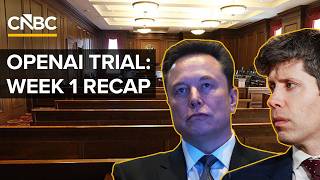
Elon Musk testifies in OpenAI trial accusing company of abandoning nonprofit mission

Elon Musk testifies in OpenAI trial accusing company of abandoning nonprofit mission

Elon Musk vs. OpenAI: Testy exchanges fill day 2 of trial

Elon Musk vs. OpenAI: Testy exchanges fill day 2 of trial

The Musk Vs. OpenAI Trial Is Underway — Here's Where Things Stand

The Musk Vs. OpenAI Trial Is Underway — Here's Where Things Stand