A 'Niche-y' Chip Sold at Broad-Market Multiples
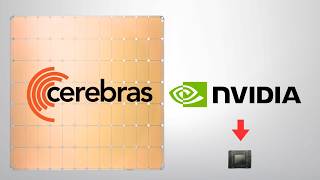
Cerebras's pitch is hardware heresy: instead of slicing a silicon wafer into hundreds of small dies and stitching them back together with packaging and interconnect, the company etches a single chip across an entire wafer. The result, the Wafer Scale Engine 3, is about 58 times larger than a leading GPU and keeps compute, memory, and bandwidth co-located on one piece of silicon — a layout the company says delivers up to 15x faster inference than GPU clusters and roughly 1,000x the memory bandwidth of Nvidia's Rubin generation [1][2].
The public market priced that pitch like a general-purpose Nvidia challenger. Sell-side research is less convinced. Davidson analysts called the product 'niche-y,' arguing wafer-scale wins decisively on single-large-model inference but struggles to compete in the broader training and mixed-workload markets where GPUs and hyperscaler ASICs dominate [1]. That tension — a niche architecture priced at a broad-market multiple — is the cleanest explanation for the roughly 10% pullback the day after the debut [3]. Reddit's r/stocks bear thread captured the same logic in numbers, pegging price-to-sales at roughly 67x even at the $160 reference level the IPO blew past, against Nvidia at 24x, Broadcom at 31x, and AMD at 9x. The bull-bear gap here isn't about whether wafer-scale is impressive; it's about how much of the AI compute pie a 'dinner-plate-sized' chip can plausibly eat.