Amazon 'Transformer' Smartphone Development
TECH

Amazon 'Transformer' Smartphone Development

32+
Signals

Strategic Overview

  • 01.
    Amazon is internally developing a new smartphone codenamed 'Transformer,' its first foray into mobile phones since the disastrous Fire Phone in 2014, with Alexa deeply embedded as the core interface rather than a traditional app ecosystem.
  • 02.
    The project is led by J Allard, the former Microsoft Xbox and Zune executive, operating within an internal team called ZeroOne that is roughly a year old, and sits under the Amazon Devices and Services division headed by Panos Panay.
  • 03.
    Two device variants are being explored: an AI-centric flagship smartphone that envisions eliminating traditional app stores in favor of Alexa completing tasks directly, and a minimalist 'dumbphone' inspired by the Light Phone that strips out browser and app functionality entirely.
  • 04.
    The device remains in early development with no confirmed price, launch timeline, or carrier partnerships, and Amazon has not ruled out canceling the project.

Deep Analysis

Why This Matters

Amazon's return to smartphones is not simply a hardware play — it is a strategic bid to own the AI-mediated interface layer of consumer life. The smartphone is the single most used computing device on the planet, and Amazon has long been locked out of it. While Alexa dominates the smart home via Echo devices (150M+ units sold), Amazon has zero presence on the device people use most: their phone. Every time a Prime subscriber opens the Amazon app on an iPhone or Android, Amazon pays a toll to Apple or Google through app store economics and platform data terms. A proprietary smartphone, even a modest one, would let Amazon close that loop entirely.

The 'Transformer' name is not accidental — it signals a philosophical ambition to transform the smartphone from a container of apps into a single, unified AI agent. This mirrors the broader industry shift underway in 2026, where large language model assistants are beginning to replace discreet app interactions. Amazon's bet is that Alexa, trained on a decade of purchase history, viewing data, and smart-home behavioral signals, can deliver a more personally tailored AI phone experience than Apple Intelligence or Google Gemini. If that bet pays off even partially, it would reshape how Amazon monetizes its 200M+ Prime subscriber base — not just through e-commerce, but through the AI layer that mediates every digital interaction those subscribers have.

How It Works

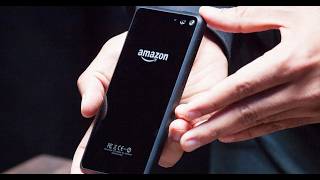
The Transformer's core architectural concept is to replace the traditional app store and icon-grid home screen with a conversational Alexa layer that handles user intent directly. Rather than tapping a Grubhub icon to order food, the user would tell Alexa what they want to eat and Alexa would complete the transaction end-to-end — drawing on Prime payment credentials, location data, and order history. The device is envisioned as a 'mobile personalization hub' tightly integrated with Prime Shopping, Prime Video, Amazon Music, and partner services like Grubhub. Critically, reports indicate it is not necessarily built on a custom OS, which suggests an Android base with a heavily customized Alexa-first shell — similar to how Amazon's Fire tablets run a forked Android.

The dumbphone variant takes a different architectural philosophy: radical subtraction. Inspired by the Light Phone (which retails at $700 and has genuine niche following), this variant would strip out the browser and third-party apps entirely, leaving only Alexa-mediated interactions. This is less an AI device and more a digital wellness play — targeting users who want to reduce screen time without abandoning mobile connectivity. Both variants converge on the same core thesis: that the value of a smartphone lies not in its app library, but in its ability to understand and anticipate user needs.

By The Numbers

The market context for the Transformer is sobering. IDC projects the global smartphone market to contract 13% in 2026 — meaning Amazon would be entering a shrinking market against entrenched incumbents. Apple and Samsung together control approximately 40% of global market share, with deep supply chain advantages, carrier relationships, and developer ecosystems that took decades to build. Feature phones (the dumbphone's closest market analog) account for only 15% of global handset sales in 2025, and analysts describe that segment's volumes as 'negligible' — the Light Phone's cult following has not translated into mass-market demand.

Contrast this against Amazon's own assets: 200M+ Prime subscribers globally represent an addressable base that no consumer hardware startup could dream of matching. The Echo ecosystem's 150M+ units sold demonstrates Amazon's proven ability to create a new device category when it controls the value proposition end-to-end. The Fire Phone sold approximately 35,000 units in its first 20 days before collapsing — a failure that required a $170M write-off. A successful Transformer would need to convert even a fraction of Prime's subscriber base to justify the investment.

Impacts & What's Next

In the near term, the Transformer's disclosure will heighten competitive vigilance at Apple and Google. Both companies have been investing heavily in on-device AI — Apple Intelligence and Gemini Nano — precisely to defend against the scenario where a third-party AI assistant becomes the default interface on their platforms. If Amazon signals serious hardware intent, expect accelerated AI assistant integrations from both incumbents designed to reduce switching motivation. Carrier negotiations will also be a critical early signal: Fire Phone's AT&T exclusivity was widely cited as a strategic mistake that constrained addressable market from day one.

Medium-term, the device's fate hinges on whether Amazon can solve the app store inertia problem that analyst Colin Sebastian identified. The most plausible path is not abolishing apps entirely — which community sentiment across tech forums finds absurdly overreaching — but offering Alexa as a sufficiently capable default layer that casual users rarely need to drop into an app. Long-term, if Amazon ships any version of the Transformer, it validates a thesis that has been circulating in Silicon Valley for years: that the smartphone's app-centric paradigm will eventually be displaced by AI agents.

The Bigger Picture

The Transformer story is a microcosm of a much larger battle: who controls the AI interface layer of everyday consumer life. Amazon, Apple, Google, Samsung, and Microsoft are all racing to make their AI assistant the default point of contact between humans and their devices. The smartphone is the most valuable real estate in that battle. Amazon lost this ground in 2014 for reasons that were fundamentally strategic — wrong price, wrong carrier, wrong gimmick — not because the company lacked the engineering talent or ecosystem depth to compete.

The social signal picture — overwhelmingly skeptical across X, YouTube, and tech community forums — reflects genuine consumer wariness, but also a predictable response to early-stage disclosure of an unfinished product. The Fire Phone's ghost dominates public discourse and will continue to do so until Amazon demonstrates a working device. Crucially, the Fire Phone's failure was not a dead end: it spawned the Echo, which quietly became one of the most successful hardware products in Amazon's history. Even if the Transformer is canceled tomorrow, the ZeroOne team's work on Alexa mobile integration, AI-native UX patterns, and Prime ecosystem orchestration will feed into whatever Amazon builds next. In that sense, Amazon cannot truly lose this bet — only win at different scales.

Historical Context

2014-07
Amazon launched the Fire Phone at $649 exclusively on AT&T, betting on a 3D display 'Dynamic Perspective' feature and Firefly object-recognition as differentiators, but the device failed to attract meaningful consumer interest.
2014-09
Just six weeks after launch, Amazon slashed the Fire Phone price from $649 to $0.99 with a contract, signaling a catastrophic sales failure.
2014-10
Amazon disclosed a $170 million write-off tied to the Fire Phone, including $83 million in unsold inventory.
2014-11
Speech recognition technology developed for the Fire Phone was repurposed into the Amazon Echo smart speaker, which went on to sell over 150 million units globally.
2015-09
Amazon officially discontinued the Fire Phone approximately 14 months after launch, having sold roughly 35,000 units in its first 20 days.
2026-03-20
Reuters published the exclusive report revealing Amazon's internal 'Transformer' smartphone project, marking the first public disclosure of Amazon's return to the mobile handset market.

Power Map

Key Players
Subject

Amazon 'Transformer' Smartphone Development

AM

Amazon (ZeroOne Team)

Primary developer bearing all execution risk. Amazon controls the hardware roadmap, Alexa AI stack, and Prime ecosystem integration — and shoulders the reputational risk of a second smartphone failure after the Fire Phone wrote off $170M in 2014.

J

J Allard

Lead of ZeroOne, the internal team building the Transformer. Allard co-founded the Xbox brand and was a key figure behind the Zune at Microsoft; his hardware pedigree gives the project credibility but also raises stakes given his checkered record with consumer devices.

PA

Panos Panay

Head of Amazon Devices and Services division, with an explicit mandate for profitability. Panay — formerly Microsoft's Surface chief — must approve the Transformer's continued development and bears accountability if the division repeats the Fire Phone loss.

AP

Apple & Samsung

Incumbent duopoly controlling roughly 40% of global smartphone market share combined. A successful Amazon smartphone offering a Prime-integrated alternative would primarily threaten their lock-in over high-spending Prime subscribers, though analysts see near-term disruption as unlikely.

20

200M+ Prime Subscribers

The Transformer's intended target market. Prime subscribers represent a captive, high-spend audience already embedded in Amazon's shopping, video, music, and delivery ecosystem — making them the most viable early adopter base and the core commercial rationale for the device.

GR

Grubhub

Confirmed integration partner for the Transformer's food delivery functionality. Grubhub's inclusion signals Amazon's intent to bundle third-party services directly into Alexa-mediated interactions, bypassing app stores and giving Grubhub privileged distribution access.

THE SIGNAL.

Analysts

"Called the timing 'the worst possible moment' to launch a new smartphone, citing IDC's projection that the global smartphone market will contract 13% in 2026. While acknowledging Amazon's unique intersection of AI capabilities, Prime ecosystem scale, and brand reach, Jeronimo warned that the dumbphone segment has 'negligible' sales and that even Amazon's strengths may not overcome structural market headwinds."

Francisco Jeronimo
VP Client Devices Research, IDC

"Highlighted consumer attachment to existing app stores as the single greatest barrier to Transformer adoption, arguing that behavioral inertia — not hardware specs or AI features — is what Amazon must overcome. Sebastian's framing suggests that the no-app-store model, however conceptually compelling, faces a near-impossible switching cost problem with mainstream users."

Colin Sebastian
Analyst, R.W. Baird
The Crowd

"Exclusive: In 2014, Amazon introduced its first smartphone, hoping to take on Apple and Samsung. Instead, the Fire Phone was scrapped in barely over a year. Now, Amazon is dialing up a new phone"

@@Reuters12

"Amazon lost $170 million on the Fire Phone in 14 months. The price went from $649 to $159 before they killed it. Now Reuters reports they are building another phone, codenamed Transformer."

@@nullhypeai43

"AMAZON $AMZN IS REPORTEDLY DEVELOPING A NEW MOBILE PHONE, ITS FIRST SINCE 2014 FIRE PHONE. The latest effort, known internally as Transformer, is being developed within its devices and services unit."

@@StockMKTNewz288

"Amazon Plans Smartphone Comeback More Than a Decade After Fire Phone Flop"

@u/EditorDavid37
Broadcast
Amazon's New Smartphone: A Second Chance or a Repeat of History?

Amazon's New Smartphone: A Second Chance or a Repeat of History?

Amazon's Alexa Phone: The Next Big Thing or Another Fire Phone Flop?

Amazon's Alexa Phone: The Next Big Thing or Another Fire Phone Flop?

BREAKING: Amazon eyes new AI smartphone over decade after Fire Phone flop

BREAKING: Amazon eyes new AI smartphone over decade after Fire Phone flop