Micron US DRAM Manufacturing Expansion
TECH

Micron US DRAM Manufacturing Expansion

29+
Signals

Strategic Overview

  • 01.
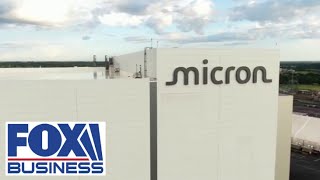
    On May 22, 2026, Micron started 1α (1-alpha) DRAM manufacturing at its Manassas, Virginia fab — the most advanced memory technology ever produced in the United States.
  • 02.
    Micron is investing more than $2 billion to expand and modernize the Manassas facility, supporting over 3,100 direct manufacturing and community jobs.
  • 03.
    The 1α node produces DDR4 and LP4 long-lifecycle memory and is expected to quadruple Micron's DDR4 wafer supply in Manassas, with qualified production targeted by the end of 2026.
  • 04.
    The Manassas expansion is part of Micron's broader $200 billion U.S. plan — approximately $150B for manufacturing and $50B for R&D — projected to create about 90,000 jobs across Virginia, Idaho, and New York.

Deep Analysis

The DDR4 squeeze that made Manassas inevitable

Micron's May 22, 2026 start of 1α DRAM production in Manassas is best read not as an AI-era flex but as a defensive answer to a market mechanism that has quietly broken the long-lifecycle memory supply chain [1]. The big three DRAM producers — Micron, Samsung, and SK Hynix — have been reallocating wafer starts toward HBM and DDR5/LPDDR5X to chase the much fatter margins of AI accelerators. The customers who rely on older DDR4 and LP4 — automotive, defense, aerospace, industrial, networking, medical — have been left scrambling for capacity that nobody wants to build.

That is the gap Manassas is engineered to fill. The 1α node is explicitly aimed at DDR4 and LP4 long-lifecycle products, and Micron expects the ramp to quadruple Manassas DDR4 wafer supply [2]. The urgency is not hypothetical: S&P Global Mobility projects automotive DRAM contract prices could rise 70-100% in 2026 versus 2025, memory lead times across the industry now exceed 58 weeks, and SK Hynix has said its entire 2026 production is sold out [1]. Politically the ceremony was packaged as a tariff-and-CHIPS reshoring win, but the underlying economics would have forced this fab even without the policy backdrop — somebody had to keep building memory for the cars, missiles, and pacemakers that the AI boom is starving.

The fab that's already in half your car

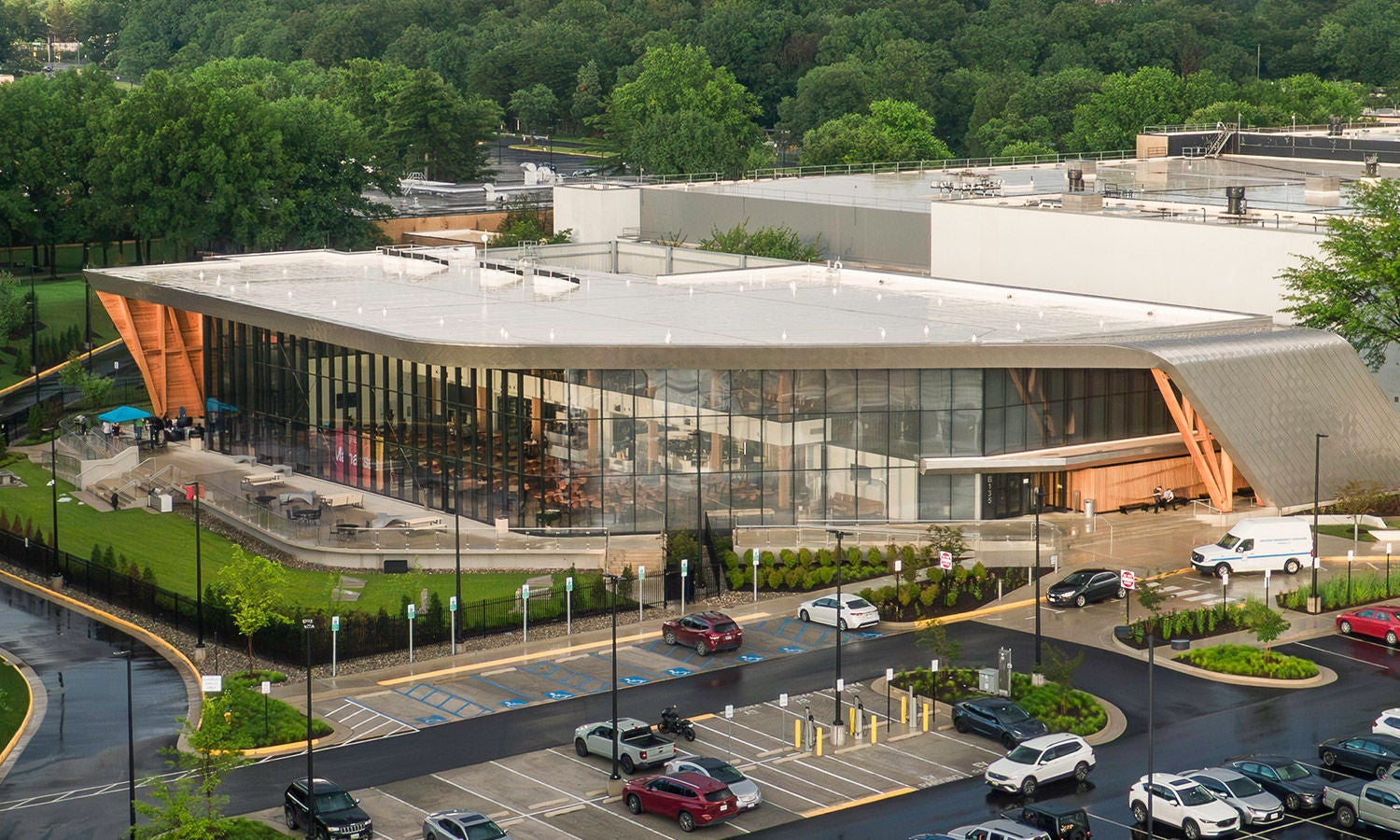
Manassas Fab 6 is not a moonshot; it is a quiet workhorse that the United States has been depending on without noticing. It is the country's only fully owned 300mm fab, currently staffed by more than 1,300 Micron employees and around 1,000 contractors, and roughly 2% of all memory chips produced globally already come out of this single Virginia site [3]. About half of the cars on U.S. roads contain a Micron chip made in Manassas [3]. That is not a leading-edge HBM story; it is the embedded-memory backbone of U.S. critical infrastructure, hiding in plain sight inside dashboards, infusion pumps, and radar systems.

That existing position is what makes the $2 billion-plus modernization, and the move to 1α, structurally important rather than merely symbolic [4]. The expansion supports more than 3,100 direct manufacturing and community jobs and is anchored by up to $70 million in Virginia state appropriations through the MEI Commission, on top of a $275 million incremental CHIPS Act award targeting Manassas [3][5]. Commerce Secretary Howard Lutnick framed the milestone bluntly — 'We are finally building memory semiconductors in America' — and Senator Mark Warner tied it to national security: 'Making more of these chips in America will strengthen our national security and further American competitiveness' [2]. The point of Manassas is not to beat TSMC at leading-edge logic; it is to make sure the long-tail memory that runs a Ford F-150, an F-35 avionics box, or an MRI machine does not have to cross the Pacific.

A $200B plan that even Micron admits won't be enough

The Manassas ramp is the most visible piece of a $200 billion U.S. investment plan — roughly $150 billion for manufacturing across Virginia, Idaho, and New York, and $50 billion for R&D, projected to create about 90,000 direct and indirect jobs [6]. Greenfield DRAM fabs in Boise (targeted for 2027) and Clay, NY are meant to extend the Manassas template into the next decade, and the company has committed more than $325 million in workforce development across the three states [4]. On paper it is the largest reshoring bet in U.S. semiconductor history.

And Micron itself is telling customers it will not be enough. CEO Sanjay Mehrotra has publicly said the company will only be able to meet 'half to two-thirds' of demand from key customers, even with the full Idaho-Virginia-New York buildout [7]. SK Hynix has reportedly sold out 2026 production entirely, and industry lead times above 58 weeks are now normal [1]. That means qualification timing matters as much as capacity: Micron expects qualified 1α production from Manassas by the end of 2026 [1], and any slip cascades directly into the projected automotive DRAM price spike. The honest framing of this expansion is not 'America regains memory sovereignty' but 'America builds enough domestic memory to soften, not solve, a structural shortage that will outlive the current capex cycle.'

The bull and bear cases meet on Wall Street

Wall Street is treating Manassas as a leading indicator of a multi-year memory up-cycle, but the consensus is more fragile than it looks. Bernstein's Mark Newman argues earnings revisions are 'powered by very very strong memory prices,' and Melius Research's Ben Reitzes upgraded Micron to Buy on the thesis that the stock could gain another 41% over the next year on structural demand through 2030 [8]. The bull case rests on a simple chain: HBM is fully booked through 2026, AI capex is still accelerating, and the displaced DDR4/LP4 customers now have nowhere to go except a Micron fab in Virginia.

The bear case, articulated most clearly in retail investor forums around the announcement, calls this the 'digestion trap.' Memory chips have 3-5 year lifespans, which means today's shortage seeds tomorrow's glut as installed-base refresh cycles collide with the new fabs coming online in 2027 and beyond. Enterprise capex is more volatile than consumer demand — a single hyperscaler decision can zero out a multi-billion-dollar order overnight. Retail community sentiment around the Manassas announcement reflects exactly this split: enthusiasm in regional subreddits about local jobs and economic upside, paired with finance-forum skepticism that the long-run margin math is achievable. Manassas does not resolve that debate — it sharpens it, because every additional wafer of long-lifecycle DRAM both eases the shortage that justifies premium pricing and pulls forward the date at which the cycle inverts.

Historical Context

2002
Micron arrived in Manassas in 2002, taking over the former Dominion Semiconductor facility owned by Toshiba.
2018-08
Micron announced a $3 billion investment in Manassas; construction began November 2018 and operations commenced by late 2020.
2024-12
Commerce finalized up to $6.165 billion in CHIPS Act direct funding for Micron's broader U.S. expansion.
2025-06-12
Micron announced its expanded $200B U.S. investment plan ($150B manufacturing, $50B R&D) alongside $275M incremental CHIPS Act funding earmarked for Manassas modernization.
2026-05-22
Micron began 1α DRAM production at Manassas; ceremony hosted by CEO Mehrotra with Secretary Lutnick, Senators Warner and Kaine, USTR Greer, and Speaker Don Scott.

Power Map

Key Players
Subject

Micron US DRAM Manufacturing Expansion

MI

Micron Technology

Sole U.S.-based memory manufacturer; building 1α DRAM at Manassas and additional fabs in Boise, ID and Clay, NY under a $200B plan to reshore memory production.

SA

Sanjay Mehrotra

Micron Chairman, President and CEO — hosted the Manassas 1α DRAM ceremony and frames the milestone as central to Micron's $200B U.S. investment plan.

U.

U.S. Department of Commerce / Howard Lutnick

Secretary of Commerce; oversees CHIPS Act funding and awarded $275M incremental CHIPS funds on top of roughly $6.165B baseline for Micron's broader U.S. footprint.

VI

Virginia state government

Provided up to $70 million in MEI Commission special appropriations and political support (Speaker Don Scott, Gov. Abigail Spanberger, Senators Warner and Kaine) to anchor the project in the Commonwealth.

LO

Long-lifecycle DRAM buyers (auto, defense, aerospace, industrial, medical)

Critical-infrastructure customers whose 10+ year part lifecycles depend on continued DDR4 and LP4 supply; Manassas is the only U.S.-located source.

Fact Check

8 cited
  1. [1] Micron begins producing America's most advanced DRAM at its Virginia fab
  2. [2] Micron Advances Made-in-America Memory With Manufacturing Expansion in Virginia
  3. [3] Micron U.S. Expansion - Virginia
  4. [4] Micron Advances Made-in-America Memory With Manufacturing Expansion
  5. [5] Commerce Awarding Micron Tech $275M of CHIPS Funding
  6. [6] President Trump Secures $200B Investment from Micron Technology
  7. [7] Micron outlines grim outlook for DRAM supply - CEO says it can only meet half to two-thirds of demand
  8. [8] Micron and SanDisk pop as memory demand to remain high through 2030

Source Articles

Top 3

THE SIGNAL.

Analysts

"Frames the Manassas 1α start as a foundational step in Micron's $200B U.S. expansion, emphasizing domestic supply for U.S. customers: 'We are proud to bring advanced 1α DRAM manufacturing to American soil, strengthening domestic supply for U.S. customers.'"

Sanjay Mehrotra
Chairman, President and CEO, Micron Technology

"Positions the milestone as the U.S. finally regaining memory-chip sovereignty after decades of offshoring: 'We are finally building memory semiconductors in America.'"

Howard Lutnick
U.S. Secretary of Commerce

"Views the expansion as a national-security and competitiveness lever: 'Making more of these chips in America will strengthen our national security and further American competitiveness.'"

Sen. Mark Warner
U.S. Senator, Virginia

"Raised Micron to Buy, arguing the stock could gain another 41% over the next year on structural memory demand through 2030."

Ben Reitzes
Analyst, Melius Research

"Sees a structural earnings up-cycle 'powered by very very strong memory prices,' supporting the capex thesis behind Micron's $200B plan."

Mark Newman
Analyst, Bernstein
The Crowd

"We're proud to announce a milestone moment for U.S. memory manufacturing. Micron has officially started manufacturing 1α DRAM at our Manassas, VA fab. As the only U.S. manufacturer of memory, Micron is strengthening America's domestic memory supply with the world's most advanced"

@@MicronTech1546

"MICRON STARTS ADVANCED DRAM PRODUCTION IN VIRGINIA $MU says it has started manufacturing 1-alpha DRAM at its Manassas, Virginia fab. The company says this is the most advanced memory technology ever produced in the U.S. The 1-alpha node will quadruple Micron's DDR4 wafer"

@@wallstengine1208

"$MU expanding its DRAM production. And boy do we need it."

@@danielnewmanUV53

"Micron to invest $2.17 billion to expand U.S.-based memory production in Manassas"

@u/1lesspanda119
Broadcast
How Micron's Building Biggest U.S. Chip Fab, Despite China Ban

How Micron's Building Biggest U.S. Chip Fab, Despite China Ban

Micron CEO on Expanding Chip Production, Memory Demand

Micron CEO on Expanding Chip Production, Memory Demand

Micron expands US memory chip production amid AI demand surge

Micron expands US memory chip production amid AI demand surge