Apple revamped Siri in iOS 27 with auto-deleting chat histories
TECH

Apple revamped Siri in iOS 27 with auto-deleting chat histories

36+
Signals

Strategic Overview

  • 01.
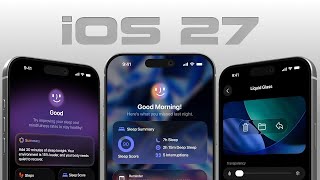
    Apple's redesigned Siri will ship as a standalone iOS 27 app with auto-deleting chat history, offering three retention windows: 30 days, one year, or indefinitely.
  • 02.
    The retention controls mirror Apple's Messages app behavior, building privacy limits into the system by default rather than offering them as opt-in incognito modes.
  • 03.
    The chatbot is powered by a custom Google Gemini foundation model that runs on Apple's Private Cloud Compute infrastructure, with on-device processing where possible.
  • 04.
    Apple will unveil the revamped Siri at WWDC on June 8, 2026, with reports suggesting it may still launch behind a beta label after a roughly two-year delay from the original 2024 target.

Deep Analysis

How auto-delete actually rewires the chatbot UX

Most AI assistants today are designed to remember. ChatGPT, Gemini, and Claude have spent the past two years racing to build longer memory, persistent profiles, and cross-conversation context — all of which improve answers but also create a slow-accreting personal dossier on the user. Apple is taking the opposite stance. The new Siri app will let users choose between three retention windows — 30 days, one year, or indefinitely — and the controls are baked into the system rather than buried as opt-in incognito modes [1][2]. The framing matters: the default settings, not the power-user toggles, are what define a product's privacy character.

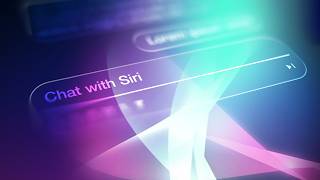
The mechanism mirrors something Apple users already know. On the Messages app, conversations can be set to auto-delete after 30 days or a year, and the exact same options will now appear inside Siri [3]. The new app supports starting fresh chats or voice sessions, browsing past chats, and uploading files — and crucially, Apple will let users choose whether a new Siri session inherits prior context or starts clean [1][4]. Combined with the iMessage-style chat UI, contextual cards, and Dynamic Island integration [5], the experience pulls Siri closer to a modern chatbot while quietly redefining what 'chat history' means as a product primitive.
Privacy as positioning: the structural argument against ChatGPT, Claude, and Gemini

Apple's competitors are not blind to privacy — every major chatbot offers some form of history toggle or data-deletion request — but those controls almost always live as opt-in escape hatches. By making 30-day or one-year auto-deletion a first-class setting surfaced at setup, Apple is reframing the conversation: not 'how do I delete my data?' but 'how long should this thing remember me at all?' Bloomberg's Mark Gurman has reported that privacy will be the defining theme of the WWDC Siri unveil [2], and TheNextWeb captures the strategic intent precisely — Apple is 'placing tighter limits on what information can persist and how long it is retained, building the restrictions into the system itself rather than offering them as optional modes' [6].

This is classic Apple positioning, repurposed for the AI era. Where rivals optimize retention to improve their models, Apple is selling forgetfulness as a feature. The bet is that a meaningful slice of mainstream iPhone users — the same audience that responded to App Tracking Transparency — will treat 'designed to forget' as a reason to default to Siri instead of a third-party chatbot. The competitive risk for OpenAI, Anthropic, and Google is real: if Apple normalizes prominent retention controls, it will be hard to keep burying them in settings menus [1][6]. The risk to Apple is equally real, and is the subject of the next section.

The Gemini paradox: Apple's most private chatbot runs on Google's brain

The same Siri that Apple is marketing on 'designed to forget' is reportedly powered by a custom Google Gemini foundation model — by some estimates a roughly 1.2-trillion-parameter variant — that Apple is paying Google roughly $1 billion per year to license [7]. Tim Cook has publicly confirmed both halves of this arrangement: that 'the personalized version of Siri is a collaboration with Google' and that Siri will 'continue to run on the device and run in Private Cloud Compute, and maintain our industry-leading privacy standards in doing so' [8]. Google Cloud CEO Thomas Kurian was similarly direct: Google is Apple's 'preferred cloud provider to develop the next generation of Apple Foundation Models based on Gemini technology' [7].

The architectural trick that makes this defensible is Private Cloud Compute. Routing Gemini inference through Apple's own infrastructure means Google does not ingest Siri queries to train its general models — the relationship looks more like a licensed model running on Apple's segregated servers than a typical API call to gemini.google.com [8]. That nuance is real, but it is also exactly the kind of detail that gets lost on the public. The skeptical read, which is already circulating in Apple-developer communities, is that Siri has become a 'Gemini wrapper' and that Apple's foundation-model ambitions are quietly being outsourced to its biggest search-and-AI rival. The fact that Apple needed an external model at all is itself an admission: the in-house models reportedly trailed frontier competitors badly enough to make the billion-dollar-a-year arrangement worth it [7][9].

The community read: skepticism, 'just a wrapper' debates, and developer hesitation

The reception across enthusiast and developer communities has been notably cooler than the headlines. Tech YouTubers have framed the redesign as Apple's biggest Siri overhaul ever and an explicit answer to ChatGPT, Claude, and Gemini, with breakdowns leaning hard on the dedicated app, device gating, and chat-history controls. On Apple-focused subreddits, however, the dominant register is fatigue — the recurring jokes are that 'every year is a major Siri redesign' and that Apple is still catching up to assistants that have been chatty for years. The Gemini dependency, not the privacy story, has consumed most of the discussion: defenders point out that Apple is running a private custom model on segregated infrastructure, while critics insist it's a wrapper by any reasonable definition.

The more substantive concern is developer-side. Reports that Apple will let third-party apps integrate with Siri through App Intents have drawn upvotes but also a specific fear: that Apple will eventually charge a commission for those calls, the way it does for in-app purchases. The chilling effect is straightforward — developers are reluctant to invest engineering time building Siri integrations for a platform whose monetization terms could change. None of this is fatal to the launch, but it complicates the story Apple wants to tell at WWDC. The product is shipping into an audience that has heard 'this time Siri is different' several times before and is bringing receipts.

The beta gamble: shipping unfinished after a two-year slip

The most underappreciated detail in Gurman's reporting is that the new Siri may launch with a beta label even after a roughly two-year delay from its original 2024 target [3][6]. For most software companies, shipping a beta is unremarkable. For Apple, which built its brand on polish and which has spent eighteen months absorbing reputational damage from Apple Intelligence's slow rollout, it is genuinely unusual — and it telegraphs how badly Apple needs something tangible on stage at WWDC on June 8 [5].

The beta framing is a hedge that cuts both ways. On the upside, it lets Apple ship the architecture (the standalone app, the auto-delete controls, the system-wide 'Search or Ask' gesture, the Gemini-backed chat) without committing to feature-complete personalization in the same release. On the downside, a privacy-forward relaunch labeled 'beta' risks reinforcing exactly the narrative Apple is trying to escape: that its AI strategy is perpetually one year away. Even sympathetic critics like 9to5Mac's Ben Lovejoy are already pushing back on the marquee feature itself, arguing that auto-deletion strips out the long-term context that makes chatbots genuinely useful [10]. If the launch lands as a hedged, half-finished beta whose flagship setting power users disable on day one, Apple will have spent two years getting to a starting line its competitors crossed in 2023.

Historical Context

2010-04
Acquired Siri Inc. for roughly $200 million, bringing SRI's natural-language tech in-house.
2011-10
Introduced Siri with the iPhone 4S, making it the first widely available voice assistant on a major smartphone.
2024
Originally targeted ship date for the revamped, more conversational Siri tied to Apple Intelligence; the project slipped roughly two years.
2026-01-12
Reports surface that Apple selected Google Gemini to power the next-generation Siri.
2026-01-29
Tim Cook publicly confirms the personalized Siri is a Google collaboration that will run on device and on Private Cloud Compute.
2026-04-22
Thomas Kurian confirms Gemini-based Apple Foundation Models will debut in a more personalized Siri later in 2026.
2026-05-12
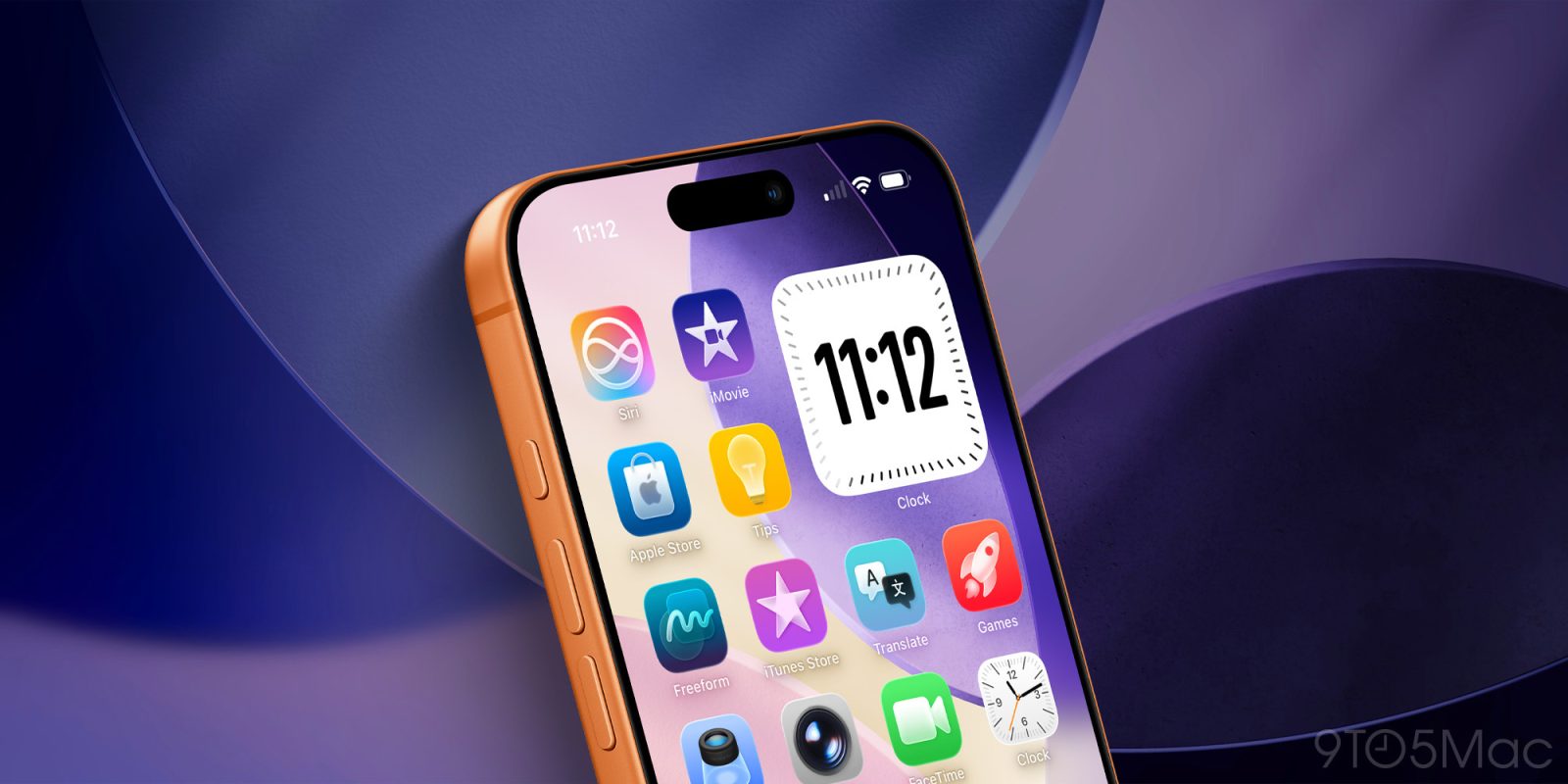
Reports surface that Siri will live in the Dynamic Island, get a dedicated app, an iMessage-style chat UI, and a system-wide 'Search or Ask' gesture.
2026-05-17
Power On newsletter details the auto-delete chat-history feature, possible beta label, and standalone Siri app launch plan.

Power Map

Key Players
Subject

Apple revamped Siri in iOS 27 with auto-deleting chat histories

AP

Apple

Vendor designing the redesigned Siri and standalone app; positions privacy controls as structurally built-in; targets WWDC 2026 reveal on June 8.

GO

Google (Gemini)

Provides the custom Gemini foundation model that backs the next generation of Apple Foundation Models powering Siri; preferred cloud partner.

OP

OpenAI (ChatGPT) and Anthropic (Claude)

Third-party chatbots that users can select instead of Siri inside the new system-wide 'Search or Ask' feature.

MA

Mark Gurman / Bloomberg

Primary reporter breaking the auto-delete, beta-label, and feature-set details via the Power On newsletter.

IP

iPhone users

Recipients of the new privacy controls; can pick a retention window or opt to keep chats forever.

Fact Check

10 cited
  1. [1] Apple's Siri revamp could include auto-deleting chats
  2. [2] Power On: iOS 27 Siri app to have auto-deleting chats
  3. [3] Apple launching new Siri app next month with auto-deleting chat history
  4. [4] Apple's new Siri app will reportedly offer auto-deleting chat options
  5. [5] iOS 27 Siri Redesign
  6. [6] Apple's iOS 27 Siri app: auto-deleting chats, privacy, beta
  7. [7] Google confirms context-aware Siri built from Gemini will debut in 2026
  8. [8] Apple confirms Gemini-powered Siri will use Private Cloud Compute
  9. [9] Siri in iOS 27: Rumor Recap
  10. [10] Here's why I won't be switching on auto-deleting Siri chats

Source Articles

Top 5

THE SIGNAL.

Analysts

"Confirmed Siri will keep running on device and via Private Cloud Compute, framing the Google collaboration as compatible with Apple's privacy posture. Quote: 'We'll continue to run on the device and run in Private Cloud Compute, and maintain our industry-leading privacy standards in doing so.'"

Tim Cook
CEO, Apple

"Publicly confirmed the Gemini foundation-model partnership with Apple ahead of Siri's 2026 launch. Quote: 'We're collaborating with Apple as their preferred cloud provider to develop the next generation of Apple Foundation Models based on Gemini technology.'"

Thomas Kurian
CEO, Google Cloud

"Reports privacy will be the defining theme of the WWDC Siri unveil and that Apple may still ship the new Siri behind a beta label. Quote: 'Privacy will be a major theme when Apple unveils a new version of Siri at the Worldwide Developers Conference in June.'"

Mark Gurman
Reporter, Bloomberg (Power On)

"Argues against enabling auto-delete because chatbots get more useful when they retain context across sessions; recommends keeping history organized and only deleting sensitive chats manually."

Ben Lovejoy
EU Editor, 9to5Mac

"Frames the iOS 27 work as the most significant Siri redesign since launch and positions it as Apple's answer to Claude and ChatGPT. Quote: 'Siri will be more like Claude or ChatGPT, marking a major improvement in how Siri works.'"

Juli Clover
Reporter, MacRumors
The Crowd

"Apple's new Siri app in iOS 27 will include privacy features unique to the chatbot market, @markgurman writes in this week's Power On"

@@business0

"BREAKING: Apple is overhauling Siri this fall in iOS 27 and macOS 27 and turning it into its first full-fledged chatbot, looking to fend off OpenAI's ChatGPT and seriously compete in the generative AI space."

@@markgurman0

"BREAKING: Apple is planning to open up Siri to run any AI service via their App Store apps as part of iOS 27, dropping ChatGPT as the exclusive outside partner in Apple Intelligence and Siri."

@@markgurman0

"Apple wants apps to integrate with Siri in iOS 27, but one fear holds some back: report"

@u/FollowingFeisty5321380
Broadcast
iOS 27 LEAKS: Apple's New Siri is Basically ChatGPT

iOS 27 LEAKS: Apple's New Siri is Basically ChatGPT

iOS 27 Siri LEAKED: Apple's Biggest AI Upgrade Ever?

iOS 27 Siri LEAKED: Apple's Biggest AI Upgrade Ever?

iOS 27 - This is INSANE, The New Siri Mode Changes Everything | Big News

iOS 27 - This is INSANE, The New Siri Mode Changes Everything | Big News