The 'approved but zero shipments' paradox
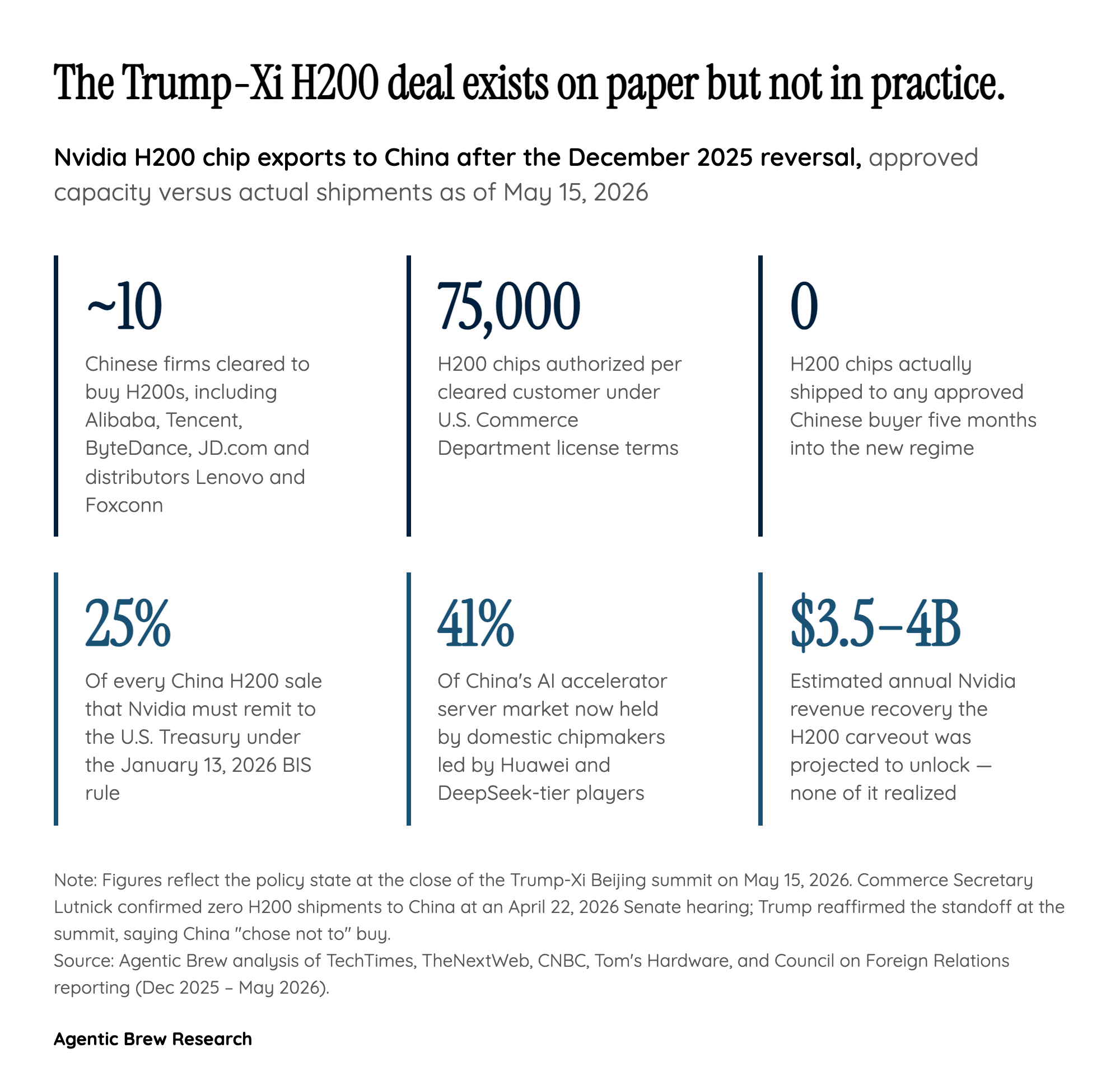
The headline contradiction of the Trump-Xi summit is that Washington has done everything it can to enable Nvidia H200 sales to China — and China has done everything it can to refuse them. The U.S. Commerce Department has cleared roughly 10 Chinese firms — Alibaba, Tencent, ByteDance, JD.com, plus distributors Lenovo and Foxconn — to buy up to 75,000 H200 chips each[1]. Yet as Commerce Secretary Howard Lutnick told a Senate Appropriations subcommittee in April, 'we have not sold them any chips as of yet'[2]. Trump himself confirmed the standoff on the tarmac in Beijing, saying China 'chose not to' buy and 'they want to develop their own'[3]. The mechanism is not market drift; it is deliberate. China's State Council has launched a parallel supply-chain security review and quietly told tech firms to pause H200 orders so capex stays inside the country[1]. That has reduced what was supposed to be a $3.5–$4 billion annual revenue recovery for Nvidia to a paper victory[4]. The licenses are real; the shipments are not.