Claude connectors for creative software
TECH

Claude connectors for creative software

32+
Signals

Strategic Overview

  • 01.
    On April 28, 2026, Anthropic released nine new Claude connectors that link the assistant directly into Adobe Creative Cloud, Blender, Autodesk Fusion, Ableton, Splice, Affinity by Canva, SketchUp, and Resolume Arena/Wire.
  • 02.
    The Adobe for creativity connector orchestrates multi-step workflows across more than 50 pro-grade tools spanning Photoshop, Premiere, Illustrator, Lightroom, InDesign, Firefly, Express and Stock.
  • 03.
    Anthropic also joined the Blender Development Fund as a Corporate Patron, donating at least 240,000 EUR per year earmarked for Blender core development including the Python API the connector depends on.
  • 04.
    The Blender connector is built on Model Context Protocol, meaning other large language models can drive Blender through the same surface in addition to Claude.

The pro-tool embed strategy: Claude as orchestration layer, not creative app

Anthropic's nine-connector launch is best read as a positioning choice rather than a product expansion. Instead of building a Claude-native image editor, video tool, or DAW, Anthropic is wiring its assistant into the software professionals already use and have earned. The Adobe connector reaches into more than 50 pro-grade tools across Photoshop, Premiere, Illustrator, Lightroom, InDesign, Firefly, Express and Stock. The Blender connector exposes a natural-language interface to the application's Python API, with the model able to analyze and debug entire scenes or write batch-edit scripts. Autodesk Fusion supports conversational 3D model creation; Resolume's Arena and Wire integrations let live VJs drive visuals in real time through prose.

Industry analysts have read the move as exactly that kind of embed. Unite.AI characterizes it as 'Anthropic's clearest move yet to embed Claude as a productivity layer inside creative tooling instead of competing with it head-on.' The economic logic is straightforward: integration deeply lowers adoption friction for working professionals who would otherwise have to abandon decades of muscle memory and asset libraries. It also lets Anthropic offer outcomes — finished renders, exported videos, mastered tracks — without owning the underlying creative app. The risk it accepts is dependency on partner roadmaps and APIs, which the Blender patronage move is partly designed to neutralize.
The Blender patronage calculus: paying to harden the surface you depend on

Anthropic joining the Blender Development Fund as a Corporate Patron — a tier that requires donating at least 240,000 EUR per year — is unusually legible as strategy. The funds are explicitly earmarked for Blender core development including 'foundational features like the Blender Python API.' That API is precisely the surface the Blender connector talks to. In effect, Anthropic is paying to harden the integration point its own agent depends on, so that future Blender releases continue to evolve in ways amenable to agentic control. The patronage also places Anthropic at the same tier as Epic Games, Netflix, Wacom, and Pico XR — peer companies in funding, not in product alignment.

Reddit observers dug into Blender's published corporate membership tiers (which reportedly span roughly $7K up to $280K) and noted that Corporate Patrons are said to receive a dedicated product manager plus a developer-and-board contact channel. That structural detail complicates the simple 'generous donation' narrative: at the patron level, money buys access to roadmap conversations, not just gratitude in a credits page. Some Hacker News commenters frame this less as the specific contract and more as the signal of AI labs deepening influence over creative open source. Blender CEO Francesco Siddi welcomed the support — 'In these uncertain and divisive times, we appreciate Anthropic offering support to the Blender project in a Patron-level membership' — and framed the funding as enabling the team 'to keep pursuing projects independently, and to focus on building tools for artists and creators.' Both can be true: the funding is meaningful, and so is the influence it conveys.

Coopetition inside Adobe: Firefly versus Claude on the same canvas

Adobe's role in this launch is the most strategically tangled. The company simultaneously ships its own Firefly AI Assistant and now exposes more than 50 Creative Cloud tools to a rival lab's agent. Adobe's own announcement frames the connector as 'pro-grade tools from our creative suite, working together intelligently to help you get to the best creative outcome.' That language is careful — Adobe is trying to position itself as the orchestration substrate, not as a feature being orchestrated by someone else. But for Photoshop or Premiere users, the practical effect is that two distinct AI surfaces — Firefly inside the app, Claude through the connector — now compete for the same mouse clicks and prompts.

This is a textbook coopetition arrangement. Adobe gains immediate distribution into Anthropic's user base and risks customer churn if it refuses; Anthropic gets the most credible creative integration on the market and accepts that Adobe could throttle or fragment access in future versions. The medium-term question is whose AI experience anchors the user's mental model of 'how I work in Creative Cloud.' If Claude becomes the default conversational layer, Firefly becomes a model invocation. If Firefly defends the surface, Claude becomes a peripheral macro engine. Both companies have visibly hedged.

The 'we did this in 2023' counter-narrative

Not everyone reads the launch as a breakthrough. Reddit and Hacker News commenters with hands-on Model Context Protocol experience pointed out that community Blender-MCP integrations have existed for over a year, with one prototype reportedly built on gpt-3.5-turbo back in 2023. The Blender connector itself is built on MCP, and Anthropic has confirmed it is 'accessible to other large language models in addition to Claude.' From a strict mechanism standpoint, the contrarian view is that the technical novelty is modest: the API existed, MCP existed, and competent developers had glued them together.

What is genuinely new is distribution, official partnership, and grounded behavior. The Ableton connector, for example, grounds Claude's answers in 'official product documentation for Live and Push' — a small detail with outsized reliability implications versus a hobbyist MCP server that hallucinates DAW shortcuts. Splice exposes its royalty-free sample catalog directly inside Claude. Resolume gives real-time control of live performance environments. These are licensed surfaces, not scraped ones. The sober reading is that the engineering bar was already cleared by the community; what changed is that vendors have now signed off, which moves the integration from a weekend hack into something a working freelancer can put on a client invoice.

The displacement fault line: enthusiasm and anxiety in the same week

Community reception split along professional lines. Within Claude-focused communities, the reception was largely enthusiastic, with users highlighting concrete quality-of-life wins — scene cleanup, batch operations, fixing naming conventions and folder structures, and generating Python scripts on demand — rather than utopian text-to-3D fantasies. The framing across enthusiast threads was that this lifts pain off repetitive production work without claiming to replace creative judgment.

Professional VFX channels were noticeably more skeptical. Anxiety surfaced openly about specialized creative roles being eroded as agentic workflows mature, with displacement concern dominating commentary even on relatively technical posts. No Film School's Jourdan Aldredge captured the broader unease: 'There's quite a bit of concern from those in the creative industries regarding AI moving into the creation space. And, frankly, that's exactly what this is.' Practical worries also surfaced — token cost for long sessions, model reliability on complex scenes, and the absence of strong sandboxing or undo guarantees when Claude has write access to project files. Anthropic's own framing leans into augmentation language ('Claude can't replace taste or imagination, but it can open up new ways of working'), but the labor question is unlikely to be settled by positioning. It will be settled by what a freelancer's hourly rate looks like a year from now, after agentic batch-editing has had time to compound.

Historical Context

2026-04-17
Anthropic launched Claude Design roughly eleven days before the creative connectors, a release reportedly impacting Figma's valuation and signaling a vertical push into creative software.
2026-04-28
Anthropic announced nine creative-tool connectors and joined the Blender Development Fund as a Corporate Patron at the highest published tier.
2026-04-28
Adobe published its 'Adobe for creativity' announcement on the same day, framing the Claude connector as an orchestration layer across more than 50 Creative Cloud tools.

Power Map

Key Players
Subject

Claude connectors for creative software

AN

Anthropic

Launching company; positions Claude as a productivity orchestration layer inside existing creative software rather than a standalone competitor, while simultaneously funding the open-source surface (Blender) it integrates with.

AD

Adobe

Built the broadest connector reaching 50+ Creative Cloud tools while continuing to ship its own Firefly AI Assistant, creating a coopetition dynamic between vendor-native and platform AI experiences.

BL

Blender Foundation

Receives Corporate Patron-level support of at least 240,000 EUR/yr earmarked for the Python API and core development; partner whose open API is what made the integration possible in the first place.

AU

Autodesk, Ableton, Splice, Canva (Affinity), SketchUp, Resolume

Tool-vendor partners exposing capabilities through Claude — 3D modeling in Fusion, grounded answers from Live and Push docs, sample search in Splice, batch production in Affinity, ideation-to-3D in SketchUp, and real-time VJ control in Resolume Arena/Wire.

OT

Other Blender Corporate Patrons (Epic Games, Netflix, Wacom, Pico XR)

Anthropic now sits at the same top funding tier as these companies, granting equal visibility within Blender's funding ecosystem and a comparable channel of influence.

CR

Creative professionals (VFX, music production, design)

Primary users; reactions split between enthusiasm for workflow acceleration and concern about wage pressure and job displacement as agentic control over pro tools matures.

Source Articles

Top 5

THE SIGNAL.

Analysts

"Welcomes Anthropic's patron-level support during what he calls a difficult period for the open-source ecosystem."

Francesco Siddi
CEO, Blender

"Frames the funding as enabling Blender to keep pursuing projects independently and to focus on building tools for artists and creators."

Francesco Siddi
CEO, Blender

"Argues the Adobe-Anthropic connector signals a turning point that creative industries rightly view with concern, calling it 'exactly' the kind of AI move into the creation space practitioners have feared."

Jourdan Aldredge
Writer, No Film School

"Reads the launch as Anthropic's clearest move yet to embed Claude as a productivity layer inside creative tooling rather than competing with it head-on."

Unite.AI analysis
Industry publication

"Frames Claude as augmentation rather than replacement, saying Claude can't replace taste or imagination but can open up new ways of working."

Anthropic
Company positioning statement
The Crowd

"Claude now connects to the tools creative professionals already use. With the new Blender connector, you can debug a scene, build new tools, or batch-apply changes across every object, directly from Claude."

@@claudeai0

"Freelance designers charge $5,000/month for what Claude can now do inside Blender for free. And that's just the beginning. Anthropic just launched Claude for Creative Work. Here's what Claude can now do: 1. Blender → Debug entire 3D scenes through conversation 2. Autodesk ..."

@@CodeByPoonam0

"Anthropic released new Connectors to Claude, focused on Creative Work. New Connectors: Adobe Creative Cloud, Ableton, Splice, Canva Affinity, SketchUp, Resolume, Autodesk Fusion, and Blender."

@@testingcatalog0

"Claude now connects to Blender"

@u/MarcelCorleone254
Broadcast
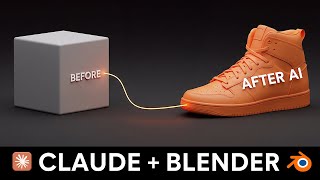
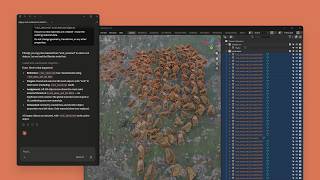
Claude now connects to Blender

Claude now connects to Blender

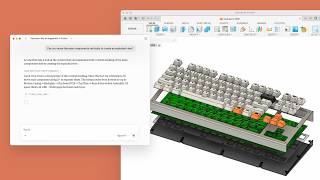
Claude now connects to Autodesk Fusion

Claude now connects to Autodesk Fusion

I connected Claude AI to Blender 3D...Mind-Blowing Results (MCP)

I connected Claude AI to Blender 3D...Mind-Blowing Results (MCP)