Elon Musk Announces Terafab Chip Manufacturing Project in Austin
TECH

Elon Musk Announces Terafab Chip Manufacturing Project in Austin

3+
Signals

Strategic Overview

  • 01.
    Elon Musk officially launched Terafab on March 21, 2026, at Austin's Seaholm Power Plant as a $20 billion joint venture between Tesla, SpaceX, and xAI to manufacture 2nm semiconductors in-house.
  • 02.
    The vertically integrated fab aims to produce 100-200 billion AI and memory chips annually across two categories: edge/inference chips for Tesla vehicles, robotaxis, and Optimus robots, and high-power chips for SpaceX space data centers and xAI computing.
  • 03.
    The facility targets 100,000 wafer starts per month with AI5 mass production beginning mid-2027 and full capacity by 2029, featuring chips that deliver 40-50x more compute and 9x more memory than current AI4 silicon.
  • 04.
    Social media reaction was polarized: X users and YouTube commentators celebrated the vertical integration ambition, while Reddit communities and financial analysts raised concerns about Tesla's zero semiconductor manufacturing experience and projected negative $5 billion free cash flow for 2026.

Deep Analysis

Why This Matters

Terafab represents perhaps the most audacious vertical integration play in modern technology history. Only three companies in the world -- TSMC, Samsung, and Intel -- can manufacture chips at the leading edge (sub-5nm), and none achieved that capability overnight. Tesla is proposing to join this exclusive club while simultaneously designing its own chips, a feat that even Apple, Google, and Amazon have avoided by relying on TSMC as their foundry partner. If Terafab succeeds, it would fundamentally reshape the semiconductor supply chain by creating a new vertically integrated model where a single corporate ecosystem designs, manufactures, and consumes its own advanced chips.

The strategic logic, however, is compelling. Musk's companies collectively face an enormous and growing chip demand: Tesla needs inference chips for millions of vehicles and Optimus robots, xAI requires training accelerators competitive with Nvidia's offerings, and SpaceX envisions radiation-hardened processors for orbital data centers. Current fabs produce only about 2% of what Musk estimates his companies will need. By internalizing production, Musk aims to break free from dependence on TSMC and Samsung, eliminate supply chain bottlenecks, and potentially achieve cost advantages at scale. The question is not whether the vision makes sense -- it does -- but whether execution is feasible given the extraordinary technical and financial barriers.
How It Works

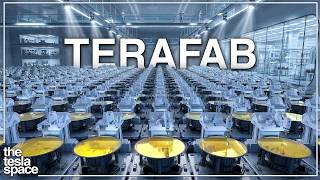
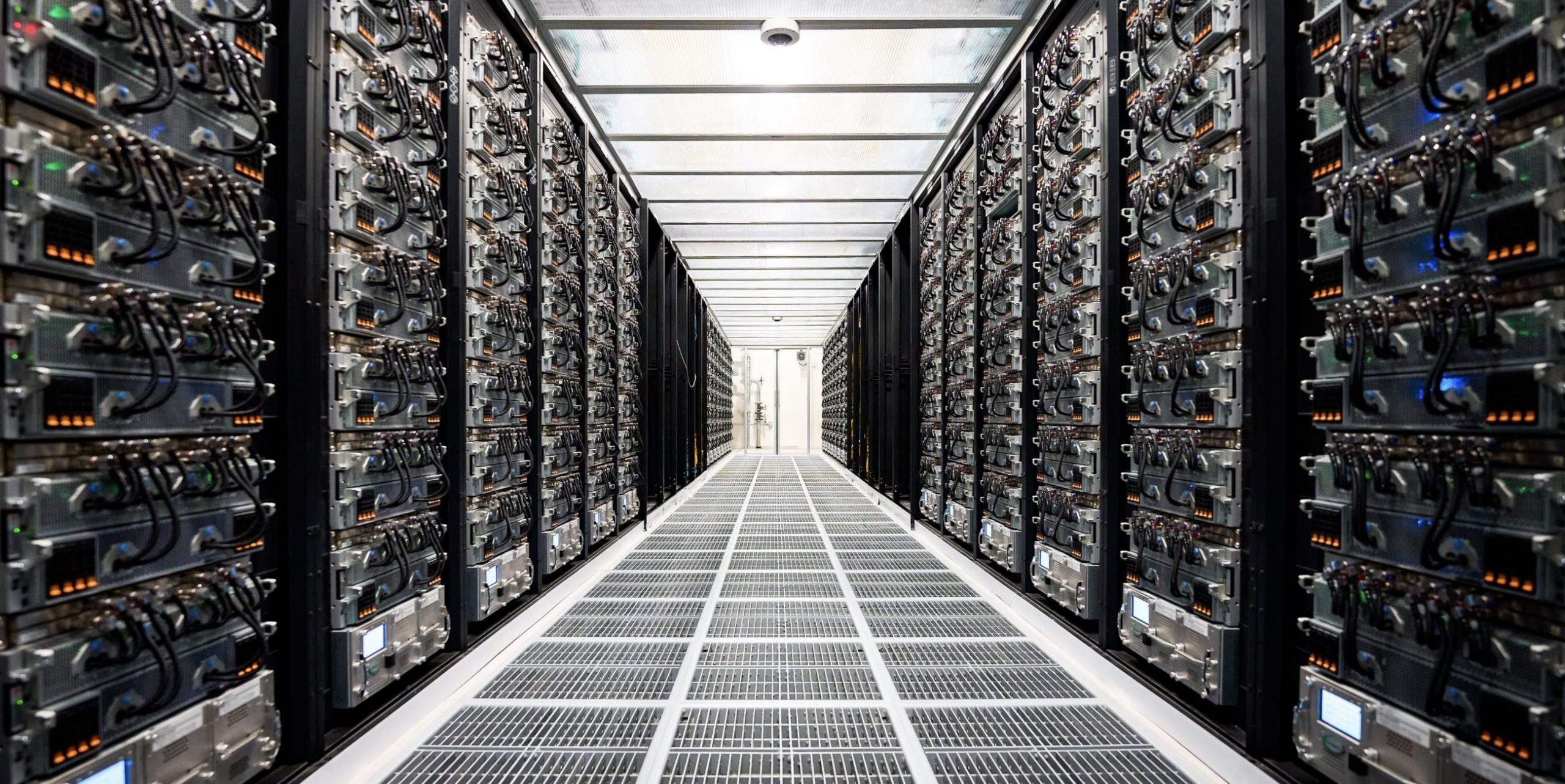
Terafab is designed as a vertically integrated semiconductor fabrication facility combining logic manufacturing, memory production, advanced packaging, and chip testing under a single roof. This contrasts with the traditional semiconductor model where these functions are split across multiple specialized facilities and companies. The fab targets 2nm process technology -- the bleeding edge of semiconductor manufacturing -- with a planned throughput of 100,000 wafer starts per month.

The facility will produce two distinct chip families. The first is an edge/inference line optimized for deployment in Tesla vehicles, Cybercab robotaxis, and Optimus humanoid robots, where power efficiency and compact form factor are paramount. The second is a high-power compute line designed for SpaceX's planned space-based data centers and xAI's AI training infrastructure. The flagship AI5 chip promises 40-50x more compute and 9x more memory compared to the current AI4, which Samsung manufactures today. The 10-module facility is planned to begin AI5 mass production by mid-2027, with full operational capacity targeted for 2029. During the ramp period, Samsung will continue producing AI4 and has secured a $16.5 billion contract for AI6 chips, providing a manufacturing backstop.

By The Numbers

By The Numbers
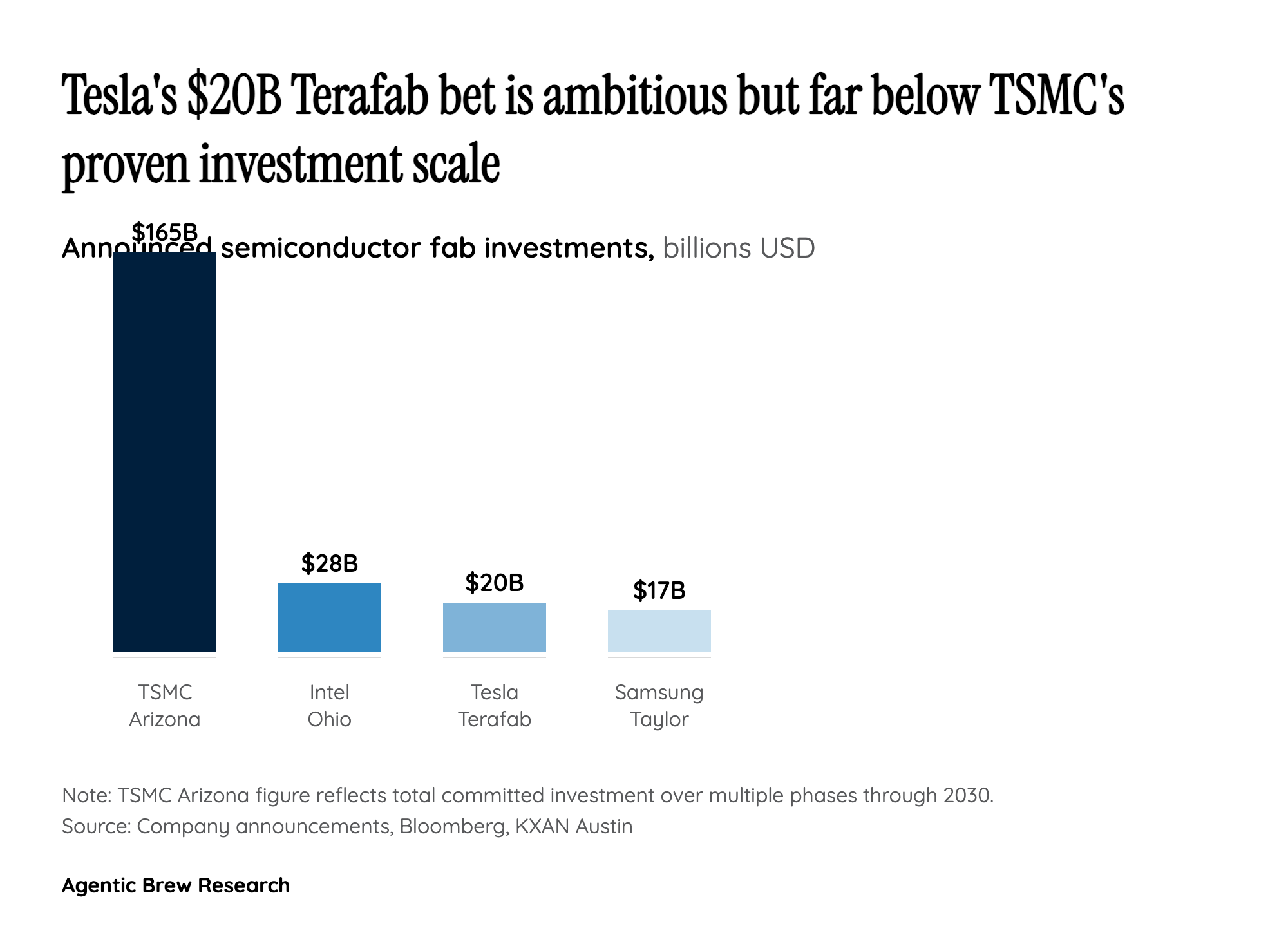
Tesla's $20B Terafab bet is ambitious but far below TSMC's proven investment scale

The financial scale of Terafab is staggering but must be placed in context. Tesla's announced $20 billion investment (with some estimates ranging to $25-40 billion) compares to TSMC's $165 billion committed investment in Arizona, Intel's $28 billion Ohio fab complex, and Samsung's $17 billion Taylor, Texas facility. Tesla's 2025 financials show $44.06 billion in cash reserves, $6.2 billion in free cash flow, and $14.75 billion in operating cash flow -- but 2026 capital expenditure is projected to exceed $20 billion, more than double the $8.53 billion spent in 2025.

The production targets are equally ambitious: 100-200 billion chips per year at full capacity, with approximately 80% destined for space applications and 20% for ground-based use. Tesla's 2025 revenue stood at $94.8 billion (down 3% year-over-year) with net income of $3.79 billion (down 46%), raising questions about how the company will finance such massive capital expenditure. Electrek's financial analysis projects approximately negative $5 billion in free cash flow for 2026 and estimates a $10-15 billion capital raise will be necessary, potentially through a secondary stock offering that would dilute existing shareholders.

Impacts & What's Next

The immediate market impact has been polarized. On social media, enthusiasm dominates: X posts from accounts like @cb_doge and @tesla_archive garnered thousands of engagements celebrating the vertical integration vision, while Tesla's official YouTube announcement video drew 112,000 views. The narrative of Musk unifying Tesla, SpaceX, and xAI into a chip-producing powerhouse resonated strongly with his supporter base. However, financial markets and engineering communities have been more cautious, with analysts maintaining predominantly 'Hold' ratings and semiconductor engineers on Reddit identifying six distinct barriers to feasibility.

The critical near-term milestones to watch are the AI5 tape-out validation (expected mid-2026), the securing of ASML extreme ultraviolet lithography equipment (a known bottleneck with multi-year lead times), and the anticipated capital raise that could arrive as early as Q3 2026. For TSMC and Samsung, Terafab represents a long-term competitive threat but an immediate revenue opportunity, as both will continue supplying Tesla during the multi-year ramp period. Nvidia's Jensen Huang has already positioned his company's messaging to emphasize the near-impossibility of matching TSMC, suggesting the incumbent ecosystem views Terafab as a serious if unlikely challenger.

The Bigger Picture

Terafab arrives at a moment of intense geopolitical and industrial competition over semiconductor sovereignty. The U.S. CHIPS Act has already channeled billions into domestic fab construction by TSMC, Intel, and Samsung, but Terafab would be the first major fab built by a non-semiconductor company. This mirrors a broader trend of hyperscaler vertical integration -- Apple designs its own chips, Google builds TPUs, Amazon created Graviton and Trainium -- but none of these companies have attempted to manufacture their own silicon. Tesla is proposing to skip the design-only model entirely and go straight to fabrication.

The historical parallel that skeptics most frequently cite is Tesla's 4680 battery cell program, which promised 100 GWh of annual production by 2022 but achieved only roughly 20 GWh by 2025. Semiconductor manufacturing is arguably harder than battery production: it requires atomic-level precision, years of process development to achieve viable yields, and a specialized workforce that is in extremely short supply globally. Yet Musk's track record also includes achievements that were widely dismissed as impossible, from reusable rockets to scaled electric vehicle production. Whether Terafab joins the list of Musk's improbable successes or his overambitious stumbles will likely become clear by the 2027-2028 timeframe, when AI5 production yields will reveal whether Tesla can truly compete with the world's most sophisticated manufacturers.

Historical Context

October 2025
Samsung expanded its role in Tesla's chip manufacturing ecosystem, deepening the partnership ahead of next-generation chip designs.
November 2025
Tesla neared tape-out of the AI5 chip design and began preliminary work on the AI6 architecture, signaling accelerating in-house silicon ambitions.
January 17, 2026
AI5 chip design reached near-completion, marking a critical milestone in Tesla's custom silicon development program.
January 19, 2026
Tesla restarted the Dojo3 custom chip project, expanding its portfolio of in-house semiconductor designs beyond automotive inference chips.
January 28, 2026
Terafab was first publicly confirmed during Tesla's Q4 2025 earnings call, revealing the company's intent to build its own semiconductor fabrication facility.
March 14, 2026
Musk posted on X that 'Terafab launches in 7 days,' building public anticipation for the official announcement event.
March 21, 2026
Official Terafab launch event held at the Seaholm Power Plant in Austin, Texas, with Musk presenting the $20 billion vertically integrated semiconductor fab as a joint venture across his three companies.

Power Map

Key Players
Subject

Elon Musk Announces Terafab Chip Manufacturing Project in Austin

TE

Tesla

Primary operator and largest chip consumer; uses semiconductors for Full Self-Driving, Cybercab, and Optimus robot platforms. Currently relies on Samsung for AI4 chip manufacturing.

SP

SpaceX

Joint operator focused on high-power chip production for space-based data centers, estimated to consume approximately 80% of Terafab's compute output.

XA

xAI

Key beneficiary for AI computing needs; Terafab chips will power xAI's large-scale model training and inference infrastructure.

TS

TSMC

Current leading-edge chip supplier to Tesla; stands to lose a major customer if Terafab succeeds in producing competitive 2nm chips. Currently co-manufactures AI5 with Samsung.

SA

Samsung

Current AI4 manufacturer for Tesla with an expanded $16.5 billion deal to produce AI6 chips; serves as a bridge supplier during Terafab's ramp-up period.

NV

Nvidia

Competitor in AI chip space whose CEO Jensen Huang publicly warned that matching TSMC's manufacturing capabilities is 'virtually impossible,' underscoring the difficulty of Terafab's ambitions.

THE SIGNAL.

Analysts

"Stated that building advanced chip manufacturing is 'extremely hard' and matching TSMC's capabilities is 'virtually impossible,' implicitly casting doubt on Tesla's ability to execute Terafab at the announced scale and timeline."

Jensen Huang
CEO, Nvidia

"Drew a direct parallel to Tesla's 4680 battery cell program, which promised 100 GWh by 2022 but achieved only approximately 20 GWh by 2025. Predicted Terafab could follow a similar pattern of overpromise and delayed execution, noting Tesla has zero semiconductor manufacturing experience."

Electrek Editorial Board
Technology publication, Tesla coverage

"Projected approximately negative $5 billion free cash flow for Tesla in 2026 and estimated a $10-15 billion capital raise would be necessary to fund Terafab alongside other commitments, questioning the financial viability without significant dilution."

Electrek Financial Analysis
Financial reporting team

"Remained divided with many maintaining 'Hold' ratings citing execution risks and capital intensity, while some optimistic voices highlighted Terafab as a potential catalyst for AI leadership that could recharge the stock if milestones are met."

Wall Street Analyst Community
Equity research analysts covering Tesla

"Identified six major barriers to feasibility including ASML equipment bottlenecks, lack of process development expertise, cleanroom contamination challenges, yield management complexity, talent acquisition in a tight labor market, and the multi-year learning curve required for any new fab to reach production-grade yields."

r/semiconductors Engineering Community
Industry engineers and semiconductor professionals
The Crowd

"ELON MUSK: Even when we estimate the best case scenario for chip production from our suppliers, it is still not enough. So I think we may have to do a Tesla TeraFab."

@@cb_doge2900

"BREAKING: ELON MUSK ANNOUNCES TERAFAB - ADVANCED CHIP FAB IN AUSTIN WITH FULL IN-HOUSE LOOP."

@@tesla_archive3700

"BREAKING: Elon Musk just announced the Terafab project. Tesla + SpaceX + xAI project. Location: Austin / Giga Texas. 1TW/year of compute."

@@ns123abc610

"Elon Musk announces Terafab chip factory project - $20B bet on 2nm AI chips in Austin"

@u/unknown-1
Broadcast
TERAFAB

TERAFAB

Elon Musk Reveals Tesla TeraFab Chip Factory

Elon Musk Reveals Tesla TeraFab Chip Factory

Elon Reveals TERAFAB (Tesla & SpaceX) - Full Replay

Elon Reveals TERAFAB (Tesla & SpaceX) - Full Replay