Anthropic and OpenAI enterprise AI deployment ventures
TECH

Anthropic and OpenAI enterprise AI deployment ventures

52+
Signals

Strategic Overview

  • 01.
    On May 4, 2026, Anthropic, Blackstone, Hellman & Friedman, and Goldman Sachs announced a $1.5 billion AI-native enterprise services firm to deploy Claude inside mid-sized organizations, with each of the three lead partners contributing about $300 million and Goldman Sachs adding roughly $150 million.
  • 02.
    On the same day, OpenAI launched The Deployment Company (internally DeployCo) at a $10 billion valuation, raising approximately $4 billion from 19 investors including TPG, SoftBank, Brookfield Asset Management, Advent, and Bain Capital, while OpenAI itself committed $500 million upfront with the option to scale to $1 billion.
  • 03.
    OpenAI reportedly guaranteed its private equity backers a 17.5% annual return over five years — a structure unusual in enterprise software financing.
  • 04.
    One day after the JV announcement, Anthropic shipped 10 finance-specific Claude agent templates spanning pitch building, earnings review, valuation, ledger reconciliation, month-end close, statement audit, and KYC screening.
  • 05.
    Anthropic also rolled out full Microsoft 365 integration — Claude operating as a single agent across Excel, PowerPoint, Word, and Outlook with shared context — and embedded Moody's as a native MCP app providing credit ratings and data on more than 600 million companies.
  • 06.
    Both ventures are in talks to acquire AI services and consulting firms, with OpenAI's deployment arm reportedly in advanced stages on three deals; most of the capital is expected to fund acquisitions of engineering services and consulting shops.

Deep Analysis

Same Day, Different Bets: The Volume Play vs. The Credibility Play

Strip away the press-release symmetry and the two ventures are not the same deal. OpenAI's Deployment Company is a volume machine: a $10 billion vehicle backed by $4 billion from 19 investors led by TPG and SoftBank, aimed at the 2,000+ mid-sized companies sitting inside its private-equity backers' portfolios. The economics are explicit — OpenAI reportedly guaranteed its PE investors a 17.5% annual return over five years, the kind of structured promise rarely seen in enterprise software financing. The bet is that captive distribution plus aggressive acquisitions of engineering-services firms can manufacture revenue fast enough to clear that hurdle.

Anthropic's $1.5 billion JV is a smaller, more curated structure with three balanced anchor partners — Blackstone, Hellman & Friedman, and Goldman Sachs — each writing roughly $300 million ($150 million from Goldman). It reads less like a captive distribution channel and more like a credentialing exercise: stand next to the most prestigious financial institutions in the world, get introduced into their portfolios, and let the brand do the early sales work. The accompanying May 5 product drop — 10 finance-specific Claude agents, full Microsoft 365 context-sharing across Excel, Word, PowerPoint, and Outlook, and Moody's embedded as a native MCP app reaching 600 million companies — gives that credibility play tangible product surface area. OpenAI is buying scale; Anthropic is buying trust.

Why a 17.5% Guarantee Is the Most Telling Number in This Story

OpenAI's reported promise of a 17.5% annual return for five years to its PE backers deserves more attention than it has received. Enterprise software companies rarely guarantee returns, because the unit economics — high gross margins, predictable expansion revenue, and software's near-zero marginal cost — typically produce outcomes that beat such floors organically. A guarantee is what you offer when capital is not sure the underlying business will deliver. Read together with the venture's $10 billion valuation, the $4 billion check, and OpenAI's own modest $500 million-to-$1 billion contribution, the structure tells you what kind of business The Deployment Company actually is: a services business with consulting-style margins and consulting-style cyclicality, not a software multiple in disguise.

The context shifts the math further. Sequoia partner Julien Bek explicitly frames the new wave: 'next-generation companies will sell outcomes (legal services, financial analysis, insurance processing via AI) billed as consulting rather than traditional software.' For every dollar enterprises spend on software they spend roughly six on services, so the pool is enormous — but it is also lumpier, more labor-intensive, and harder to compound. The 17.5% number is the price OpenAI paid to convert an open-ended demand question into something its investors could underwrite. It is also why Reddit's r/Anthropic was quick to note that Blackstone and H&F are not 'patient mission-driven capital' — they have fund lifecycles, and they will extract Claude productivity gains as margin somewhere down the chain.

The Consulting Industry Just Acquired a New Competitor With Better Tooling

The Big Three (McKinsey, BCG, Bain) and the Big Four (Accenture, Deloitte, PwC, EY) have spent the last three years building 'AI transformation' practices that resell other people's models with their own labor markup. The Anthropic and OpenAI joint ventures collapse that arbitrage. Anthropic's existing Claude Partner Network — which already includes Accenture, Deloitte, and PwC — now sits beside a new entity whose job is to sell Claude-powered outcomes directly into the mid-market the consultancies have historically priced out. Constellation analyst Holger Mueller predicts the new ventures will recruit talent from those same incumbents to staff up implementation: the consultancies trained the engineers that the labs will now hire to compete with them.

The vertical pattern is already visible. Anthropic's first ten agents are all finance-shaped — pitch builder, earnings reviewer, model builder, valuation reviewer, general ledger reconciler, month-end closer, statement auditor, KYC screener — the exact workstreams that fill billable consulting hours at investment banks and PE-backed mid-market businesses. The Microsoft 365 integration matters here in a way that is easy to underplay: a single agent that maintains context across Excel, Word, PowerPoint, and Outlook turns the four most ubiquitous knowledge-worker tools into one continuous workflow, and that workflow is exactly where a junior consultant currently sits. Moody's plugged in as a native MCP app means Claude can pull credit ratings and reference data on 600 million companies without leaving the chat — a capability traditional consulting decks rebuild manually for every engagement.

The Contrarian Read: Is This a Demand Problem Wearing a Distribution Strategy

Not everyone is buying the deployment-bottleneck framing. The skeptical view, surfaced most clearly in r/technology threads and in @Ric_RTP's contrarian X analysis, is that a $4 billion raise plus a 17.5% return guarantee plus aggressive M&A talks plus $1.5 billion in JV equity does not look like a company solving a delivery problem on top of overflowing demand — it looks like a company manufacturing demand ahead of an IPO. One commenter framed it as 'juicing run-rate before Opus 5,' and the timing fits: Anthropic surpassed OpenAI in enterprise revenue in March 2026 and is reportedly weighing offers at a $900 billion+ valuation, while OpenAI faces White House AI czar David Sacks' warning that the gap could become 'insurmountable' over the next one or two years.

The counter-counter is also worth taking seriously. r/technology user simsimulation pointed out that Apple spends $2 billion a year on advertising, Samsung roughly $9 billion, and Netflix similar — enterprise SOC-compliant sales legitimately require long cycles and embedded human capital. The honest read is probably that both stories are partly true: deployment really is a bottleneck (only about 20% of US businesses currently use AI tools in a meaningful way), and the JV structures really are also a way to convert that long, expensive sales cycle into something a public-market or PE investor can model. The $1.5 billion isn't proof of product weakness; it's the cost of meeting Fortune 500 procurement on its own terms.

Palantir's Playbook, Repackaged for Foundation Models

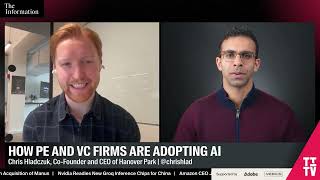
The most useful historical lens here is Palantir, which invented the Forward Deployed Engineer model in the early 2010s — engineers embedded inside customer organizations long enough to translate the technology into actual operational outcomes. Goldman's Marc Nachmann openly invokes the term, framing the Anthropic JV as a way to 'democratize access to forward-deployed engineers' for companies that can't afford Palantir-tier or Big Four-tier engagement fees. The Information's Chris Hladczuk made the same point on YouTube, arguing the deal explicitly imports the Palantir FDE template into a foundation-model business and signals that traditional B2B SaaS — the seat-license, self-serve playbook — is over for the categories AI now touches.

What changes when you graft the FDE model onto Claude or GPT is the leverage. Palantir engineers brought general-purpose data-integration software; Anthropic's engineers will arrive with 10 prebuilt finance agents, M365 context-aware tooling, and a Moody's data plane already plumbed in. The same human-embedded sales motion now ships with substantially more pre-built product surface, which is why the venture's economics can plausibly support consulting-style headcount even at a software-style valuation. The flip side is the cultural transformation it forces on the labs themselves: Anthropic and OpenAI now have to operate inside change-management cycles, security reviews, and customer politics — the exact friction that originally pushed Palantir into a public-market valuation that has often confused observers because investors don't agree on whether the company is software or services. Anthropic and OpenAI are about to inherit that same identity question, just at a much larger scale.

Historical Context

2010-01-01
Palantir invented the Forward Deployed Engineer model in the early 2010s — embedding engineers directly inside customer organizations to translate technology into outcomes. This is the explicit template Anthropic and OpenAI are now adopting.
2025-03-03
Anthropic finalized a megaround at a $61.5 billion valuation, the capital base from which the enterprise pivot would later be funded.
2025-03-26
Anthropic signed a five-year strategic partnership with Databricks to deliver Claude to over 10,000 enterprise customers — an early signal that distribution deals, not model releases, would define 2025-2026.
2026-03-18
Anthropic surpassed OpenAI in enterprise/API revenue, reframing the competitive race and triggering David Sacks' 'insurmountable lead' warning.
2026-04-29
Anthropic was reported to be considering funding offers at over $900 billion valuation, potentially leapfrogging OpenAI in private market value just days before the JV launch.
2026-05-04
Both Anthropic and OpenAI announced rival enterprise AI services joint ventures with private-equity anchor partners on the same day — an unmistakable signal that enterprise deployment is now the primary battlefield.
2026-05-05
One day after the JV announcement, Anthropic shipped the first wave of products the venture will sell: 10 finance agents, full Microsoft 365 integration, and the Moody's MCP app.

Power Map

Key Players
Subject

Anthropic and OpenAI enterprise AI deployment ventures

AN

Anthropic

Founding partner committing $300M and supplying both Claude technology and applied AI engineers; uses the venture to scale beyond its existing Claude Partner Network of Accenture, Deloitte, and PwC into the mid-market.

BL

Blackstone

Anchor investor with $300M; opens its private-equity portfolio as a captive customer base and frames the venture as the answer to the AI engineering bottleneck.

HE

Hellman & Friedman

Anchor investor with $300M; CEO Patrick Healy positions the deal as a rare convergence of demand and frontier-AI capability.

GO

Goldman Sachs

Founding investor at roughly $150M; through Marc Nachmann frames the venture as 'democratizing forward-deployed engineers' for firms that cannot otherwise afford that talent.

OP

OpenAI

Majority owner of The Deployment Company committing $500M-$1B; led by COO Brad Lightcap, targeting 2,000+ mid-sized firms across PE portfolios.

TP

TPG and SoftBank

Lead investors in The Deployment Company; provide private-equity portfolio access and deepen SoftBank's AI infrastructure thesis following Stargate.

MO

Moody's

First major data provider to embed an entire platform inside Claude as a native MCP app, supplying credit ratings and company data at 600M+ scale.

MI

Microsoft

Distribution partner via Microsoft 365 — Claude operates across Excel, Word, PowerPoint, and Outlook with shared context across all four applications.

Source Articles

Top 5

THE SIGNAL.

Analysts

"Both ventures resemble consulting operations despite the AI labs lacking prior consulting experience, and will likely pull talent from incumbents like Accenture: 'Anthropic and OpenAI look like they're in a parade-style lockstep with the way they keep mirroring each other's actions.'"

Holger Mueller
Principal Analyst, Constellation Research

"Argues the venture will 'break down one of the most significant bottlenecks to enterprise AI adoption by expanding the number of highly skilled implementation partners' — framing the engineer shortage, not model capability, as the binding constraint."

Jon Gray
President & COO, Blackstone

"'Enterprise demand for Claude is significantly outpacing any single delivery model' — positions the JV as additive to existing systems integrators rather than a replacement."

Krishna Rao
CFO, Anthropic

"'By democratizing access to forward-deployed engineers, the new company can help accelerate AI adoption' — selling embedded engineering as a commodity to companies that can't pay Big Four rates."

Marc Nachmann
Global Head of Asset and Wealth Management, Goldman Sachs

"'This is a rare convergence: massive market need, the unmatched AI technical capability of Anthropic.'"

Patrick Healy
CEO, Hellman & Friedman

"Warns that if OpenAI doesn't catch Anthropic on enterprise revenue soon, Anthropic could 'take a lead here that, let's say, over the next one or two years, could be insurmountable.'"

David Sacks
AI Investor / White House AI Czar

"Frames the structural shift directly: 'next-generation companies will sell outcomes (legal services, financial analysis, insurance processing via AI) billed as consulting rather than traditional software.'"

Julien Bek
Partner, Sequoia Capital
The Crowd

"The most important AI story today isn't a new model but rather it's two massive bets on who controls how AI gets used (Save this). OpenAI and Anthropic have both concluded, simultaneously, that the bottleneck in AI is no longer capability, it's deployment. The models are good enough but the problem is that most companies can't actually install them inside their businesses. They don't have the teams, data pipelines, security architecture or operating discipline to take a frontier model and make it affect revenue. Both companies have now placed an identical bet on how to close it, use private equity as their distribution engine. OpenAI finalized its joint venture today officially called The Deployment Company backed by 19 investors including TPG, Brookfield, Bain Capital, SoftBank, and Dragoneer. The PE partners collectively touch over 2,000 portfolio companies and clients, turning AI enterprise selling from a one company at a time pitch into a routed distribution network across thousands of businesses simultaneously. Hours later, Anthropic announced its own version, a $1.5 billion joint venture with Blackstone, Hellman & Friedman, Goldman Sachs, and General Atlantic. But Anthropic's structure is different in one critical way rather than a financing vehicle with an AI partner, this is a standalone operating company with Anthropic engineers embedded directly inside it. The execution philosophies reveal two different theories of the market. OpenAI's is a volume play, pull as many PE portfolios as possible into a captive distribution channel as fast as possible while Anthropic's is a credibility play, a smaller number of deeply prestigious financial institutions whose imprimatur sells Claude to the rest of the market, with embedded engineers who can continuously evolve implementations as the model itself changes every few weeks. The implications for traditional consulting are severe. McKinsey, Deloitte, Accenture, and BCG have collectively built $300 billion in annual revenues selling exactly this service."

@@MilkRoadAI278

"Anthropic partners with Blackstone, Hellman & Friedman, and Goldman Sachs to launch a new AI services firm."

@@IndianTechGuide2123

"OpenAI just created a $10 billion company whose ONLY job is forcing businesses to use AI. And they're literally guaranteeing investors a 17.5% annual return to make it happen. It's called "The Deployment Company." OpenAI finalized it yesterday with 19 investors including TPG, SoftBank, Bain Capital, Brookfield, and Advent International. Here's the structure: OpenAI puts in $1.5 billion. The private equity firms put in $4 billion. In exchange, those PE firms open up their 2,000+ portfolio companies as a CAPTIVE customer base for OpenAI's products. OpenAI then embeds teams of engineers directly inside those companies, Palantir-style, to integrate their tools into daily operations. And here's the big red flag in all of this: OpenAI is GUARANTEEING those PE firms a 17.5% annual return over five years. That means even if the companies in the portfolio don't want AI, don't need AI, or get zero value from AI, OpenAI is still on the hook to pay those returns. OpenAI is so desperate for enterprise adoption that they're paying Wall Street to force their product into thousands of businesses."

@@Ric_RTP42

"Anthropic nears $1.5 billion AI joint venture with Wall Street firms, WSJ reports"

@u/Mo_Jack305
Broadcast
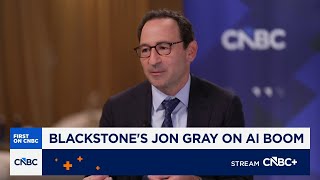
Blackstone president Jon Gray discusses new partnership with Anthropic

Blackstone president Jon Gray discusses new partnership with Anthropic

Anthropic, Blackstone, Goldman Sachs Building A New AI Enterprise Venture: Here's What It'll Do

Anthropic, Blackstone, Goldman Sachs Building A New AI Enterprise Venture: Here's What It'll Do

Anthropic's Private Equity Strategy

Anthropic's Private Equity Strategy