OpenAI Codex Chrome Extension Launch
TECH

OpenAI Codex Chrome Extension Launch

33+
Signals

Strategic Overview

  • 01.
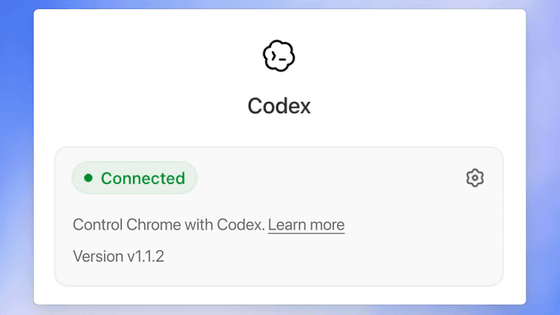
    OpenAI launched a Codex extension for Google Chrome on May 7, 2026, letting Codex operate directly inside the user's signed-in Chrome browser on macOS and Windows.
  • 02.
    Inside Chrome, Codex can test web apps, gather context across multiple tabs, and use Chrome DevTools in parallel — all without taking over the browser from the user.
  • 03.
    The extension is purpose-built for tasks that require an authenticated session, such as work inside Gmail, Salesforce, LinkedIn, dashboards, and internal tools.
  • 04.
    Codex tasks running in Chrome are organized in dedicated tab groups so background work for a thread stays isolated from the user's normal browsing.
  • 05.
    By default Codex must ask permission before interacting with each new website, with allowlists and blocklists managed in Computer Use settings.
  • 06.
    The extension is available in all regions on macOS and Windows except the EU and UK, with support for those regions promised soon.

The architectural trick: parallel tab groups instead of a takeover

The defining design choice of the Codex Chrome extension is what it does not do. Earlier browser-agent demos — including OpenAI's own Computer Use — typically commandeer the active window, mousing through buttons while the user watches helplessly. The Chrome extension flips that. Codex spawns its own dedicated tab groups, runs work in the background, and leaves the foreground tab to the human. Engadget called out this 'without taking over your browser' framing as the actual product story, and developer-focused YouTube reviewers highlighted the isolated background tabs combined with Chrome DevTools access as the standout differentiator versus competing browser agents.

The mechanical implication is significant: a developer can keep coding in their main tab while Codex, in a sibling tab group, opens a staging dashboard, fires DevTools, reproduces a bug, and reports back. It is the difference between an agent that interrupts you and one that runs alongside you, and it is the first time a major lab has shipped that pattern as a default Chrome extension.


From coding agent to knowledge-worker agent

Codex began life as a coding tool, but the Chrome extension quietly redraws its addressable market. By targeting authenticated sessions in Gmail, Salesforce, LinkedIn, and internal dashboards, OpenAI is positioning Codex for any task where the bottleneck is not writing code but navigating signed-in web apps — CRM updates, research across tabs, dashboard checks, structured data entry.

The growth numbers reinforce the trajectory: 4 million weekly active users, an 8x lift since the start of 2026, and in Australia a 6x consumer surge alongside a 13x enterprise surge over the same period. Those enterprise multiples in particular suggest Codex is leaking out of engineering teams and into operations and revenue functions, which is exactly the audience for whom an agent that can drive Salesforce inside their existing Chrome login is more interesting than one that can refactor a Python file.

Authenticated agency: the security debate the launch can't avoid

An agent that runs inside your signed-in Chrome inherits everything Chrome has — cookies, sessions, single sign-on tokens to internal tools. Digital Trends framed the tradeoff bluntly: the same reach that makes Codex useful is what raises the risk bar, and the publication argued that browser-resident agents need stronger human review than chatbots because they can read dashboards, submit forms, and touch internal systems.

That concern echoes loudly in community reaction, where developers contrast Codex's in-browser approach with sandboxed Playwright-based alternatives — handing an agent access to a signed-in Chrome 'with all your cookies and sessions' is, in their framing, a different category of trust than running scripted automation in a clean container. OpenAI's mitigations are real but conventional: per-site confirmation prompts by default, allowlists and blocklists in Computer Use settings, and minimal logging of Chrome actions. Whether that is enough depends less on the prompts themselves and more on whether users actually treat each approval as a meaningful checkpoint rather than a click-through, especially once the agent is running multiple tab groups in parallel and the human's attention is, by design, elsewhere.

The EU and UK carve-out is the regulatory tell

OpenAI shipped the Codex Chrome extension in every region on macOS and Windows except the EU and the UK. The company has not detailed the reasoning, but the shape of the carve-out is itself the signal: when a US lab withholds an agentic browser tool specifically from those two jurisdictions, it points to the same compliance regimes — the Digital Markets Act, the AI Act, and the UK's emerging frameworks — that have shaped recent staggered rollouts of other AI features.

The omission matters because agentic browser control is precisely the surface where European rules around automated decision-making, data access, and gatekeeper interaction are most contested. For now, EU and UK developers are watching from the sidelines, with some users reportedly routing through VPNs to get access. Whether 'support for those regions soon' arrives with the same default behavior or with a more constrained variant will be a real-world test of how much agentic AI design is now being shaped by jurisdiction rather than by capability.

Squeezing the browser-automation middle

By bundling DevTools access, parallel-tab orchestration, and authenticated browsing into a single Chrome extension shipped from the Codex app, OpenAI is compressing a stack that until now was assembled from separate parts: Playwright or Selenium for testing, an MCP server for DevTools, a computer-use agent for clicks. Practitioners have started framing the launch as eliminating the need for external testing tools, and that compression is the competitive story.

It puts pressure on browser-automation startups, on Manus-style standalone AI browsers, and on Chrome DevTools MCP setups that previously offered the only route to programmatic DevTools control. The reception is not unanimous — some power users insist Chrome DevTools MCP remains more token-efficient and burns Codex's weekly usage faster than they would like — but the strategic move is clear: collapse multiple categories of tooling into one extension that ships behind OpenAI's distribution and pricing, including the $100/month Codex Pro tier that offers roughly 5x the usage of $20/month ChatGPT Plus.

Historical Context

2025-04-01
Codex initially launched as OpenAI's coding agent.
2026-01-01
Start-of-year baseline used for the 8x growth comparison; Codex weekly active users have grown roughly 8x since this point.
2026-05-07
Codex Chrome extension launched on macOS and Windows in all regions except the EU and UK.

Power Map

Key Players
Subject

OpenAI Codex Chrome Extension Launch

OP

OpenAI

Vendor and developer of Codex; owns the new Chrome extension and is expanding Codex from a coding tool into a general browser-automation agent.

GO

Google (Chrome)

Browser platform — the extension ships through the Chrome Web Store and Codex operates inside Chrome's tab and extension model.

CO

Codex developers and end users

Primary users; growth is rapid (4M weekly actives, 8x year-to-date) and increasingly extends beyond developers to anyone whose work lives in browser apps.

AN

Anthropic, GitHub Copilot, and Google AI

Competing AI coding and browser-agent providers; this launch positions OpenAI more directly against Claude Code, GitHub Copilot, and Google's browser-AI integrations.

EU

EU and UK regulators and users

Regional gatekeepers; the extension is withheld from the EU and UK at launch, signaling regulatory friction for agentic browser tools in those markets.

Source Articles

Top 5

THE SIGNAL.

Analysts

"Argues that the same capability that makes Codex useful inside Chrome — reaching real, authenticated services — is exactly what raises the agentic-AI risk bar and demands narrow permissioning. Quote: 'The clever trick is also the stress test. Codex in Chrome is useful because it can reach real services. It needs narrow permissions for the same reason.'"

Digital Trends (editorial analysis)
Tech publication

"Warns that browser-resident agents need stronger human review than chat-only tools because they can act on dashboards, forms, and internal systems. Quote: 'A system that can read a dashboard, fill out a form, or interact with an internal tool needs stronger review habits than a chatbot answering questions in a separate window.'"

Digital Trends (editorial analysis)
Tech publication

"Frames the extension as a productivity expansion that lets Codex stay out of the user's way while doing browser-side dev work in parallel. Quote: 'Codex can now take on more of your browser dev work. With the new Chrome plugin in the Codex app, it can test web apps, gather context across tabs, use web DevTools efficiently in parallel, and keep results organized without taking over your browser.'"

Engadget (editorial framing)
Tech publication
The Crowd

"The Chrome extension expands what Codex can do for coding and work. From debugging browser flows to checking dashboards, conducting research, or updating CRMs, Codex can take on more of the tasks that already happen in your browser. Available today in the Codex app in all"

@@OpenAI0

"Codex Chrome extension is now officially rolling out on macOS and Windows. You need to install the Chrome plugin to start testing. Now"

@@testingcatalog0

"OpenAI gave Codex a Chrome extension so it can work directly in the browser. Mac and Windows users can install the Chrome plugin from the Codex app starting today, allowing Codex to execute tasks directly in the browser, with parallel multi-tab background support that doesn't hijack the browser UI you're using. Codex is OpenAI's coding agent, previously mainly active in terminal and IDE."

@@dotey0

"Codex now works directly in Chrome on macOS and Windows."

@u/dorugamer78
Broadcast
Codex Browser Use IS INSANE! Controls Your Computer & Automates Everything!

Codex Browser Use IS INSANE! Controls Your Computer & Automates Everything!

Codex can now control Chrome

Codex can now control Chrome

I Tried NEW Codex In-App Browser: No Need for Playwright Tests?

I Tried NEW Codex In-App Browser: No Need for Playwright Tests?