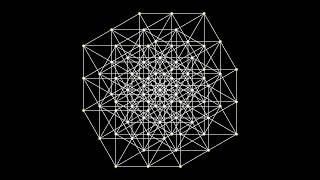
OpenAI's general-purpose reasoning model disproves Erdos unit distance conjecture
TECH

OpenAI's general-purpose reasoning model disproves Erdos unit distance conjecture

38+
Signals

Strategic Overview

  • 01.
    On May 20, 2026, OpenAI announced an internal general-purpose reasoning model produced a disproof of the 1946 Erdos planar unit distance conjecture.
  • 02.
    The construction is an infinite family of n-point configurations with n^(1+delta) unit distance pairs (delta>0), polynomially beating the long-assumed near-linear/square-grid limit.
  • 03.
    Princeton's Will Sawin sharpened the gain to delta >= 0.014 (about n^1.014) on the same day as the announcement.
  • 04.
    The proof bridges plane geometry and algebraic number theory using infinite class field towers and Golod-Shafarevich theory.

Deep Analysis

What the proof actually does: class field towers, not brute force

The disproof is a construction, not a heuristic argument. The model produced an infinite family of n-point sets in the plane whose unit-distance pair count grows like n^(1+delta) for some delta strictly greater than zero, beating the long-assumed square-grid scaling of n times a slowly-growing log factor [1]. The key move is to leave combinatorics entirely and import machinery from algebraic number theory: the construction rests on infinite class field towers in the style of Golod-Shafarevich, with the companion paper citing Ellenberg-Venkatesh and Hajir-Maire-Ramakrishna as the lineage of ideas [3]. Princeton's Will Sawin then made the gain explicit, pinning delta at roughly 0.014, so the new lower bound sits at about n^1.014 unit-distance pairs [7]. The Spencer-Szemeredi-Trotter upper bound of O(n^(4/3)) from 1983 is untouched, meaning the famous gap between lower and upper bounds is now narrower but still wide open [4]. One detail circulating on r/math underscores how exotic the object is: the smallest concrete instance of the construction reportedly needs on the order of 10^1,957,151 points, which is why no one will be drawing a picture of it.

Why humans missed it for 80 years: the square-grid orthodoxy

The community-wide assumption since 1946 was that the extremal configurations should look essentially like square grids, which top out at roughly n times a small log factor. Harvard's Melanie Matchett Wood, quoted in Scientific American, frames this as a sociological failure as much as a technical one: mathematicians did not spend enough effort 'playing devil's advocate' against the conjecture, because everyone was busy trying to prove it [6]. Thomas Bloom, who maintains the canonical erdosproblems.com tracker, agrees that the lesson is about which toolbox to open: 'this shows that there is a lot more that number theoretic constructions have to say about these sorts of questions than we suspected' [5]. The model's advantage was not raw intelligence but breadth of search; r/math commenters noted that some of the algebraic ingredients were already known from adjacent work, but no human had bothered to wire them into the unit-distance problem because the conjecture felt settled.

Why this announcement is being believed when October's was not

Seven months ago, OpenAI claimed GPT-5 had solved ten Erdos problems; the claim was retracted within days after researchers showed the 'solutions' already existed in the literature, and both Demis Hassabis and Yann LeCun criticized the rollout publicly [1]. The May 2026 announcement is structured to avoid that failure mode. Nine external mathematicians, including Fields Medalist Tim Gowers and longtime AI-math skeptic Thomas Bloom, co-authored a 19-page companion paper on arXiv that digests the model's output into a human-readable proof [3]. Gowers, who appears in the OpenAI announcement video alongside Lijie Chen, Mark Sellke, Mehtaab Sawhney, and Sebastien Bubeck, told reporters he would have recommended the paper for acceptance at the Annals of Mathematics without hesitation if a human had submitted it [5]. University of Toronto's Daniel Litt went further, calling it 'the unique interesting result produced autonomously by AI so far' [6]. Gil Kalai compared the verification arc to the 1976 Appel-Haken computer-assisted proof of the Four Color Theorem, suggesting this is the closest historical analogue for how the mathematical community absorbs machine-produced results [4].

What is still missing: opaque methodology and an unsettled social contract

The r/MachineLearning thread, in contrast to the celebratory r/math reception, pushed back hard on what OpenAI did not disclose: the specific model name, how many candidate proofs were generated before this one was selected, the compute budget, and the prompt strategy. Public reporting confirms only that the proof came from a 'general-purpose reasoning model' whose success scaled with test-time compute, with the raw output running to hundreds of pages before human digestion and the released abridged chain-of-thought still spanning 150-plus pages [2]. Gowers himself flagged a methodological caveat that the press largely glossed: counterexamples are easier to imagine emerging from a 'try many things' search than positive proofs would be, so the result should not yet be read as evidence that AI can produce affirmative theorems on demand. There is also a brewing governance question raised on Reddit: mathematicians post preprints to arXiv as a gift to other researchers, not as training fodder for commercial labs that then capture financial value from the resulting results. Add the still-open Spencer-Szemeredi-Trotter ceiling and the absence of any Lean or Coq formalization of the construction, and the picture is less 'AI does math now' and more 'AI broadened the search and humans certified one specific output.'

Historical Context

1946-01-01
Posed the planar unit distance problem, asking for the maximum number of pairs of points at distance exactly 1 among n points in the plane.
1976-01-01
Produced the computer-assisted proof of the Four Color Theorem, Gil Kalai's closest historical analogue for how the community absorbs machine-produced results.
1983-01-01
Established the O(n^(4/3)) upper bound for unit distance pairs in the plane, which still stands above the new lower bound.
2025-10-01
Earlier GPT-5 claim of solving ten Erdos problems was retracted within days after researchers showed the solutions already existed in the literature.
2026-05-20
Disproof of the unit distance conjecture published; companion paper arXiv 2605.20695 submitted the same day with nine external mathematician co-authors.
2026-05-20
Posted explicit lower bound delta >= 0.014, pinning the new bound at approximately n^1.014 unit-distance pairs.

Power Map

Key Players
Subject

OpenAI's general-purpose reasoning model disproves Erdos unit distance conjecture

OP

OpenAI

Developer of the internal general-purpose reasoning model; coordinated external verification with nine outside mathematicians and published the announcement on May 20, 2026.

TI

Tim Gowers

Fields Medalist at Cambridge; co-author of the 19-page companion paper on arXiv and the primary public endorser of the result.

TH

Thomas Bloom

Mathematician and maintainer of erdosproblems.com; co-validated and co-authored the companion paper digesting the model's output into a human-readable proof.

WI

Will Sawin

Princeton mathematician who sharpened the construction's lower bound to delta >= 0.014, giving the explicit n^1.014 figure now in circulation.

OP

OpenAI research team (Lijie Chen, Mark Sellke, Mehtaab Sawhney, Sebastien Bubeck)

Internal researchers who appeared in the OpenAI announcement video alongside Gowers and presented the methodology behind the result.

Fact Check

7 cited
  1. [1] OpenAI claims it solved an 80-year-old math problem, for real this time
  2. [2] Model disproves discrete geometry conjecture
  3. [3] Remarks on the disproof of the unit distance conjecture
  4. [4] Amazing! The Erdos unit distance problem was disproved! It was achieved by AI!
  5. [5] OpenAI Model Disproved an 80-year-old Erdos Conjecture
  6. [6] AI Just Solved an 80-Year-Old Erdos Problem and Mathematicians Are Amazed
  7. [7] Unit Distance Pairs OpenAI Yields

Source Articles

Top 5

THE SIGNAL.

Analysts

"There is no doubt that the solution to the unit-distance problem is a milestone in AI mathematics: if a human had written the paper and submitted it to the Annals of Mathematics and I had been asked for a quick opinion, I would have recommended acceptance without any hesitation."

Tim Gowers
Fields Medalist, Cambridge

"This shows that there is a lot more that number theoretic constructions have to say about these sorts of questions than we suspected."

Thomas Bloom
Mathematician, maintainer of erdosproblems.com

"This is the unique interesting result produced autonomously by AI so far."

Daniel Litt
Mathematician, University of Toronto

"This may well be a scientific landmark whose importance goes beyond combinatorics and beyond mathematics; the verification arc is analogous to the 1976 Appel-Haken computer-assisted proof of the Four Color Theorem."

Gil Kalai
Mathematician, Hebrew University

"Community belief in the conjecture may have suppressed exploration; mathematicians should be playing devil's advocate against widely accepted conjectures more often than they do."

Melanie Matchett Wood
Mathematician, Harvard
The Crowd

"Today, we share a breakthrough on the planar unit distance problem, a famous open question first posed by Paul Erdős in 1946. For nearly 80 years, mathematicians believed the best possible solutions looked roughly like square grids. An OpenAI model has now disproved that"

@@OpenAI25950

"AI has now solved a major open problem -- one of the best known Erdos problems called the unit distance problem, one of Erdos's favourite questions and one that many mathematicians had tried."

@@wtgowers3482

"Following up on the suggestion from Will Sawin, here is an illustration of the new configurations that disprove Erdos' unit distance conjecture (made with the help of ChatGPT 5.5 Thinking)."

@@mathandcobb2567

"OpenAI's internal model disproves Unit Distance Conjecture of Erdos"

@u/garanglow818
Broadcast
The Erdős Breakthrough

The Erdős Breakthrough

AI just disproved the biggest math conjecture so far

AI just disproved the biggest math conjecture so far

BREAKING NEWS: OpenAI has disproved Erdős' unit-distance conjecture

BREAKING NEWS: OpenAI has disproved Erdős' unit-distance conjecture