Why This Matters
AI agents represent the most consequential shift in how humans interact with software since the advent of the graphical user interface. Unlike traditional AI applications that respond to explicit prompts, agents act autonomously -- planning multi-step workflows, using tools, making decisions, and even delegating tasks to other agents or humans. This shift transforms AI from a productivity tool into an autonomous economic actor.
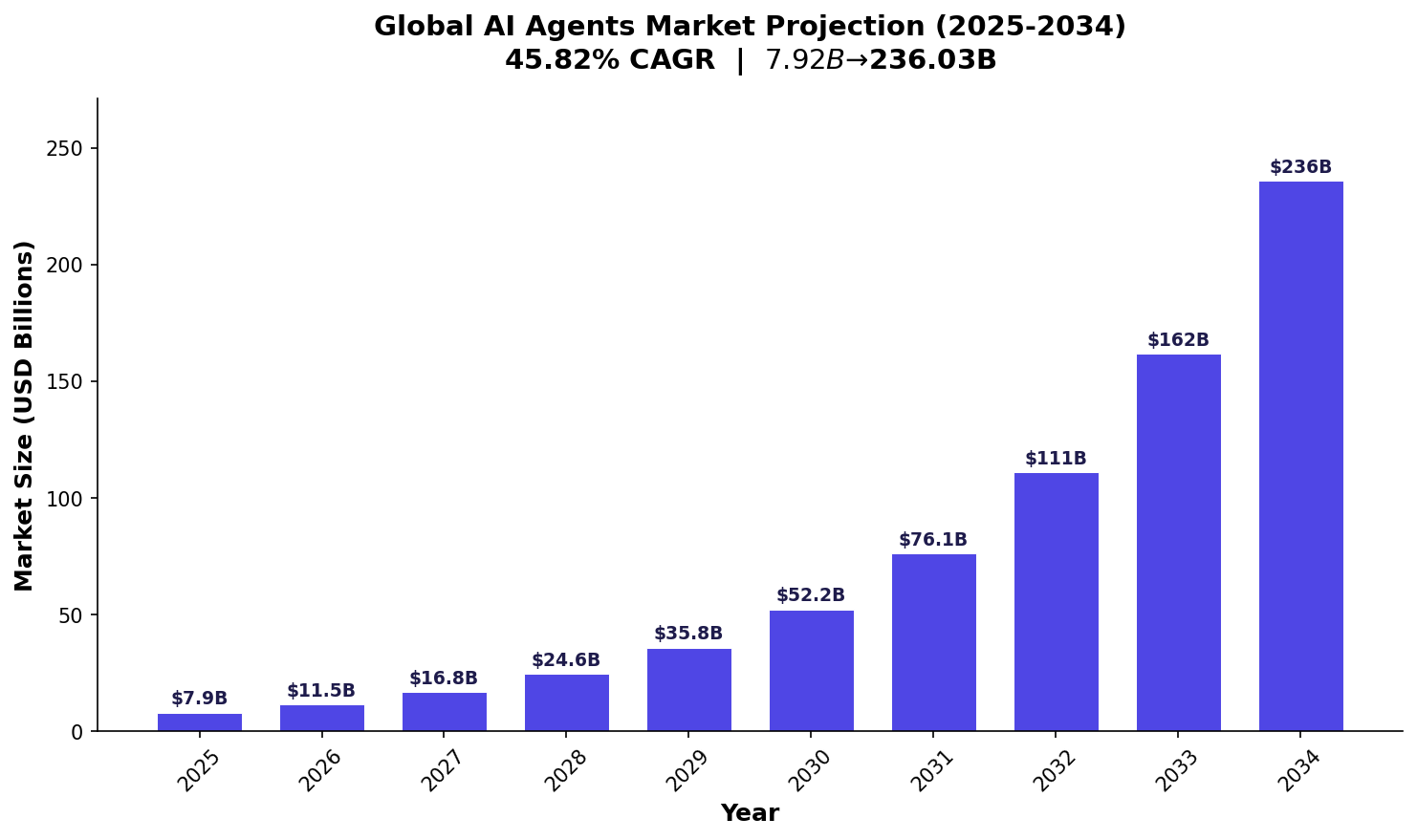
The stakes are enormous. Microsoft projects 1.3 billion AI agents operating by 2028. Enterprises report an average anticipated ROI of 171% on agentic AI investments, and 88% of senior executives plan to increase their agent budgets. With $650 billion in AI capital expenditure projected for 2026 alone (a 70% year-over-year increase), the infrastructure race is reshaping global technology investment. The formation of the Agentic AI Foundation by competing giants -- Microsoft, Google, OpenAI, and Anthropic -- underscores that even fierce rivals recognize the need for shared standards to prevent a fragmented, unsafe agent ecosystem.