Chrome silently installs Gemini Nano AI model
TECH

Chrome silently installs Gemini Nano AI model

37+
Signals

Strategic Overview

  • 01.
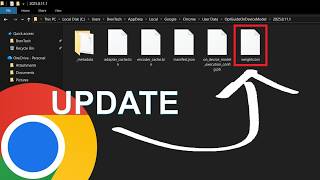
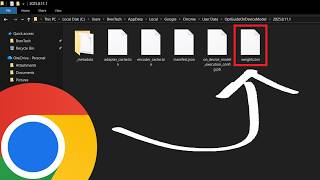
    Google Chrome silently downloads a roughly 4GB Gemini Nano on-device AI model file named weights.bin into an OptGuideOnDeviceModel folder inside the Chrome user profile, with no opt-in prompt or notification on eligible devices.
  • 02.
    If a user discovers and deletes weights.bin, Chrome simply downloads it again unless specific chrome://flags entries are disabled or the model is removed via a Chrome setting that began rolling out in February 2026.
  • 03.
    The locally installed Gemini Nano does not power Chrome's prominently displayed 'AI Mode' pill in the omnibox; that surface is a cloud-backed Search Generative Experience that routes every query to Google's servers.
  • 04.
    Privacy researcher Alexander Hanff and outlets including Tom's Hardware argue the silent write to user disk may breach Article 5(3) of the EU ePrivacy Directive, the same provision that underpins cookie consent law.

The AI Mode pill is a magician's misdirection

Chrome 147's omnibox shows a visible 'AI Mode' pill that has trained users to associate the browser with on-device intelligence. The trick, as Hanff documents, is that AI Mode is a cloud-backed Search Generative Experience surface — every query hits Google's servers — while the silent 4GB local model powers an entirely different and largely invisible set of features like 'Help me write,' tab group suggestions, page summaries, smart paste, and on-device scam detection.

The result is a perception gap: users who notice the AI Mode UI assume the local download is what powers it, and users who have privacy concerns about cloud AI assume the local model is the safer alternative. Both assumptions are wrong, which is why Hanff calls the configuration a deceptive design pattern rather than just a poorly communicated rollout. The reader watching the AI Mode pill never sees the 4GB transfer happening underneath; the reader who finds weights.bin in their Chrome profile never sees that AI Mode never touches it.

Article 5(3) is the same statute behind cookie banners

The legal hook Hanff and Tom's Hardware are pointing at is not exotic. Article 5(3) of the EU ePrivacy Directive — 2002/58/EC, as amended — is the rule that requires prior informed consent before storing or accessing information on a user's terminal equipment. It is the reason every European website now asks about cookies. Writing a 4GB model file to a user's local disk without a prompt is, on its face, exactly the kind of storage event Article 5(3) was written to gate.

Google's February 2026 opt-out toggle does not satisfy the directive's prior-consent standard, and Tabriz's public response notably does not engage with the legal question at all. If a single EU data protection authority decides to test this, the precedent reaches well beyond Chrome: every browser, OS and security product that silently provisions large model weights becomes a candidate target. A regulator that already won the cookie-banner fight has the playbook to apply it to model weights.

Google's strategy, the user's electricity bill

Tabriz frames the on-device model as 'core to our developer & security strategy.' That phrasing is honest about who benefits: Google gets a distribution channel for an LLM substrate it can build APIs and security features against, without paying for the inference. The cost side of the ledger lands on users — 4GB of disk, bandwidth to pull it, roughly 14 minutes of background install activity per gHacks's reporting, and the electricity to run any subsequent local inference.

Hanff puts the climate cost of a single push at 6,000 to 60,000 tonnes of CO2-equivalent emissions across the Chrome install base. Malwarebytes captures the asymmetry bluntly: the device, storage, bandwidth and power bill are all the user's. The deeper shift here is that 'browser' has quietly come to mean something that can provision multi-gigabyte assets onto your disk on its own schedule, and the cost of that capability is being externalised by a single vendor onto a user base in the billions.

The auto-redownload behavior breeds a workaround subculture

What is unusual about this rollout, compared with prior controversial features, is that simply deleting the file does not end the story. Chrome's OnDeviceModelComponentInstaller treats a missing weights.bin as a fault to repair, so the browser refetches it the next time conditions are met. That single design choice has produced a small ecosystem of countermeasures: disable specific entries in chrome://flags before deleting, use Chrome's own February 2026 settings toggle, or — as community guides now describe — replace the file with an empty placeholder and revoke write permissions so Chrome cannot overwrite it.

The fact that ordinary users are reaching for filesystem ACL tricks against their own browser is itself the story. It also frames the broader migration discussion visible in browser forums, where the practical answer for a vocal cohort has become Firefox, Brave, Vivaldi or LibreWolf rather than fighting Chrome's installer round after round. The community sentiment skewed strongly negative once the auto-redownload behavior became widely understood, and the most-shared YouTube explainers were the ones that coupled outrage with a working remediation script.

An industry pattern of silent device infrastructure

Chrome's Gemini Nano push is the latest entry in a pattern of vendors quietly turning shipping client software into a runway for AI infrastructure on user devices. Google's own framing — that the model is 'core to' security and developer strategy — implicitly concedes that the install is a platform decision, not a feature decision.

The press response has connected the dots: Tom's Guide and Malwarebytes have covered consent and storage; gHacks and Cybernews have detailed the install path and the OnDeviceModelBackgroundDownload feature flag that reportedly enables the fetch before user-facing AI settings are exposed. The longer-term question this story raises is whether 'I installed this software' continues to mean what users think it means, or whether multi-gigabyte model deliveries become a normal background operation that vendors disclose, at best, in release notes.

Historical Context

2024
Google began offering Gemini Nano in Chrome as a lightweight on-device model targeted at security features and developer APIs.
2025
Chrome 137 began shipping Gemini Nano unflagged in limited situations and rolled out on-device protections against tech-support scams using the model.
2026-02
Google began rolling out a Chrome setting that lets users disable and remove the on-device Gemini Nano model, predating Hanff's public discovery but unknown to most users at the time.
2026-05-06
Hanff publishes 'That Privacy Guy' analysis documenting the silent 4GB install of weights.bin via macOS kernel logs and arguing it breaches Article 5(3) of the EU ePrivacy Directive.
2026-05-06
Chrome VP Parisa Tabriz responds publicly defending the on-device model as core to security and developer strategy and citing the existing opt-out toggle, without directly addressing consent or redownload behavior.

Power Map

Key Players
Subject

Chrome silently installs Gemini Nano AI model

GO

Google (Chrome team / Parisa Tabriz, VP & GM of Chrome)

Distributor of the model. Tabriz publicly defended the on-device install as core to Chrome's developer and security strategy and pointed to a February 2026 settings toggle, but did not directly address the consent question, the EU ePrivacy Directive, or the auto-redownload behavior.

AL

Alexander Hanff ('That Privacy Guy')

Computer scientist, lawyer and privacy researcher who verified the silent install via macOS kernel file system logs and is publicly arguing that Google is breaching EU law and engaging in deceptive design via the unrelated AI Mode pill.

EU

EU regulators under ePrivacy Directive 2002/58/EC and GDPR

Implicated enforcement audience. Article 5(3) of the ePrivacy Directive prohibits storing information on a user's terminal equipment without prior informed consent, providing a direct legal hook for complaints from European data protection authorities.

EN

End users on the Chrome billion-device install base

Bear the cost in disk space, bandwidth, electricity, and exposure of an opaque on-device LLM they did not consent to install, with a recurring workaround culture forming on Reddit and YouTube.

TE

Tech press (Tom's Hardware, Tom's Guide, gHacks, Malwarebytes, Cybernews, Digital Trends, Decrypt, Android Authority)

Amplified Hanff's discovery, scrutinised Google's response, and surfaced the consent and climate angles to mainstream readers, in many cases publishing step-by-step removal instructions.

Source Articles

Top 5

THE SIGNAL.

Analysts

"Hanff argues the silent installation is a direct breach of Article 5(3) of the EU ePrivacy Directive and raises GDPR transparency and lawful-basis issues, characterising the conduct as Chrome reaching into users' machines and writing 4GB of data without asking, with no opt-in, no easy opt-out, and automatic re-download on deletion."

Alexander Hanff
Privacy researcher, computer scientist and lawyer ('That Privacy Guy')

"Hanff also frames the visible Chrome 'AI Mode' pill as a deceptive design pattern, since users will reasonably assume it uses the locally installed Gemini Nano when in fact every query is routed to Google's cloud and the local model serves entirely different features."

Alexander Hanff
Privacy researcher, 'That Privacy Guy'

"Defends the on-device model as core to Chrome's security and developer strategy, says the model auto-uninstalls when device storage is low, and points users to the February 2026 settings toggle to disable and remove it. Her statement does not address the consent question, the ePrivacy Directive, or the redownload-on-delete behavior."

Parisa Tabriz
VP and GM of Chrome, Google

"Frames Hanff's findings as potentially violating EU law and, at Chrome's billion-device scale, wasting thousands of kilowatts of energy in a single push, putting the climate cost of opt-out AI rollouts on the agenda."

Tom's Hardware editorial
Tech industry publication

"Calls out the asymmetry of the rollout: users carry the disk, bandwidth and electricity costs of a model that was pushed without their agreement, framing the issue as a quiet redrawing of the line between vendor software and user-owned hardware. As Malwarebytes put it: 'Your device is yours. The storage is yours. The bandwidth is yours. And the electricity bill is yours.'"

Pieter Arntz / Malwarebytes editorial
Consumer security publication
The Crowd

"Chrome 147 is silently downloading a 4GB Gemini Nano AI model file (weights.bin) on eligible Windows and macOS devices without notice, consent, or an obvious opt-out. Deleting it triggers an automatic re-download unless flags or enterprise policies disable it. Critics say this"

@@mariusfanu0

"Google Chrome is quietly downloading a roughly 4 GB AI model to many users' computers without clear upfront consent. The file, called weights.bin, is part of Google's Gemini Nano on-device language model and lands in the browser's user data folder under OptGuideOnDeviceModel."

@@Pirat_Nation0

"This won't stop Chrome from downloading the same thing again... do this instead 1.Close Chrome 2.Delete weights.bin 3.Create an empty file named weights.bin in that same location 4.Go to the file's properties, and Deny permissions from the OS to touching that empty file"

@@STGshmups0

"Google Chrome now downloads a 4GB LLM called Gemini Nano on chrome browsers."

@u/International-Try4674700
Broadcast
Google Chrome Is Silently Downloading a 4GB AI Model! Here's the FIX!

Google Chrome Is Silently Downloading a 4GB AI Model! Here's the FIX!

3,500,000,000 Computers Have AI SECRETLY Installed On Them!

3,500,000,000 Computers Have AI SECRETLY Installed On Them!

Google Finally Responds: Chrome Is Silently Downloading a 4GB AI Model!

Google Finally Responds: Chrome Is Silently Downloading a 4GB AI Model!