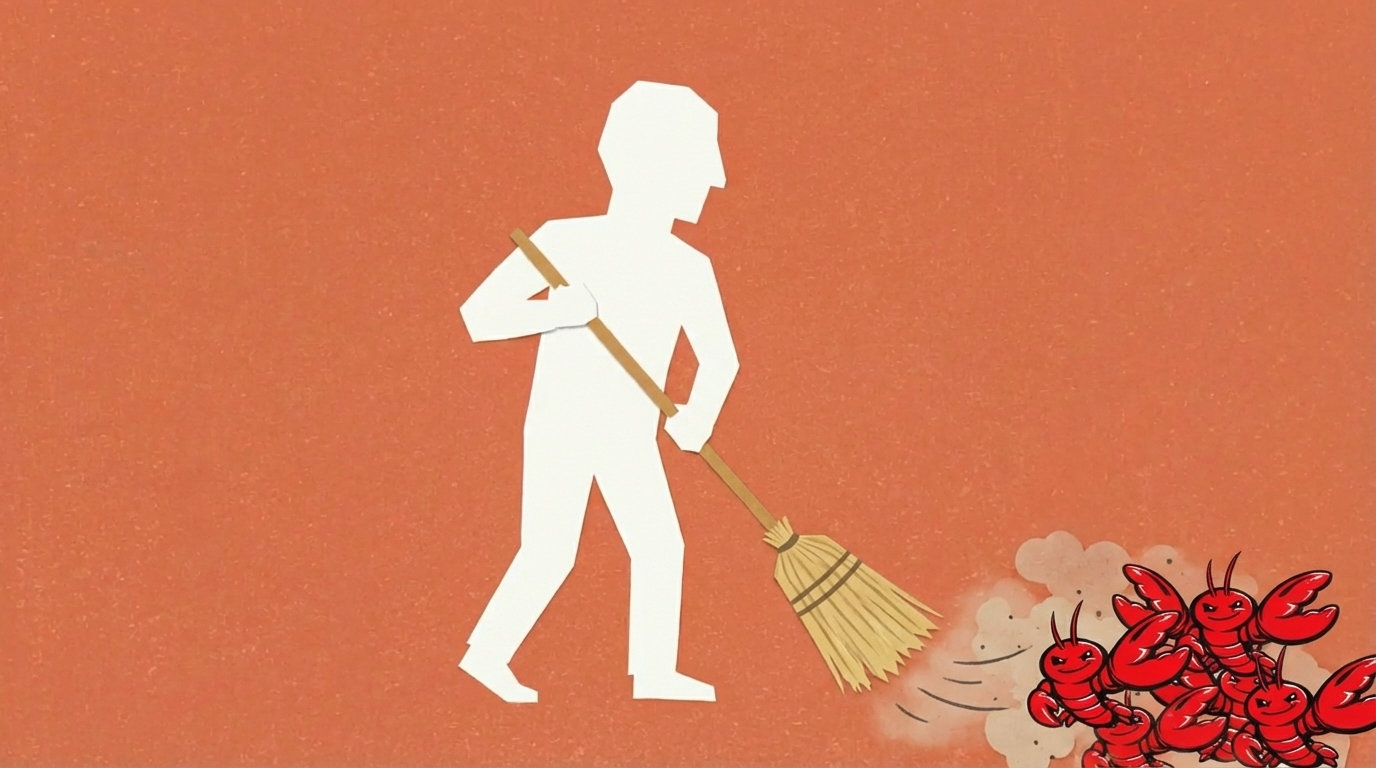
Anthropic restricts Claude third-party tool access and raises costs
TECH

Anthropic restricts Claude third-party tool access and raises costs

33+
Signals

Strategic Overview

  • 01.
    Anthropic blocked Claude Pro and Max subscribers from using third-party AI agent frameworks like OpenClaw effective April 4, 2026, requiring users to instead pay via extra usage bundles or API keys. The company cited unsustainable demand patterns, noting that subscriptions were never built for the compute-intensive usage of autonomous agent tools.
  • 02.
    A single OpenClaw instance running for one full day can consume $1,000 to $5,000 in equivalent API costs, compared to a $200/month Max subscription, creating a pricing gap that Anthropic deemed unsustainable at scale across 135,000+ active instances.
  • 03.
    Google followed with similar restrictions on AI Ultra subscribers using OpenClaw OAuth with Gemini CLI just two days later, signaling an industry-wide correction against flat-rate access for agentic workloads.
  • 04.
    Separately, Claude Code has begun blocking legitimate security research tasks including vulnerability analysis and exploit development, while users also report rapid quota exhaustion with some depleting their allowance in under an hour.

Deep Analysis

The $200 vs. $5,000 Pricing Arbitrage That Broke the Model

At the heart of Anthropic's decision lies a simple but staggering economic reality: the flat-rate subscription model was never designed to absorb the compute demands of autonomous AI agents. A single OpenClaw instance running autonomously for a full day can consume between $1,000 and $5,000 in equivalent API costs. Multiply that across 135,000+ active instances, and the math becomes existential for any AI provider offering unlimited access at $200 per month.

This pricing gap represents what industry observers have called the fundamental tension of the agentic AI era. When users interact with Claude through a chat interface, their consumption is naturally rate-limited by human typing and reading speed. But autonomous agents remove that constraint entirely, sending continuous streams of API calls that can run 24 hours a day. The result is a usage pattern that looks nothing like what subscription tiers were designed to accommodate. Anthropic's Boris Cherny framed this as an engineering constraint, but the underlying reality is that the company was effectively subsidizing heavy agentic users at a rate that threatened the service for everyone else. With Claude Sonnet 4.6 priced at $3/$15 per million input/output tokens and Opus 4.6 at $15/$75, the gap between subscription pricing and actual compute costs was not a rounding error but a structural flaw.

Copy Then Lock Out: The Open Source Trust Fracture

Perhaps the most damaging accusation against Anthropic comes from OpenClaw's own creator. Peter Steinberger, who left for OpenAI in February 2026, publicly charged that Anthropic replicated popular OpenClaw features into Claude Code before restricting open-source access. His critique, "First they copy some popular features into their closed harness, then they lock out open source," strikes at a familiar pattern in platform economics: embrace, extend, and restrict.

The timing lends credibility to this narrative. Anthropic's first-party tool Claude Code is explicitly exempt from the third-party restrictions, meaning users who want flat-rate agentic access must use Anthropic's own product. This creates a structural advantage for Claude Code over competing frameworks, regardless of whether that was the primary motivation. Industry analyst Nathan Cole reinforced this reading, noting that the change was "not a bug" but "a deliberate policy change," emphasizing that the subscription loophole allowing third-party access was never officially sanctioned in the first place.

The community reaction has been sharply divided. On Reddit's r/ClaudeAI, some users viewed OpenClaw power users as freeloaders who exploited an unsustainable pricing gap, while others saw Anthropic's move as anti-competitive platform capture. On X, the phrase "TOKEN FEUDALISM" coined by user @Hesamation resonated widely, capturing the sentiment that paying subscribers were losing control over how they use a service they pay for. The practical impact is already visible: some developers report switching to GPT 5.4 on OpenClaw, while others explore alternatives like NanoClaw.

An Industry-Wide Correction, Not an Isolated Decision

Anthropic's restriction did not remain an isolated event for long. Just two days after Anthropic updated its legal terms, Google took similar action against AI Ultra subscribers who were using OpenClaw OAuth with Gemini CLI. This rapid follow-on suggests either coordinated industry response or, more likely, that both companies were independently facing the same unsustainable economics and Anthropic simply moved first.

The pattern extends further back. In late March 2026, Google had already restricted Gemini Pro models to paid subscriptions only, pushing free-tier users to less capable Flash models. These moves collectively signal that the era of generous, all-you-can-eat AI access is ending as providers confront the actual infrastructure costs of serving autonomous agents at scale. As growth marketer Aakash Gupta summarized, the "all-you-can-eat buffet just closed."

For the broader AI ecosystem, this correction raises fundamental questions about how agentic AI tools will be priced and distributed. The subscription model that fueled explosive adoption of tools like OpenClaw (247,000 GitHub stars, 47,700 forks) was built on the assumption that human-paced interaction would naturally limit consumption. As autonomous agents become the primary interface for AI models, the industry must develop pricing models that can sustain the compute demands without pricing out individual developers and hobbyists who face 10-50x cost increases under per-token billing.

Collateral Damage: Security Researchers and Quota Chaos

While the OpenClaw ban dominated headlines, two concurrent issues reveal deeper problems with Anthropic's approach to platform governance. First, Claude Code has begun blocking legitimate security research tasks, flagging vulnerability analysis and exploit development as "violative cyber content" under Anthropic's usage policy. Security researcher Tim Becker reported being unable to resume exploit development sessions, hitting the same blocking error every time. The irony, as Becker pointed out, is that sophisticated threat actors use self-hosted models and are entirely unaffected by these restrictions, meaning the blocks primarily hamper defensive security work.

Second, Claude Code users have experienced severe quota exhaustion issues independent of the third-party tool ban. Some Max 5 plan subscribers ($100/month) reported depleting their entire quota in just one hour of work, a far cry from the expected multi-hour sessions. Anthropic acknowledged that users were "hitting usage limits in Claude Code way faster than expected" and attributed part of the problem to cache bugs that inflated costs 10-20x. The company noted that only 7% of Claude Code users were affected by peak-hour quota reductions, but for those users the impact was severe.

These issues paint a picture of a platform growing faster than its governance and infrastructure can support. The one-time credit equal to monthly subscription price and the offer of full refunds via email suggest Anthropic recognizes the disruption, but affected users and security professionals are left navigating a rapidly shifting landscape with limited recourse.

What Comes Next: The Emerging Economics of Agentic AI

Anthropic's introduction of discounted Extra Usage bundles at up to 30% off standard API rates represents its first attempt at a middle path between unsustainable flat-rate subscriptions and full per-token API pricing. Whether this bridge pricing proves sufficient to retain the developer community remains an open question.

The market is already responding with alternatives. Community discussions on Reddit point to NanoClaw as a potential replacement framework, and at least one prominent user publicly documented their migration from Claude to GPT 5.4 on OpenClaw, a post that garnered 242 likes on X. The competitive dynamics are shifting: OpenAI, which hired OpenClaw's creator Peter Steinberger in February, now has both the talent and the strategic incentive to position itself as a more open-source-friendly alternative.

For developers and organizations planning around agentic AI workflows, the practical implications are clear. Flat-rate subscription access for autonomous agent workloads should be treated as a temporary arbitrage opportunity rather than a reliable foundation. Teams building on any AI provider's platform should architect for per-token economics from the start and maintain multi-provider flexibility. The Reddit community's practical advice to downgrade to Claude Code 2.1.34 to avoid cache bugs is a short-term workaround, but the long-term direction is toward consumption-based pricing that reflects the true cost of autonomous AI compute.

Historical Context

2026-02-14
OpenClaw creator Peter Steinberger announced he was joining OpenAI.
2026-02-20
Anthropic clarified its ban on third-party tool access to Claude.
2026-03-02
OpenClaw reached 247,000 GitHub stars and 47,700 forks.
2026-03-25
Google restricted Gemini Pro models to paid subscriptions only.
2026-03-31
Anthropic acknowledged Claude Code users were hitting usage limits way faster than expected.
2026-04-04
Anthropic officially cut off Claude Pro and Max subscription usage inside third-party agentic tools.
2026-04-06
Google restricted AI Ultra subscribers using OpenClaw OAuth with Gemini CLI. Security researchers reported Claude Code blocking vulnerability research.

Power Map

Key Players
Subject

Anthropic restricts Claude third-party tool access and raises costs

AN

Anthropic

AI model provider that imposed the restrictions, citing capacity constraints and unsustainable usage patterns. Its first-party tool Claude Code is exempt from the ban, raising anti-competitive concerns.

OP

OpenClaw

Open-source AI agent framework with 247,000 GitHub stars and 135,000+ active instances, and the primary target of the ban. Its creator Peter Steinberger had already departed for OpenAI in February 2026.

BO

Boris Cherny

Head of Claude Code at Anthropic who led communication of the policy change, framing it as an engineering constraint rather than a business decision.

PE

Peter Steinberger

Creator of OpenClaw, now at OpenAI. Publicly criticized Anthropic for copying OpenClaw features into Claude Code before locking out the open-source alternative.

GO

Google

Restricted AI Ultra subscribers using OpenClaw OAuth with Gemini CLI two days after Anthropic, reinforcing the emerging industry pattern against third-party agent access under flat-rate plans.

SE

Security researchers

Collateral damage from concurrent Claude Code content restrictions that block legitimate vulnerability research and exploit development, including researchers Tim Becker, Keith Ramphal, and Theo.

THE SIGNAL.

Analysts

"Defended the restrictions as necessary engineering constraints. Stated: "We have been working hard to meet the increase in demand for Claude, and our subscriptions were not built for the usage patterns of these third-party tools.""

Boris Cherny
Head of Claude Code, Anthropic

"Criticized Anthropic for replicating OpenClaw features before restricting open-source access. Stated: "First they copy some popular features into their closed harness, then they lock out open source.""

Peter Steinberger
Creator of OpenClaw (now at OpenAI)

"Characterized the policy change as the end of an unsustainable pricing model: "all-you-can-eat buffet just closed.""

Aakash Gupta
Growth Marketer

"Argued that Claude Code security blocks primarily harm defensive researchers while threat actors use self-hosted models unaffected."

Tim Becker
Security Researcher

"Framed the change as deliberate strategy: "This was not a bug. It was a deliberate policy change.""

Nathan Cole
Industry Analyst
The Crowd

"Anthropic essentially bans OpenClaw from Claude by making subscribers pay extra"

@@verge172

"THIS IS HAPPENING. Anthropic has banned Claude Code usage for OpenClaw and other 3rd party harnesses. you are paying for the subscription but you do not decide how to use it. TOKEN FEUDALISM is coming for us."

@@Hesamation162

"wrote up my full experience switching from Claude to GPT 5.4 on OpenClaw. turns out today is the perfect timing. someone mentioned a workaround: CLI backend through OpenClaw. looked into it and found that even local Claude calls routed through OpenClaw count as third party."

@@Voxyz_ai242

"All the OpenClaw bros are having a meltdown after the Anthropic subscription lock-down"

@u/unknown0
Broadcast