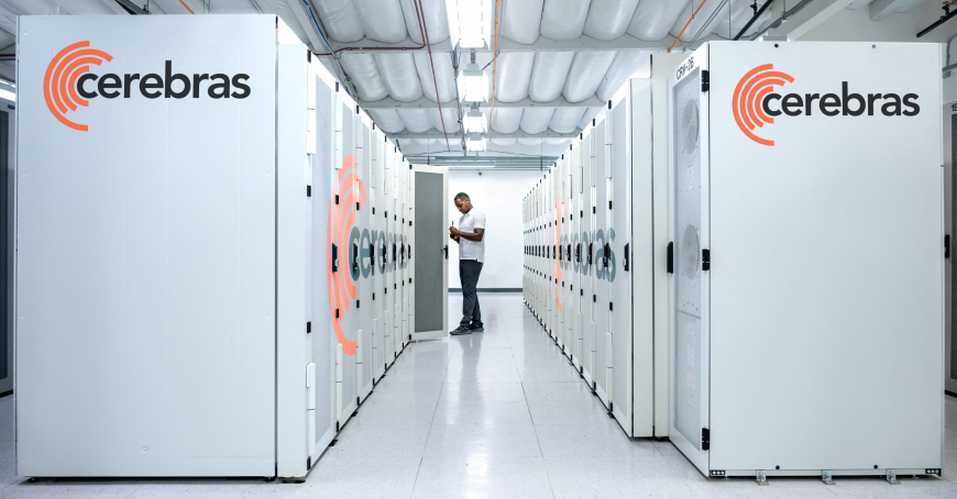
Cerebras upsizes IPO to $4.8B with OpenAI taking 3% stake
TECH

Cerebras upsizes IPO to $4.8B with OpenAI taking 3% stake

34+
Signals

Strategic Overview

  • 01.
    Cerebras Systems raised its IPO range to $150-$160 per share for 30 million shares, targeting up to $4.8 billion in proceeds at a roughly $48.8 billion fully diluted valuation, more than double its $23 billion private valuation from February 2026.
  • 02.
    The deal is anchored by OpenAI, which committed more than $20 billion in chip purchases, extended a $1 billion secured loan, and obtained warrants for more than 33 million shares, equating to roughly a 3% post-IPO stake with potential to climb to about 10% if it buys the full 2 gigawatts of compute.
  • 03.
    Demand reportedly ran more than 20 times oversubscribed, with pre-roadshow indications of interest topping $10 billion, prompting bankers to lift the range within a week of initial pricing ahead of the May 14 Nasdaq debut under ticker CBRS.
  • 04.
    The IPO follows a March 2026 partnership integrating Cerebras CS-3 systems into AWS data centers via Amazon Bedrock, marking the chipmaker's first hyperscale cloud distribution channel.

Deep Analysis

The Pitchman's Equity: How OpenAI Earned $2.6B By Promising To Buy

The most consequential detail in the Cerebras IPO is not the valuation. It is the mechanism by which OpenAI is set to walk away with roughly a 3% post-IPO stake without writing an equity check. OpenAI committed to spend more than $20 billion on Cerebras chips and lent the company $1 billion in January 2026 at 6% interest, secured by warrants for more than 33 million shares that vest as it consumes 2 gigawatts of Cerebras compute [1]. The structure converts a procurement promise into ownership: OpenAI gets paid in equity for the act of being a customer.

The arithmetic compounds across OpenAI's portfolio of supply-chain bets. The Information reports OpenAI is sitting on roughly $2.6 billion in combined Cerebras and CoreWeave stock obtained the same way, by pledging future spending on chips and cloud capacity [2]. Sam Altman personally appeared in a Cerebras-produced promotional video for the IPO and is named in the S-1 as a Cerebras stockholder [1], and OpenAI President Greg Brockman has separately disclosed personal stakes in both Cerebras and CoreWeave under OpenAI's conflict-of-interest policy [3]. The pattern reframes how to read OpenAI's losses: every dollar of compute it 'spends' may also be a dollar that builds an off-balance-sheet equity portfolio in its own suppliers.

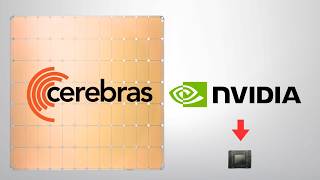
From Banned to Blockbuster: The CFIUS Arc That Unlocked The Deal

Cerebras's 2026 victory lap is almost unrecognizable from the disaster of late 2024. The company filed its first S-1 in September 2024 with Citigroup as lead underwriter [4], only to see the IPO derailed within weeks when the Committee on Foreign Investment in the United States opened a review of G42, the Abu Dhabi AI firm whose minority stake had also made it Cerebras's single largest customer, accounting for roughly 87% of first-half 2024 revenue [5]. The concern was straightforward: a chip company whose biggest revenue source and largest outside investor was the same Gulf entity with documented China linkages was not a clean fit for a US-listed AI national champion.

The path back ran through three changes. G42's holdings were restructured into non-voting shares, which Cerebras announced in March 2025 alongside CFIUS clearance [6]. Customer concentration was diluted by signing OpenAI to a multi-year deal worth more than $10 billion in December 2025 [1], then layering the AWS partnership on top in March 2026 [7]. And the bankers changed too: Morgan Stanley replaced Citigroup as lead underwriter on the refiled S-1 [4]. By the time Cerebras filed publicly in April 2026, the company looked less like a Gulf-dependent custom-silicon shop and more like a US hyperscaler-aligned chip designer with a household-name anchor customer.

96x Sales: What Wall Street Is Actually Buying

At $160 per share, Cerebras trades at roughly 96 times trailing sales, a multiple Motley Fool analyst Danny Vena described as 'lofty' for an unproven company [8]. The bull case, articulated most aggressively by Hedgeye's Felix Wang with a $188 target nearly 57% above the original midpoint, leans on Cerebras's wafer-scale architecture being structurally suited to inference, the workload analysts increasingly expect to dominate AI compute spend [9]. PitchBook's Dimitri Zabelin reinforces the thesis, observing that 'the AI market itself shifted in Cerebras' favor' as agentic and real-time applications push latency to the front of the buying criteria [10]. Demand validates the narrative on paper: the book was reportedly more than 20 times oversubscribed, with pre-roadshow indications of interest topping $10 billion [11].

The bear case is harder to wave away. Morningstar's Brian Colello points to head-to-head competition with Nvidia and its newly acquired Groq inference unit as the dominant risk new investors are underpricing [10]. The valuation gap is the real tell: a 96x multiple towers over established profitable peers like Nvidia and AMD, and Cerebras at $160 is pricing in not just inference dominance but the kind of customer concentration that the CFIUS process was supposed to have cured, with OpenAI's $20B+ chip commitment and the AWS distribution deal as the two named pillars of contracted demand. Retail finance communities are explicitly pricing this discount: the most upvoted r/stocks post on the deal concluded that 'the bankers have cooked it' and exited the trade. The IPO is a referendum on whether inference is a winner-take-most market and whether Cerebras, not Nvidia-Groq, takes it.

Inference Is Eating Training, And AWS Is The Distribution Layer

Cerebras's pitch is no longer that wafer-scale chips are a curiosity. It is that the AI workload mix has shifted under Nvidia's feet. Where training runs reward raw FLOPs across vast GPU clusters, inference, especially for agentic and real-time applications, rewards low latency and high memory bandwidth per query, which is the exact regime where a single-wafer design with on-chip memory has a structural advantage. AWS Vice President David Brown framed the bottleneck explicitly when the Cerebras collaboration launched in March 2026: 'Inference is where AI delivers real value to customers, but speed remains a critical bottleneck for demanding workloads like real-time coding assistance and interactive applications' [7]. The deal pairs Cerebras CS-3 systems with AWS Trainium and EFA networking, all surfaced to enterprise developers through Amazon Bedrock, giving Cerebras for the first time a hyperscale distribution channel rather than a direct-sales motion.

That distribution matters because Cerebras's commercial model has always been the choke point. Andrew Feldman's framing, that 'every enterprise around the world will be able to benefit from blisteringly fast inference,' is only credible if customers can procure CS-3 capacity the same way they procure H100s, through the cloud console they already use [12]. The flip side is that the IPO valuation embeds an assumption inference compute will not consolidate back to Nvidia. Nvidia spent more than $18 billion on R&D in fiscal 2026 and paid roughly $20 billion to acquire Groq in December 2025 explicitly to defend the inference flank [10]. Cerebras's $48.8 billion price tag is, in effect, the market betting that AWS-distributed wafer scale is a more durable answer than a Nvidia-owned inference roadmap. The first real datapoint arrives when CBRS opens for trading on May 14.

Historical Context

2024-10-01
The Committee on Foreign Investment in the United States opens a review of G42's minority stake on national-security grounds linked to UAE-China relationships, derailing Cerebras's first IPO attempt.
2025-03-31
Announces CFIUS clearance after G42's holdings are restructured to non-voting shares, reopening the path to going public.
2025-12-01
Finalize a multi-year agreement valued at more than $10 billion that includes warrants and a secured loan facility.
2026-01-01
Extends a $1 billion loan to Cerebras at 6% interest, secured by warrants that vest fully only if OpenAI purchases 2 GW of compute.
2026-03-13
Unveil a disaggregated inference collaboration deploying CS-3 systems inside AWS data centers and making them accessible via Amazon Bedrock.
2026-05-04
Initial pricing disclosed: 28 million shares at $115-$125, targeting up to $3.5B at a $26.6B valuation.
2026-05-11
Upsizes to 30 million shares at $150-$160, lifting potential proceeds to $4.8B and fully diluted valuation to about $48.8B.
2026-05-14
Cerebras stock (CBRS) is scheduled to begin trading on Nasdaq.

Power Map

Key Players
Subject

Cerebras upsizes IPO to $4.8B with OpenAI taking 3% stake

CE

Cerebras Systems

AI chip designer pricing 30M shares at $150-$160 on Nasdaq under ticker CBRS, anchored by OpenAI commitments and an AWS distribution deal. Q4 2025 revenue reached $510M, up 76% year-over-year, with $87.9M net income.

OP

OpenAI

Anchor customer and equity-linked partner: committed $20B+ in chip purchases, lent Cerebras $1B in January 2026 at 6% interest secured by warrants, gaining roughly 3% at IPO with a path to about 10% if it buys the full 2 GW of compute.

SA

Sam Altman

OpenAI CEO who personally promoted the Cerebras IPO in a Cerebras-produced video and is named in the S-1 as a Cerebras stockholder.

AN

Andrew Feldman

Cerebras founder and CEO and the public face of the IPO; his compensation package is structured around hitting $75B, $150B, and $250B valuation milestones over nine years.

AW

AWS (Amazon Web Services)

First hyperscaler to deploy Cerebras's disaggregated inference solution, pairing CS-3 systems with AWS Trainium and EFA networking and serving them through Amazon Bedrock.

G4

G42 (Group 42, Abu Dhabi)

Former largest customer that drove about 87% of H1 2024 revenue; its minority stake triggered the 2024 CFIUS review that derailed the first IPO and has since been restructured into non-voting shares.

Fact Check

12 cited
  1. [1] OpenAI's cozy partner Cerebras is on track for a blockbuster IPO
  2. [2] OpenAI Is Making Billions Just by Promising to Buy From Suppliers
  3. [3] OpenAI President Greg Brockman owns stakes in Cerebras, CoreWeave, Stripe, and Helion
  4. [4] Inside Cerebras' IPO filing
  5. [5] AI chip startup Cerebras seeks up to $4.8 billion in upsized U.S. IPO
  6. [6] AI chipmaker Cerebras announces CFIUS clearance, a key step toward IPO
  7. [7] AWS and Cerebras Collaboration Aims to Set a New Standard for AI Inference Speed and Performance in the Cloud
  8. [8] Strong Demand Boosts Nvidia Rival Cerebras Ahead of Its IPO
  9. [9] Will Cerebras' $4.8 Billion IPO Crush Nvidia's Grip?
  10. [10] Why AI Chip Designer Cerebras Is 2026's Hottest IPO Yet
  11. [11] Cerebras' $48 Billion IPO Tests the Market's Inference Bet
  12. [12] AWS and Cerebras Set a New Standard for AI Inference

Source Articles

Top 4

THE SIGNAL.

Analysts

"Set a $188 fair-value target on Cerebras, about 57% above the original $120 IPO midpoint, citing the industry's pivot toward inference and agentic AI workloads as a tailwind for Cerebras's wafer-scale architecture."

Felix Wang
Analyst, Hedgeye

"Warns that intense competition with Nvidia and its newly acquired Groq inference unit is the dominant risk for new Cerebras investors entering at the upsized valuation."

Brian Colello
Analyst, Morningstar

"Argues the AI market itself has 'shifted in Cerebras' favor' as workloads rebalance from training to inference, where wafer-scale designs have a structural latency advantage."

Dimitri Zabelin
Senior Investment Research Analyst, PitchBook

"Cautions that pricing at the high end implies the stock 'will be selling for 96 times sales, a lofty valuation for an unproven company' that remains unprofitable on a full-year basis."

Danny Vena
Contributing analyst, The Motley Fool

"Frames the partnership as solving an inference speed bottleneck for real-time AI applications such as coding assistants and interactive agents, where latency, not raw throughput, is the binding constraint."

David Brown
Vice President, Compute and ML Services, AWS
The Crowd

"CEREBRAS UPSIZES IPO TO $4.8B AFTER 20X DEMAND $CRBS filed to sell 30M shares at $150-$160 each, up from 28M shares at $115-$125. At the top of the new range, the AI chipmaker would raise roughly $4.8B, compared with $3.5B under the prior terms. Reuters says the IPO drew"

@@wallstengine0

"Cerebras upsized its IPO to $150-$160 after reportedly drawing more than 20x demand. At the top of the range, the AI chipmaker would raise ~$4.8B making this one of the strongest public-market demand signals yet for a pure-play AI chip IPO."

@@PolymarketMoney0

"OpenAI has agreed to spend more than $20 billion on Cerebras chips, securing alternative computing capacity as it looks beyond Nvidia. The deal also gives OpenAI a potential equity stake, tying its massive infrastructure spending to ownership upside. More details:"

@@theinformation0

"CEREBRAS JUST HIKED ITS IPO PRICE RANGE FOR THE SECOND TIME IN THREE DAYS"

@u/cowardbeater1969126
Broadcast
The $25B AI Chip Taking On Nvidia (Cerebras IPO)

The $25B AI Chip Taking On Nvidia (Cerebras IPO)

Nobody Understands How Big This Is (Cerebras IPO)

Nobody Understands How Big This Is (Cerebras IPO)

AI Chipmaker Cerebras Seeks $4.8 Billion in Upsized IPO | Bloomberg Tech 5/11/2026

AI Chipmaker Cerebras Seeks $4.8 Billion in Upsized IPO | Bloomberg Tech 5/11/2026