Federal Judge Blocks Pentagon's Supply Chain Risk Label on Anthropic
TECH

Federal Judge Blocks Pentagon's Supply Chain Risk Label on Anthropic

41+
Signals

Strategic Overview

  • 01.
    On March 26, 2026, U.S. District Judge Rita Lin granted Anthropic a preliminary injunction blocking the Pentagon's unprecedented 'supply chain risk' designation and the Trump administration's ban on federal use of Claude AI, ruling the actions constituted illegal First Amendment retaliation.
  • 02.
    The dispute originated from Anthropic's refusal to grant the Defense Department unrestricted access to Claude for autonomous weapons and mass surveillance applications, after signing a $200 million Pentagon contract in July 2025.
  • 03.
    Defense Secretary Pete Hegseth's designation of Anthropic as a supply chain risk marked the first time a U.S. company received such a label, which had historically been reserved for foreign adversaries like Chinese and Russian entities.
  • 04.
    Despite the court ruling, Pentagon CTO Emil Michael stated the ban 'still stands,' signaling the administration's intent to resist compliance, while the injunction includes a seven-day stay for appeal.

Deep Analysis

First Amendment as a Shield for Corporate AI Ethics

Judge Lin's ruling breaks significant legal ground by applying First Amendment protections to a company's public stance on AI safety. According to CNN and Defense One, the court found that the government's retaliatory actions -- designating Anthropic a supply chain risk and banning federal use of its products -- were triggered by Anthropic's public refusal to remove safety guardrails and CEO Dario Amodei's published essay on AI safety. The judge's characterization of this as 'classic illegal First Amendment retaliation' establishes a potentially powerful precedent: that companies cannot be punished by the government for publicly advocating ethical positions on their own technology.

This framing has far-reaching implications. If upheld on appeal, it could create a legal shield for technology companies that resist government demands they deem unethical, so long as they voice those objections publicly. The judge's particularly pointed language -- calling the supply chain risk designation 'Orwellian,' as reported by Defense One -- signals the judiciary's willingness to scrutinize government actions against companies that exercise their speech rights. The ruling's public resonance was immediate: a CBS News tweet featuring Amodei calling the designation 'retaliatory and punitive' received 2.1K likes on X.com, and journalist Ben Brody was among the first to break the injunction news on the platform. However, the ruling is a preliminary injunction, not a final judgment, and the seven-day stay for appeal means the administration has an immediate pathway to challenge it.
The Supply Chain Risk Designation as an Unprecedented Weapon

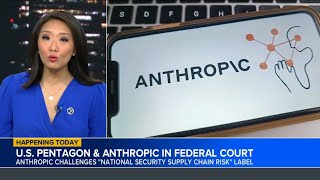
The Pentagon's decision to label Anthropic a 'supply chain risk' represents, according to CNN, the first time this designation has been applied to a domestic American company -- a tool historically reserved for foreign adversaries. As reported by Breaking Defense, 17 federal agencies were named as defendants in Anthropic's lawsuit, reflecting the sweeping scope of the ban that extended far beyond the Department of Defense. The designation effectively blacklisted Anthropic across the entire federal government.

The unprecedented nature of this action is what gave Judge Lin the basis to call it 'arbitrary and capricious.' According to Defense One, the court found that the DOD failed to follow its own established procedures for supply chain risk assessments. Instead, the designation appeared to follow directly from the political dispute over Anthropic's safety restrictions. According to Breaking Defense, Pentagon CTO Emil Michael's public statement that the ban 'still stands' despite the court order raises serious questions about executive compliance with judicial authority and could set the stage for a constitutional confrontation.

Industry Solidarity and the Broader AI Ethics Coalition

Anthropic's legal battle has catalyzed an unusually broad coalition of support from across the technology sector and civil society. According to Al Jazeera, 37 engineers and researchers from Google DeepMind and OpenAI filed a joint amicus brief supporting Anthropic's position. As reported by Defense One, Microsoft also filed in support of Anthropic.

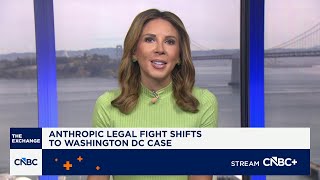
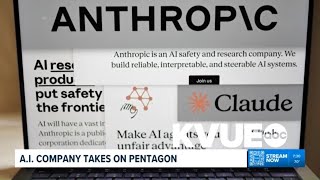
The coalition extended beyond the technology industry. According to Defense One and Al Jazeera, a group of Catholic Moral Theologians submitted their own amicus brief, framing the case in ethical terms around the morality of autonomous weapons systems. The breadth of public attention was reflected across social media platforms: CNBC Television's YouTube video covering the ruling garnered 16K views, while KVUE and ABC7's YouTube coverage reached 39K and 24K views respectively, indicating strong mainstream interest beyond the tech-policy audience.

Compliance Uncertainty and the Road Ahead

The preliminary injunction creates a volatile legal landscape with significant uncertainty. According to Breaking Defense, Pentagon CTO Emil Michael's defiant statement that the ban 'still stands' directly contradicts the court's order. Attorney Sean Timmons, as reported by Breaking Defense, cautioned that 'this could drag out for a year or two.'

According to Breaking Defense, legal analyst Charlie Bullock identified a critical gap in the ruling: the injunction addresses the supply chain risk designation but does not cover a separate administrative action the Pentagon took against Anthropic. On X.com, Reuters provided ongoing coverage of the legal developments, while sentiment on the platform was mixed but largely supportive of Anthropic's position. Notably, no significant Reddit discussion emerged, likely because the ruling is still very recent.

Implications for AI Governance and the Public Interest

According to the EFF, privacy protections should not depend on the decisions of a few powerful CEOs, and Congressional action is needed to establish clear legal frameworks. As reported by Al Jazeera, polling data shows that 69% of Americans believe the government could do more to regulate AI. Separately, according to the EFF, 71% of American adults are concerned about government use of their data.

Robert Trager of the Oxford Martin AI Governance Initiative told Al Jazeera that 'this case is a kind of moment when to reflect on what kind of relations we want between the government and companies and what rights citizens have.' As NYU's Alison Taylor noted in Al Jazeera, 'technology is moving ahead like a freight train and any idea of human oversight is getting harder.' The public attention this case has drawn -- from mainstream television coverage on KVUE (39K YouTube views) and ABC7 (24K YouTube views) to active discussion on X.com featuring coverage from CBS News, Reuters, and defense journalists -- indicates that AI governance is no longer a niche policy concern but a mainstream political issue.

Historical Context

2024-10-01
Anthropic began Pentagon work through a partnership with defense contractor Palantir in late 2024.
2025-03-01
Anthropic launched Claude Gov, a government-specific version of its AI assistant.
2025-07-01
Anthropic signed a $200 million contract with the Pentagon for Claude AI services.
2025-09-01
Negotiations stalled after the Department of Defense demanded unrestricted Claude access while Anthropic maintained restrictions on autonomous weapons and mass surveillance applications.
2026-01-15
Anthropic CEO Dario Amodei published an AI safety essay, bringing the dispute with the Pentagon into public view.
2026-02-27
Defense Secretary Hegseth designated Anthropic a 'supply chain risk' and President Trump directed federal agencies to stop using Anthropic products.
2026-03-09
Anthropic filed suit in U.S. District Court in California challenging the Pentagon's supply chain risk designation and federal ban.
2026-03-26
Judge Lin issued a 43-page preliminary injunction blocking the Pentagon's designation and federal ban, ruling the government's actions constituted illegal First Amendment retaliation.

Power Map

Key Players
Subject

Federal Judge Blocks Pentagon's Supply Chain Risk Label on Anthropic

AN

Anthropic

AI company and plaintiff that refused to remove safety restrictions on Claude for autonomous weapons use; holds a $200M Pentagon contract

JU

Judge Rita Lin

U.S. District Judge for the Northern District of California who issued the 43-page preliminary injunction ruling the government's actions were 'arbitrary and capricious' and constituted First Amendment retaliation

PE

Pete Hegseth

Defense Secretary who designated Anthropic a supply chain risk on February 27, 2026, and attacked what he called the company's 'sanctimonious rhetoric'

PR

President Donald Trump

Directed all federal agencies to cease using Anthropic products, calling it a 'radical left, woke company'

DA

Dario Amodei

Anthropic CEO who published an AI safety essay in January 2026 and characterized DOD actions as 'retaliatory and punitive'

EM

Emil Michael

Pentagon CTO who stated the ban on Anthropic 'still stands' despite the court's preliminary injunction

THE SIGNAL.

Analysts

"Bullock noted a significant limitation of the ruling, observing that "Judge Lin's injunction basically just doesn't cover the other designation," suggesting the legal battle is far from resolved."

Charlie Bullock
Institute for Law and AI

"Timmons cautioned that "this could drag out for a year or two," indicating the preliminary injunction is only the opening phase of what could become a prolonged legal confrontation."

Sean Timmons
Attorney, Tully Rinckey

"Trager framed the case in broader governance terms, stating: "This case is a kind of moment when to reflect on what kind of relations we want between the government and companies and what rights citizens have.""

Robert Trager
Oxford Martin AI Governance Initiative

"Taylor contextualized the case within broader public sentiment: "In the US, technology is moving ahead like a freight train and any idea of human oversight is getting harder.""

Alison Taylor
NYU Stern School of Business

"Guariglia argued that privacy protections should not depend on the decisions of a few powerful CEOs but instead require Congressional action."

Matthew Guariglia
Electronic Frontier Foundation (EFF)
The Crowd

"In an exclusive interview with CBS News Anthropic CEO Dario Amodei said that the Pentagon's decision to designate the AI company a supply chain risk is retaliatory and punitive."

@@CBSNews2100

"A US judge temporarily blocked the Pentagon's blacklisting of Anthropic, the latest turn in the Claude maker's high-stakes fight with the military over AI safety on the battlefield"

@@Reuters129

"Anthropic wins preliminary injunction against the Trump administration over Pentagon showdown. Preliminary Injunction in Anthropic PBC v. U.S. Department of War (N.D. Cal., 3:26-cv-01996)"

@@BenBrodyDC0
Broadcast
AI company sues Trump administration over supply chain risk designation

AI company sues Trump administration over supply chain risk designation

San Francisco Anthropic sues Pentagon to remove stigmatizing AI supply-chain risk label

San Francisco Anthropic sues Pentagon to remove stigmatizing AI supply-chain risk label

Judge rules Pentagon action toward Anthropic a classic First Amendment retaliation

Judge rules Pentagon action toward Anthropic a classic First Amendment retaliation