From App Launcher to Intelligence System
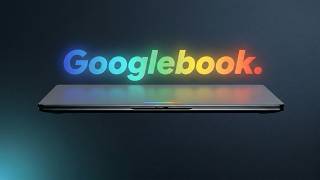
The most important sentence Google shipped on May 12 is not in the Googlebook reveal itself but in the framing around it: that the company is 'moving from an operating system to an intelligence system' [2]. That framing carries the entire announcement. Gemini Intelligence is not a feature drop — it is a category bet that the unit of computing has shifted from 'app you open' to 'task you delegate.'
The product surface area makes the bet concrete. Chrome on Android gains Auto Browse, which can complete bookings and reservations without the user touching the form [1]. Gboard ships Rambler, a voice tool that strips filler words and self-corrections and turns messy spoken thoughts into clean prose [1]. Create My Widget compiles a natural-language description into a working home-screen or Wear OS tile, and Gemini-aware autofill quietly populates third-party text fields from inside the keyboard [3]. Each of these takes a small, repetitive interaction loop — typing, tapping, tabbing — and replaces it with a model call that runs against the user's own context.
Mindy Brooks, the Android product VP who authored the announcement, gave the demo language a specifically agentic shape: Gemini will 'navigate tasks for you,' from snagging a front-row spin class bike to extracting a class syllabus out of Gmail [1]. Android Authority's editors read the rebrand as the long-promised philosophical pivot, arguing Google is finally trying to 'evolve Android from a platform we run apps on to a platform that's aware of who we are, what we need to do' [4]. The mechanism that makes that pivot legible to consumers is the branding itself — once 'Gemini Intelligence' becomes the umbrella, every micro-feature reinforces the same story instead of being filed away as a one-off.