Memory Is The Bottleneck, Not GPUs
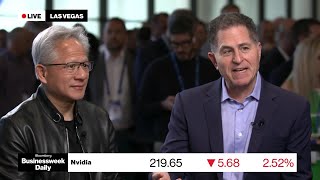
The most consequential line out of Dell World 2026 wasn't about racks or revenue — it was Jensen Huang telling Bloomberg that demand for HBM and DRAM is structurally outpacing capacity, and may not normalize before 2028 [1]. That reframes the entire AI Factory conversation: the limiting reagent for Vera Rubin NVL72 deployments is no longer GPU dies but the high-bandwidth memory stacks that surround them [2]. Investor-side forums seized on the same framing — Reddit discussion of Michael Dell's 'unimaginable levels' memory-demand prediction split between traders who saw it as a structural call and skeptics who countered that the binding wall is actually electrical capacity, not bytes per second.
The practical knock-on is that Dell's $43B AI server backlog can't simply be willed into revenue [3]. Every PowerEdge XE9812 rack is gated by HBM availability from a small set of suppliers, which is why both Nvidia and Dell are locking in capacity through partners like IREN — a 5 GW DSX-aligned deployment with up to 600,000 GPUs tied to Nvidia's $2.1B stake option [4]. If HBM stays tight through 2027, customers further down Dell's 5,000-name pipeline will see longer lead times even as the order book grows, and Dell's gross margin will be set as much by memory procurement contracts as by server ASPs.