Agentic AI Replacing High-Skill Jobs
TECH

Agentic AI Replacing High-Skill Jobs

31+
Signals

Strategic Overview

  • 01.
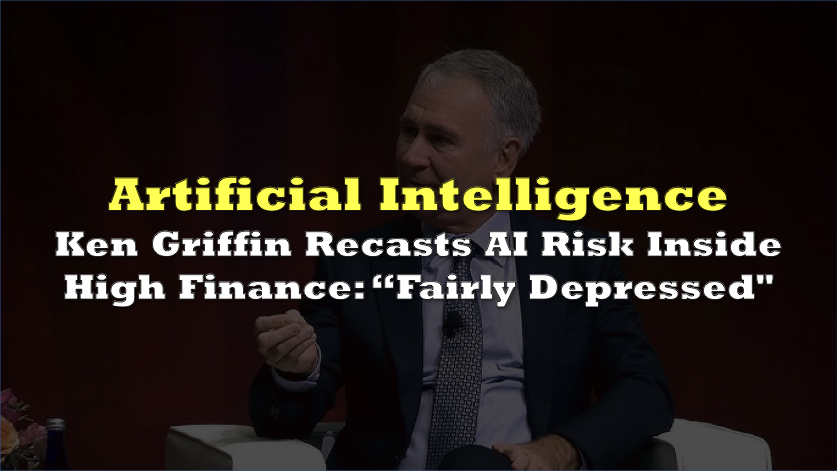
    In May 2026, Citadel founder Ken Griffin told the Stanford Leadership Forum that agentic AI now completes in hours or days the kind of finance research his master's and PhD-level analysts used to spend weeks or months on.
  • 02.
    Just four months earlier at Davos, the same Griffin had dismissed AI as 'all garbage,' making his admission that he went home 'fairly depressed' after seeing agentic AI work an unusually fast reversal for an elite-finance CEO.
  • 03.
    Griffin stressed that the work being automated is not mid-tier admin but 'extraordinarily high skilled jobs' — placing this displacement at the top of the skill ladder rather than the bottom.
  • 04.
    Aggregate US labor data remains calm — 4.3% unemployment in April 2026 and 90%+ of firms report no AI employment impact — but specific cohorts are collapsing: computer-science grad unemployment is 7.0% and software employment among 22-25-year-olds is down roughly 20% since late 2022.

Deep Analysis

Automation just inverted: this time it started at the top of the skill ladder

Every prior automation wave — looms, tractors, ATMs, scanners — hit lower-skill work first and pushed knowledge labor up the value chain. Griffin's May 2026 Stanford remarks describe the opposite. He calls agentic AI a 'step change' that is 'profoundly more powerful than it was just nine months ago' [3], and he is explicit that the displaced roles are 'extraordinarily high skilled jobs' — Citadel's master's and PhD-level finance researchers [3]. The four-month gap from his Davos 'all garbage' dismissal to his Stanford admission that he went home 'fairly depressed' [2]is itself the story: when the founder of one of the world's most profitable hedge funds flips inside a quarter, it functions as a buy-signal for the rest of the buy side.

The structural implication is what economist Anton Korinek warned about — that if the historical pattern breaks, 'labor itself becomes optional for the economy' [4]. That's a possibility not a forecast, but Griffin's reversal is the first time a marquee finance CEO has publicly described the economics of his own firm as moving in that direction. The Spreadsheet template — roughly 1M bookkeepers lost, 1.5M analysts gained [4]— relied on the new tool being a complement to higher-skill humans. Agentic AI is being deployed as a substitute for those higher-skill humans, which is a categorically different shape of disruption.


The hidden casualty: the entry-level career ladder, not the incumbents

The aggregate labor data is calm and the cohort data is on fire. Recent-graduate unemployment sits near 6% and is rising twice as fast as the rest of the US workforce since 2022 [5]. Computer-science graduate unemployment is 7.0% and computer-engineering grads are at 7.8% [5]. Software developer employment among 22-25-year-olds is down roughly 20% since late 2022, and software-development job postings are down 53% from their late-2022 peak [5]. Stanford's parallel cut: 22-25-year-olds in AI-exposed fields show a 16% relative employment decline since ChatGPT shipped [4].

Yale's Jeffrey Sonnenfeld names the mechanism: 'The biggest impact of Agentic AI on jobs will not be the layoffs we can see. It will be the opportunities that never materialize' [5]. Salesforce trimming customer support from 9,000 to 5,000 and citing agentic AI [5]isn't a layoff story so much as a 'we will not be hiring the next 4,000' story. Klarna's AI is doing the work of roughly 700 customer-service reps and UPS attributes 20,000 cuts to ML-driven logistics [6]— both removing the rung that used to teach the next cohort. The career ladder has lost its first step before the economy has lost a quarter of GDP growth, which is exactly why political pressure is mounting faster than aggregate statistics suggest it should.

The 'fascia of competence' problem: polish without correctness

The most useful pushback in the community discussion isn't 'AI can't do PhD work' — it's 'AI output looks like PhD work without being PhD work.' Working analysts on the technical subreddits have coined a phrase that's spreading: 'fascia of competence' — a polished, confident surface with subtle factual or methodological errors that compound downstream. The Scale AI Remote Labor Index, published in March 2026, found the best AI systems complete just 2.5% of tasks at human gold-standard quality [4], which lines up with the Atlanta Fed and NBER findings that 90%+ of firms report no AI employment impact over three years and that total employment hasn't meaningfully moved [4].

The risk isn't pure replacement — it's executives mistaking polish for correctness, ratcheting down their quality floor, and only noticing the regressions in hindsight. The community's working model is more credible than either of the loud extremes: it's not 1-to-1 replacement and it's not zero impact — it's compression, with one senior expert supervising a swarm of agents replacing a team. That compresses junior headcount first, which is exactly what the entry-level data shows. It also means the marginal product of the surviving senior — the one who can spot a 'fascia of competence' error — is going up sharply, which is the part Griffin's 15-25% software-engineering productivity claim [2]is actually measuring.

Perception vs. measurement: a 70/90 gap that will not stay open

Quinnipiac's March 2026 polling shows 70% of Americans believe AI will reduce job opportunities, up from 56% the prior year [4]. The Atlanta Fed says more than 90% of firms report no employment impact from AI over the past three years [4]. US payrolls added 115,000 jobs in April 2026 and unemployment is 4.3% [1], even as tech-sector layoffs topped 81,000 in Q1 2026 [1]. That 70/90 gap is the political fact of 2026: voters and graduates feel the displacement before the macro indicators register it.

Andreessen Horowitz is right that history says new sectors absorb displaced workers [7], and right that public panic has historically over-indexed on the visible casualties of automation [8][9]. They may also be right about the long run. But the relevant policy and corporate horizon is the next 18-36 months, where the displacement is concentrated in two narrow segments — top-of-the-ladder PhD work and bottom-of-the-ladder graduate entry — and aggregate statistics will keep saying 'no problem' until they don't. MIT's David Autor frames the constructive scenario: 'AI, if used well, can assist with restoring the middle-skill, middle-class heart of the US labor market' [4]. 'If used well' is now the load-bearing phrase.

Historical Context

1811-1816
English textile workers destroyed mechanized looms in protest; the Industrial Revolution that followed ultimately raised labor demand, becoming the canonical 'Luddite fallacy' case automation optimists cite against today's AI panic.
1930
Coined the phrase 'technological unemployment' but called it 'only a temporary phase of maladjustment' as new sectors absorbed displaced workers — the intellectual ancestor of today's a16z position.
1900-1960
Mechanization wiped out roughly a third of US employment from farming; workers transitioned to factories, offices, and services while farm output nearly tripled — the textbook example of automation expanding the economy.
1985-2010
About 1 million bookkeeping jobs lost and roughly 1.5 million financial-analyst roles created as the cost of financial analysis collapsed — the most-cited template for white-collar augmentation rather than replacement.
2025-05-28
The Anthropic CEO warns of a 'white-collar bloodbath,' kicking off a year of high-profile debate over AI and jobs that Griffin's May 2026 Stanford remarks would later vindicate.
2026-01-22
Griffin dismissed AI as 'all garbage,' making his May 2026 reversal a notable inflection point in elite-finance opinion within a single quarter.
2026-05-18
Griffin tells a Stanford audience agentic AI is a 'step change' automating work previously done by finance PhDs — the moment a16z's 'fantasy' framing collides head-on with a major hedge fund's own deployment.

Power Map

Key Players
Subject

Agentic AI Replacing High-Skill Jobs

CI

Citadel / Ken Griffin

Founder and CEO of the world's most profitable hedge fund; his public reversal from 'AI is garbage' to 'fairly depressed' signals that high-end buy-side finance has crossed the agentic-AI adoption line.

AN

Anthropic / Dario Amodei

AI lab CEO whose 'white-collar bloodbath' warning anchors the alarmist camp; predicts AI could erase up to half of entry-level white-collar roles and push unemployment to 10-20% within one to five years.

AN

Andreessen Horowitz (a16z)

Lead VC voice of the counter-narrative; argues the lump-of-labor fallacy plus the history of farming, spreadsheets, and electrification show new jobs will absorb displacement.

SA

Salesforce, Klarna, UPS

Named corporate adopters cited as concrete proof points — Salesforce 9,000 to 5,000 in support, Klarna AI doing the work of ~700 reps, UPS attributing 20,000 cuts to ML logistics.

YA

Yale CELI (Sonnenfeld team)

Academic group documenting that AI's primary visible effect so far is the collapse of entry-level openings — the rung that lets careers begin — rather than mass layoffs of incumbents.

Fact Check

9 cited
  1. [1] Citadel CEO Says AI Is Now Automating PhD-Level Finance Work In Days Instead Of Months, Calls It Step Change That Left Him Fairly Depressed
  2. [2] Billionaire Ken Griffin: AI is 'garbage,' depressed me with its 'dramatic impact on society'
  3. [3] Ken Griffin's AI Whiplash: Citadel CEO Shifts Stance
  4. [4] The AI Job Apocalypse Is Unhelpful Marketing, Bad Economics, and Worse History
  5. [5] The Real Job Destruction From AI Is Hitting Before Careers Can Start
  6. [6] Will Agentic AI Replace Jobs?
  7. [7] The AI Job Apocalypse Is a Complete Fantasy
  8. [8] Luddite — Wikipedia
  9. [9] The Luddite Fallacy

Source Articles

Top 1

THE SIGNAL.

Analysts

"Calls agentic AI a 'step change' that automates work previously done by master's and PhD-level finance professionals; admits he went home 'fairly depressed' after seeing the impact."

Ken Griffin
Founder & CEO, Citadel

"Warns AI could wipe out half of all entry-level white-collar jobs and spike unemployment to 10-20% in the next one to five years."

Dario Amodei
CEO, Anthropic

"Argues that if AGI is reached, the historical pattern where automation expanded total labor demand could break — 'labor itself becomes optional for the economy.'"

Anton Korinek
Economist, University of Virginia / Brookings

"Calls the AI jobs apocalypse 'unhelpful marketing, bad economics and worse history,' emphasizing prior automation waves created more jobs than they destroyed."

David George
General Partner, Andreessen Horowitz

"Treats AI as a possible restorer of the middle-skill middle class if deployed well — framed as a possibility, not a forecast."

David Autor
Labor economist, MIT

"Argues the most consequential damage isn't visible layoffs but the disappearance of the entry-level openings that would have started careers — 'the opportunities that never materialize.'"

Jeffrey Sonnenfeld
Yale School of Management
The Crowd

"Ken Griffin went home on a Friday "fairly depressed" after watching AI agents at Citadel do work that used to take teams of PhDs in finance months to complete. Done in days. His words: "These are not mid-tier white collar jobs. These are extraordinarily high skilled jobs being [replaced]""

@@TFTC210

"Prepare for an AI jobs apocalypse, per The Economist."

@@BarefootStudent0

"I looked at the evidence that AI is replacing entry-level workers in white collar jobs. Bottom line: the scale/timing of job loss is uncertain, but this is not just hype. Companies are really doing it."

@@kevinroose0

"Citadel CEO Ken Griffin says AI agents are automating PhD level finance work, leaving him "fairly depressed" over the "dramatic impact on society""

@u/Murky-Option2916401
Broadcast
How AI is Causing a White Collar Bloodbath

How AI is Causing a White Collar Bloodbath

How AI is Causing a White Collar Purge

How AI is Causing a White Collar Purge

Why AI won't wipe out white-collar jobs | The Economist

Why AI won't wipe out white-collar jobs | The Economist