The AGI Gambit: Why Musk Wants OpenAI to Publicly Deny Its Own Tech
Beneath the headline damages number sits a far more elegant piece of litigation strategy. OpenAI's founding agreement carves out 'AGI' — artificial general intelligence — as something that cannot be commercially licensed. Musk's complaint leans hard on that clause, framing GPT-class systems as drifting toward AGI and therefore outside any legitimate commercial license to Microsoft. The genius move, as community legal readers caught quickly, is that this forces OpenAI's lawyers into a defensive crouch they cannot escape: to win the contract argument, they must stand in open court and argue that their flagship product is not AGI and is nowhere close.
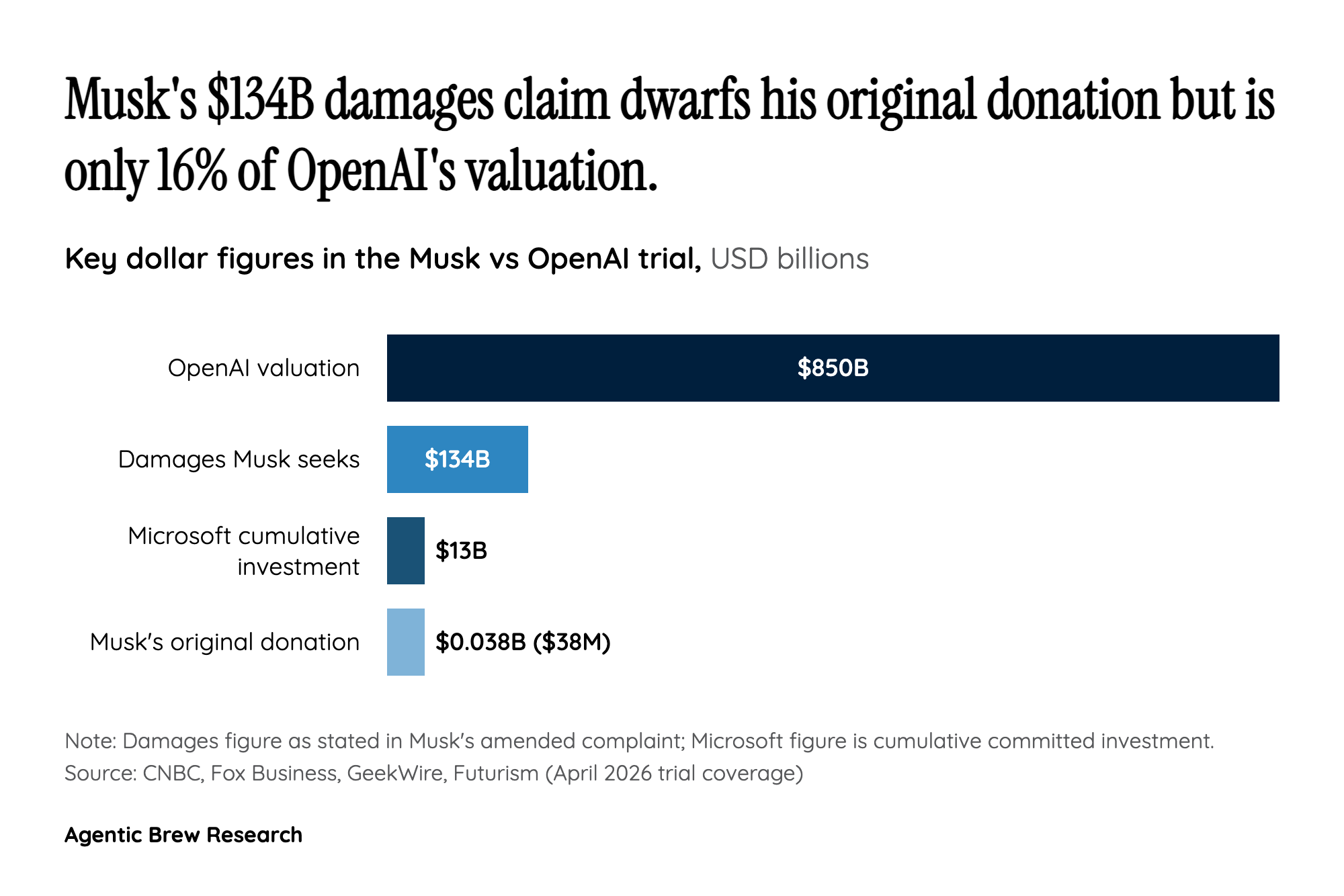
That is an extraordinary thing to drag a frontier lab into saying on the record. Every public-facing pitch from OpenAI for the last three years has danced around AGI as the company's North Star; investor narratives at $850B valuations are built on the implication that the path is real and near. The trial inverts that posture under oath. Whatever the jury concludes about damages, the discovery and testimony record will leave a paper trail of OpenAI executives carefully minimizing their own capability claims — a trail that competitors, regulators, and future plaintiffs will mine for years.